
HENRY SAXE
(b. Montreal, Quebec 1937)

Henry Saxe. Genaro, 2012 orange acrylic on aluminum 48" x 48" $8,000.

Henry Saxe. Tamsworth, 2012 orange acrylic on aluminum 36" x 37" $7,600.
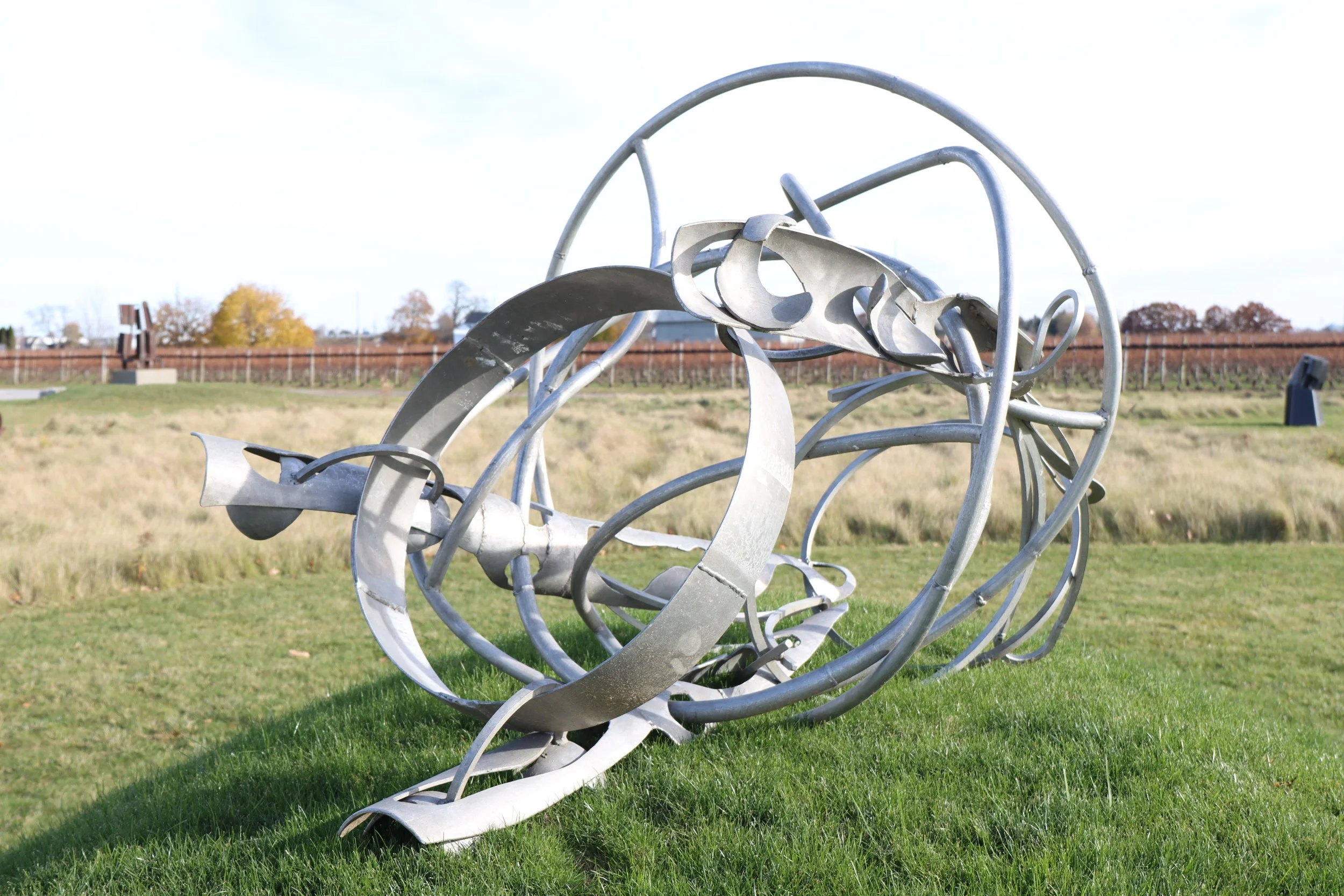
Henry Saxe. C.U.P. n.d. aluminum 75” x 54” x 60” POR

Henry Saxe. Homage à Riopelle, 2013 aluminum and canvas 26" x 24" x 2" $5,000.

Henry Saxe. Homage à Borduas, 2013 aluminum and canvas 26" x 24" x 2" $5,000.

Henry Saxe. Untitled, n.d. mixed media, metal on paper board 32" x 40" $6,500.

Henry Saxe. Untitled 4/7, 2015 chalk paint on cardstock 32" x 40" $5,000.

Henry Saxe. Untitled, 2015 chalk paint on yardstick 40" x 60" $8,500
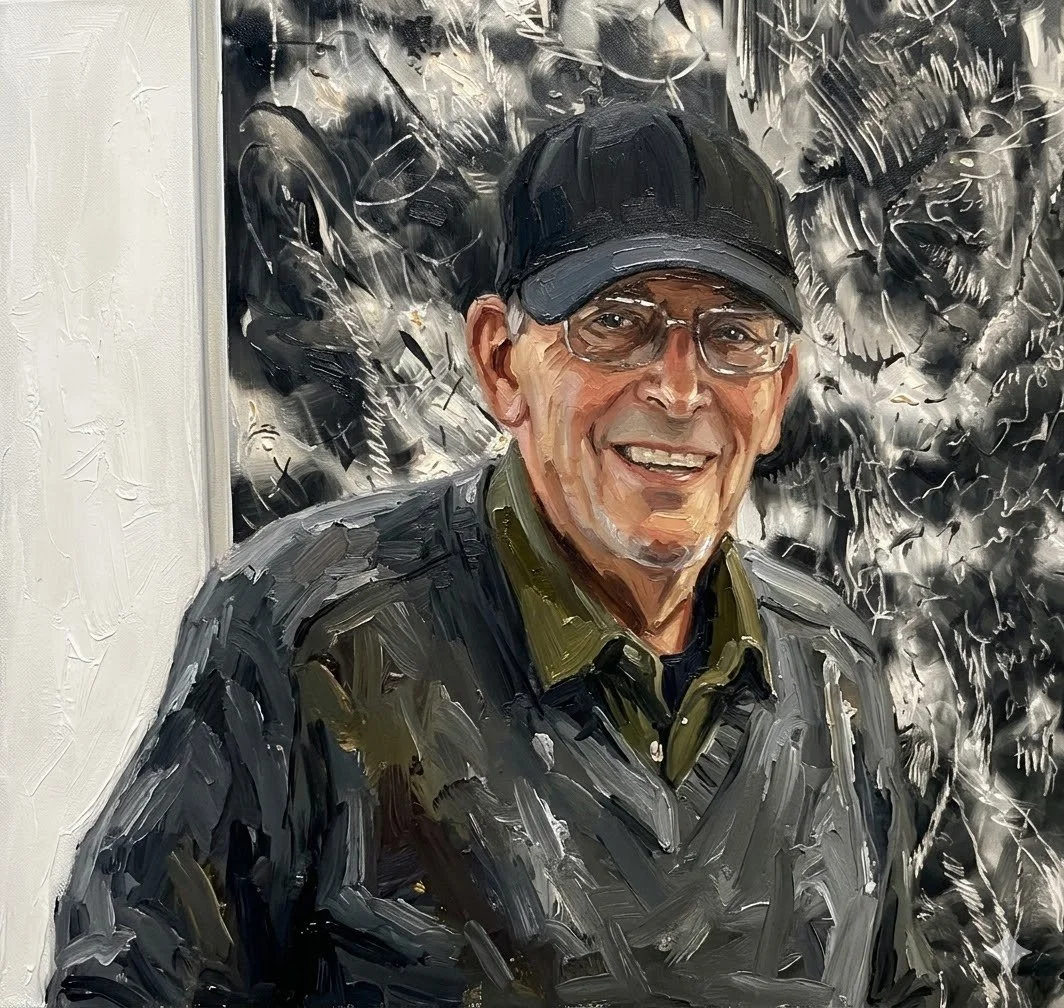
For the collector, works by Henry Saxe OC RCA occupy a significant place within the history of modern Canadian abstraction. Over the past several decades, collectors have actively supported and elevated his legacy by donating important works to major institutions, helping to solidify his reputation within Canada’s public collections. Sculptures by Saxe are now held in leading museums including the National Gallery of Canada and the Musée d’art contemporain de Montréal, reinforcing his position as one of the defining sculptors of post-war Canadian art. For collectors, Saxe’s work represents both historical importance and intellectual depth, offering an opportunity to engage with a foundational voice in the development of Canadian abstraction.
Henry Saxe was born on September 24, 1937, in Montreal, Quebec, and emerged during one of the most transformative periods in Canadian art. He studied at the École des Beaux-Arts de Montréal from 1956 to 1961 and also trained in printmaking under Albert Dumouchel. His early career unfolded amid the radical artistic climate that followed the influence of the Automatistes and the landmark 1948 Refus global manifesto, movements that challenged traditional cultural institutions and helped usher in a new era of artistic freedom in Quebec.
Within this dynamic cultural environment, Saxe became closely associated with a circle of influential Montreal abstractionists including Guido Molinari, Yves Gaucher, Claude Tousignant, Ulysse Comtois, and Jacques Hurtubise. These artists were central to the evolution of non-figurative painting and sculpture in Quebec, and their commitment to formal experimentation and geometric abstraction had a profound influence on Saxe’s development. At the same time, Saxe was deeply inspired by American modernism, particularly the expressive force of Willem de Kooning and the welded steel constructions of David Smith. These diverse influences helped shape Saxe’s distinctive synthesis of constructivist structure and abstract expressionist energy.
Although Saxe initially worked in drawing, painting, and printmaking, he created his first sculpture in 1965, marking a decisive turning point in his career. Sculpture quickly became his primary medium, offering a direct way to explore questions of spatial balance, structural tension, and the physical presence of materials. His work often combines angular geometries with seemingly precarious arrangements of planes and beams, producing compositions that appear both spontaneous and precisely engineered.
Saxe’s sculptures are notable for their inventive use of industrial materials such as steel, aluminum, and fabricated metal elements. Rather than concealing the industrial nature of these materials, he highlights their raw physical qualities—cutting, bending, or etching surfaces to create fractured planes that interact with light and shadow. Aluminum plates, in particular, often play an important role in his works, reflecting and absorbing light in ways that continually alter the viewer’s perception of the sculpture.
Throughout his career, Saxe has explored the relationship between structure and instability. Many of his works appear delicately balanced, with elements that seem poised on the verge of collapse while remaining structurally sound. This tension between equilibrium and disruption has become a defining characteristic of his sculptural language. The viewer’s movement around the sculpture becomes part of the experience, revealing shifting alignments of planes and edges and reinforcing Saxe’s interest in sculpture as a spatial event rather than a static object.
Public sculpture and architectural integration have also played an important role in Saxe’s practice. His work Dex (1977), installed near the Musée de Lachine in Montreal, demonstrates his sensitivity to landscape and spatial context. Composed of steel elements arranged along a long horizontal beam, the sculpture interacts with the surrounding terrain and encourages viewers to experience the work from multiple vantage points.
Saxe’s contributions to Canadian art were recognized early in his career through major exhibitions and international representation. In 1978 he represented Canada at the prestigious Venice Biennale alongside painter Ron Martin, bringing his work to a global audience. His sculpture has been widely exhibited throughout Canada and internationally, including major presentations at the National Gallery of Canada and a comprehensive retrospective organized by the Musée d’art contemporain de Montréal in 1994, which surveyed more than three decades of his work.
Over time, Saxe’s artistic practice has evolved through multiple phases, moving from early modular constructions to works incorporating familiar or found materials, and later to lighter, more open structures that emphasize spatial relationships and viewer interaction. In some works he has even incorporated participatory elements, allowing viewers to alter the configuration of sculptural components and reinforcing the idea that sculpture can exist as an evolving system rather than a fixed form.
In addition to his studio practice, Saxe has contributed to Canadian art through teaching and mentorship. He taught at the École des Beaux-Arts de Montréal from 1968 to 1969 and later at Université Laval from 1970 to 1973, influencing a generation of younger artists interested in abstraction and sculptural experimentation.
His achievements have been recognized through numerous prestigious honours. In 1979 he received the Victor Martyn Lynch-Staunton Award from the Canada Council for the Arts. In 1988 he was appointed an Officer of the Order of Canada in recognition of his “unconventional works” that have left an indelible imprint on Canadian sculpture. In 1994 he was awarded Quebec’s highest distinction for visual artists, the Prix Paul-Émile-Borduas. He is also a member of the Royal Canadian Academy of Arts, further affirming his role within Canada’s artistic establishment.
Since 1973 Saxe has lived and worked in the rural community of Tamworth, Ontario, north of Kingston. From his studio there he continues to pursue an active and experimental practice that spans sculpture, drawing, and painting.
Over the course of more than six decades, Henry Saxe has made a profound contribution to the development of Canadian art. His work bridges multiple movements—constructivism, minimalism, and abstract expressionism—while maintaining a distinctive voice rooted in material exploration and spatial inquiry. Through his innovative sculptural language and his sustained commitment to experimentation, Saxe has helped redefine the possibilities of sculpture in Canada. Today his work remains highly regarded by scholars, institutions, and collectors alike, reflecting a legacy that continues to shape the narrative of contemporary Canadian art.
Collector’s Perspective:
Works by Henry Saxe are not commonly found in private homes, in part because his sculptural language—rooted in industrial materials, fractured planes, and spatial experimentation—has always prioritized intellectual invention over conventional decoration. For discerning collectors, however, this is precisely the appeal. Owning a work by Saxe reflects a sophisticated engagement with the deeper history of Canadian abstraction and signals an appreciation for one of the country’s most inventive sculptural voices.
Many of Saxe’s works have entered major museum collections, including the National Gallery of Canada and the Musée d’art contemporain de Montréal, meaning relatively few significant pieces circulate in the private market. Despite his stature as an important senior living artist, his works have remained comparatively accessible when measured against their historical importance within Canadian art. Now in his late eighties, with production naturally slowing and much of his strongest work already placed in institutions or long-held collections, the available inventory is finite—making the opportunity to acquire a Saxe sculpture increasingly meaningful for collectors who value originality, scholarship, and lasting cultural significance.
For images and acquisition details, please contact us.