
OTTO ROGERS
(b. Kerrobert, Saskatchewan1935–2019)
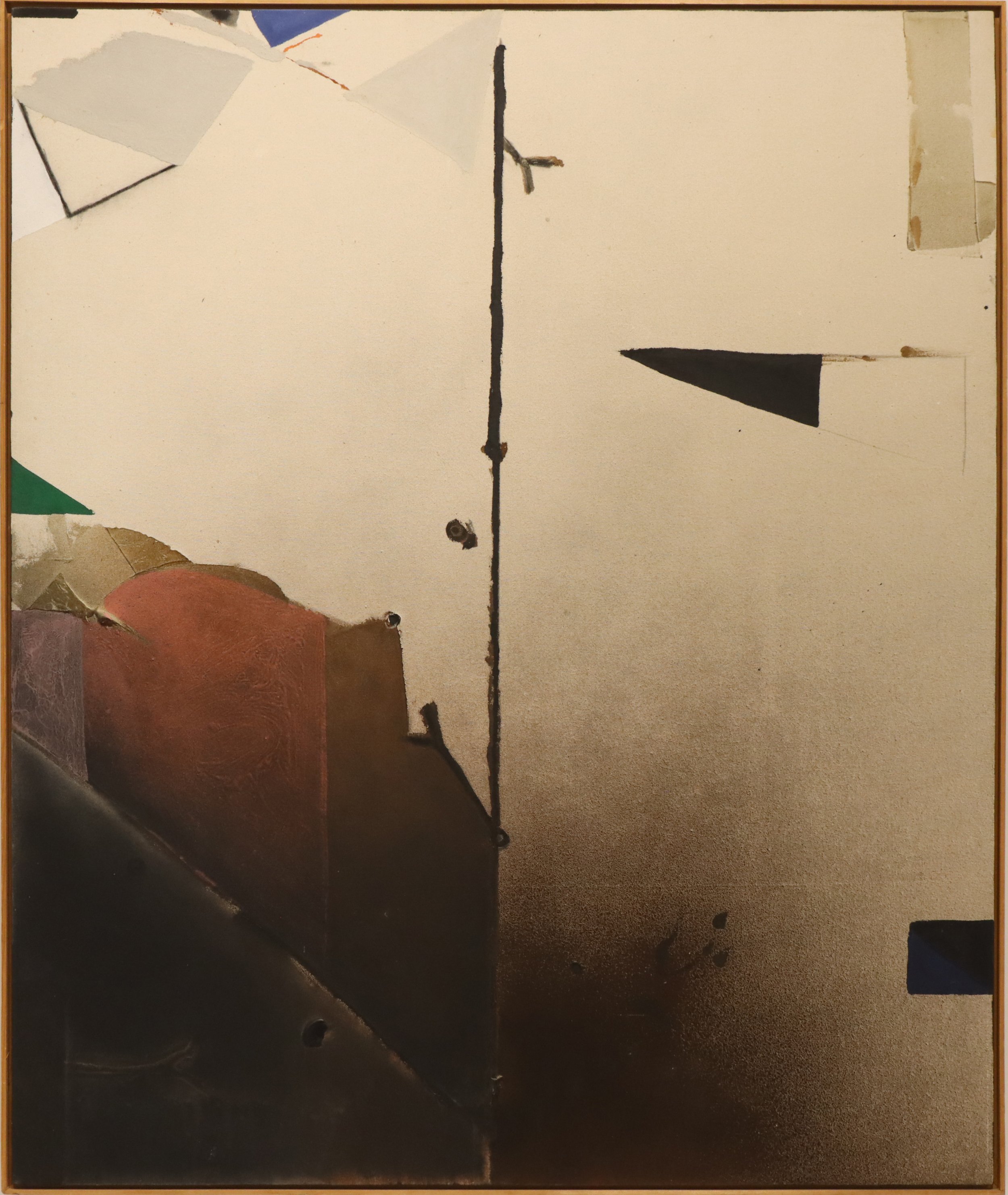
Otto Rogers. Tall Tree on Cliff Edge, 1988 acrylic on canvas 72" x 60" POR
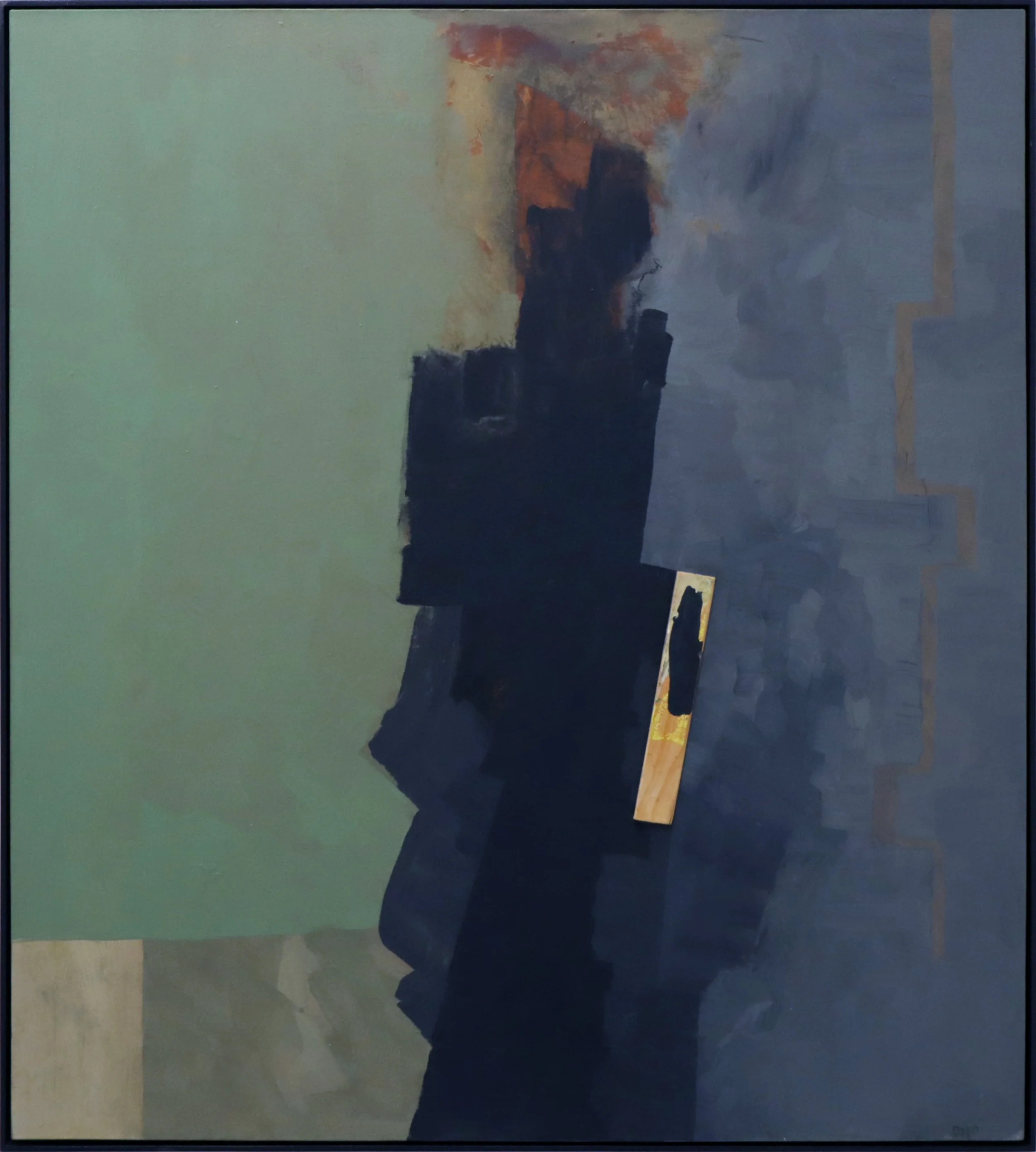
Otto Rogers. Becoming One, 2015 acrylic on canvas 54" x 60" POR
For the serious collector, works by Otto Donald Rogers represent a rare convergence of Canadian modernist history, architectural abstraction, and contemplative spirituality. His paintings and sculptures carry both cultural significance and enduring aesthetic refinement, making them highly desirable for collectors building a meaningful, long-term collection. Rogers’s work is distinguished by its quiet authority—compositions of floating planes, balanced geometry, and atmospheric light that bring the presence of the prairie landscape into a sophisticated modernist language. Owning a work by Rogers means acquiring a piece of Canadian abstraction that is historically important, intellectually grounded, and visually timeless.
Born in Kerrobert, Saskatchewan and raised on a farm near the wide horizons of the prairie, Rogers translated the visual and emotional character of the landscape into a unique modernist vocabulary. The openness of prairie skies, the subtle shifts of light, and the contemplative silence of rural space became defining elements of his artistic vision. His mature work is characterized by floating geometric forms, layered atmospheric surfaces, and a careful equilibrium between structure and gesture. Drawing on influences from European and North American modernism, Rogers synthesized the spatial clarity of cubist and constructivist thought with a distinctly Canadian sense of expansiveness and stillness.
Rogers pursued formal artistic training at the University of Wisconsin–Madison, earning a B.Sc. in Art Education in 1958 followed by an M.Sc. in Fine Art in 1959. During this period he received multiple scholarships and awards while engaging deeply with modernist theory and practice. The intellectual currents of artists such as Picasso and Mondrian helped shape his lifelong investigation into order, harmony, and spatial balance, though Rogers ultimately forged an independent visual language that emphasized contemplative structure over overt reference.
In 1959, Rogers joined the faculty of the University of Saskatchewan, beginning a transformative academic career that would span nearly three decades. As professor and later Head of the Art Department, he became a central figure in Prairie modernism and played an important role in the internationally influential Emma Lake Artists’ Workshops. These workshops connected Canadian artists with leading figures in global contemporary art, including Clement Greenberg, Donald Judd, Anthony Caro, and Kenneth Noland, helping position Canadian abstraction within broader international discourse. Rogers functioned as both educator and cultural ambassador, strengthening the relationship between Canadian modernist painting and global movements.
Rogers’s practice was deeply informed by his membership in the Bahá’í Faith, which shaped his philosophical approach to art as a search for unity, harmony, and spiritual coherence. His paintings often function as visual meditations, balancing multiplicity with order and movement with stillness. Working primarily in acrylic, collage, spray techniques, and layered mixed-media applications on gessoed canvas, he developed a slow, deliberate studio process in which surfaces evolved gradually through accumulation and refinement.
His exhibition history includes major presentations at institutions such as the Glenbow Alberta Institute in Calgary, the Mendel Art Gallery in Saskatoon, the Canadian Cultural Centre in Paris, and Galleria del Milione in Milan, among many others. Rogers’s work is held in significant public collections including the National Gallery of Canada, the Art Gallery of Ontario, the Montreal Museum of Fine Arts, and the Beaverbrook Art Gallery, as well as numerous corporate, university, and private collections across North America and internationally.
In 1988, Rogers left his academic position to serve two consecutive five-year terms at the Bahá’í World Centre in Haifa, Israel, where he worked as a Counsellor on the International Teaching Centre. The experience reinforced the spiritual and philosophical orientation of his artistic vision. Upon returning to Canada in 1998, Rogers and his wife Barbara settled in Milford, Prince Edward County, where he worked from a purpose-built waterfront studio designed by architect Siamak Hariri. The studio’s orientation toward Lake Ontario’s shifting light provided a contemplative environment that echoed the atmospheric qualities of his paintings.
Over the course of six decades, Rogers produced a body of work that is widely regarded as a cornerstone of Canadian abstract modernism. His paintings and sculptures remain highly relevant to collectors seeking historically significant Canadian abstraction that combines intellectual rigor, spiritual depth, and enduring visual serenity. Rogers’s legacy continues to resonate within the narrative of twentieth-century Canadian art as a model of disciplined modernist practice rooted in landscape, philosophy, and formal clarity.
Collector’s Perspective:
For collectors seeking historically significant Canadian modernism, a work by Otto Donald Rogers offers both intellectual refinement and lasting visual presence. Rogers is recognized as one of Canada’s essential postwar abstractionists, merging prairie landscape sensibility with a disciplined, spiritually informed modernist structure that feels remarkably contemporary even today. With the artist’s passing, the opportunity to acquire prime examples of his work is permanently limited, adding a natural scarcity that enhances long-term desirability. As museum interest and scholarly recognition continue to expand, particularly around his most resolved compositions, demand is expected to strengthen for large, exhibition-quality canvases, works with strong provenance, and paintings that exemplify his signature balance of geometry, light, and atmospheric depth.
In the current market, well-resolved medium-to-large paintings generally circulate in the high four- to low five-figure range, while exceptional works from peak creative periods can reach mid-five figures at auction. Gallery-offered museum-quality pieces may command higher pricing, reflecting their rarity and historical importance. For collectors building a serious Canadian modernist collection, a Rogers painting represents a thoughtful acquisition—one that combines cultural significance, contemplative beauty, and enduring investment potential.
For images and acquisition details, please contact us.