
RAY MEAD
(1921–1998)

Ray Mead. Untitled, 1989 acrylic on canvas 30" x 36" $22,000
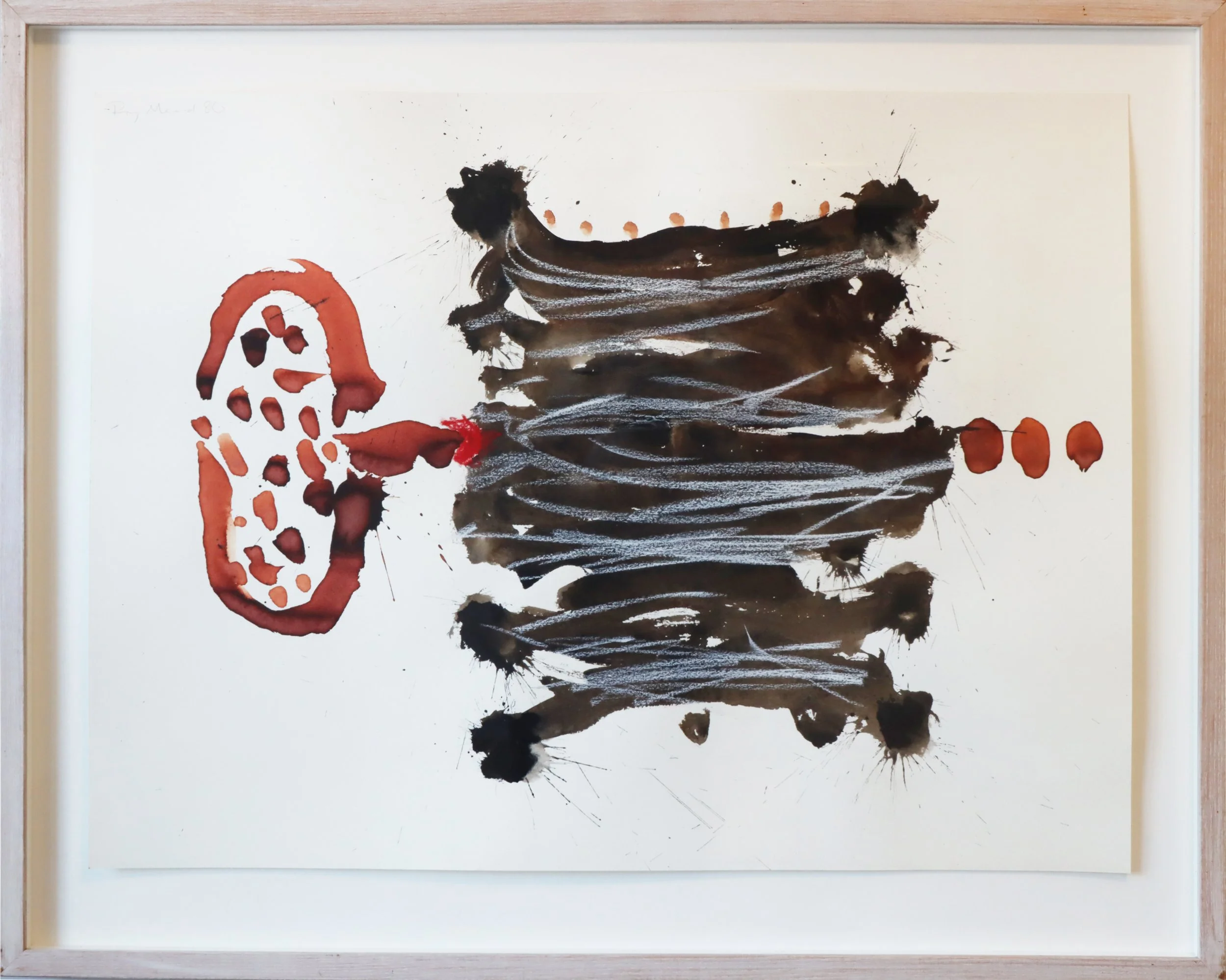
Ray Mead. Untitled, 1986 mixed media on paper 22 1/8" x 29 7/8" $8,000.00
For collectors, Ray Mead’s work represents both aesthetic sophistication and historical significance. His canvases not only capture the expressive power and elegance of mid-century Canadian abstraction but also embody a transformative moment in the nation’s cultural history. Owning a Mead is an opportunity to acquire a cornerstone of Canadian modernism—paintings that resonate with emotional depth, intellectual rigor, and enduring beauty.
Ray Mead (1921–1998) was a pioneering force in Canadian abstraction and a founding member of Painters Eleven, the groundbreaking artist collective that transformed the country’s artistic landscape in the 1950s. Born in Watford, England, he trained at the Slade School of Art under John Nash and Randolph Schwabe, graduating in 1939. During World War II, he served as a fighter pilot with the Royal Air Force, training pilots in Canada and the United States. While in New York, he encountered American abstract artists, experiences that profoundly shaped his approach to color, composition, and abstraction.
After the war, Mead settled in Hamilton, Ontario, joining a community of modernist painters and forging a lasting friendship with Hortense Gordon. In 1953, following the landmark Abstracts at Home exhibition at Simpson’s in Toronto, he co-founded Painters Eleven, a group dedicated to championing non-objective painting at a time when the Canadian art scene was largely conservative. The collective’s bold, dynamic works earned attention nationally and internationally, including a 1956 show at New York’s Riverside Museum, cementing Mead and his peers as key figures in the rise of Canadian abstraction.
Collector’s Note:
Tom Mathews occupies a meaningful place within the continuum of Canadian landscape painting, particularly for collectors interested in the enduring legacy of the Group of Seven and its long influence on regional artists. Mathews career reflects a sustained commitment to the same foundational idea: that the Canadian landscape—specifically Ontario’s fields, forests, and rural settlements—deserved painterly attention. He stands as part of the extended lineage of artists who carried forward the landscape tradition, maintaining its relevance in a changing province
Working primarily in Peel County from the 1950s through the 1990s, Mathews documented a region undergoing rapid transformation. In this sense, his paintings function not only as aesthetic objects but as historical records of a disappearing rural Ontario. For collectors, this documentary quality adds depth and resonance. Much as the Group of Seven fixed northern wilderness imagery into the national imagination, Mathews preserved the agrarian character of southern Ontario at a pivotal moment of suburban expansion. His maple sugar bushes, farmhouses, and winter fields carry both visual charm and cultural memory. Prices are generally accessible compared to nationally canonized figures, which makes his work attractive to collectors building thoughtful Canadian landscape holdings without entering the higher-priced segments associated with major historical names.