
WALTER REDINGER
(b. Wallacetown, Ontario, 1940–2014)

Walter Redinger Black and White Peaks (5 Units) N.D mixed media approx. 96" x 27" INQUIRE

Walter Redinger Untitled Wall, 1977 mixed media 72" x 72" x 12" INQUIRE

Walter Redinger Untitled Wall #2, 1977 mixed media 72" x 65" x 4" INQUIRE
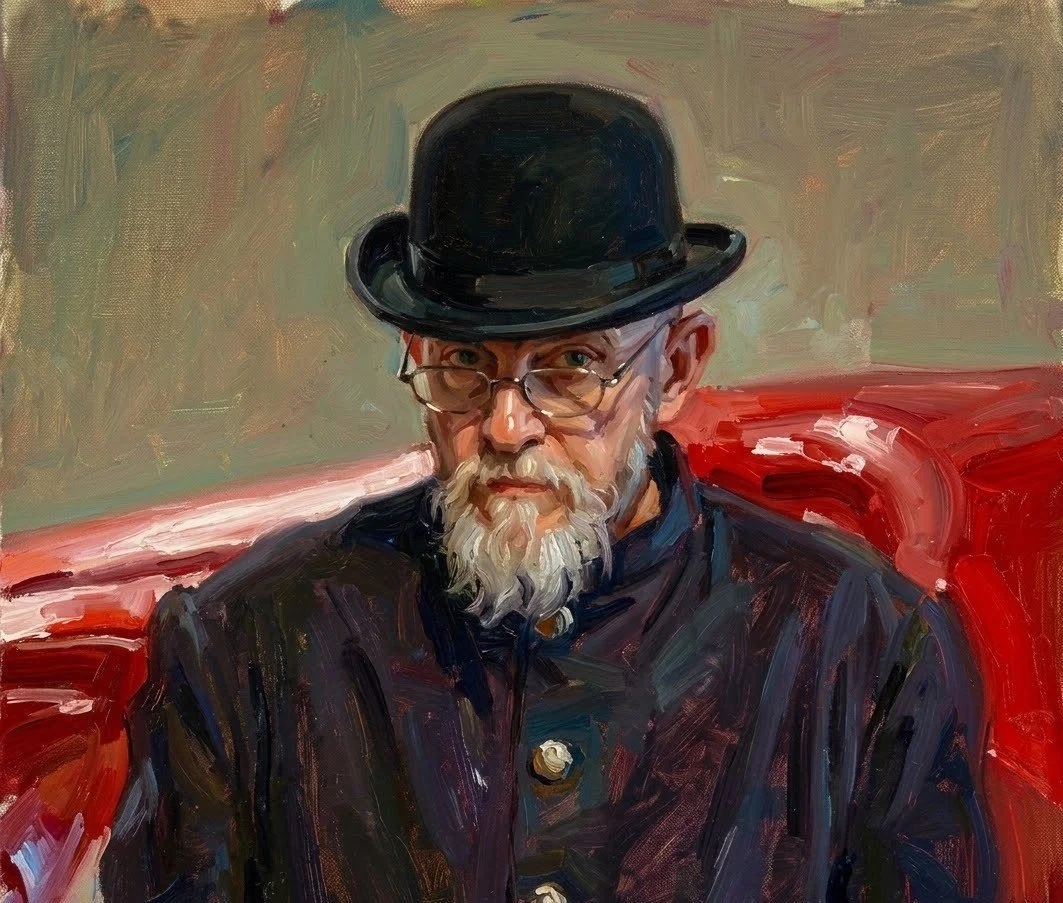
Collectors are drawn to Walter Redinger’s work for its historical importance in Canadian sculpture, its fearless material experimentation, and its unmistakable visual language. One of Canada’s most radical sculptors of the late twentieth century, Redinger developed a body of work that merges organic abstraction with psychological and physical intensity. His sculptures occupy a pivotal place in Canadian art history, bridging post-war modernist sculpture and a distinctly Canadian biomorphic vision.
Born in Wallacetown, Ontario, Redinger grew up on a tobacco farm in Southwestern Ontario, an environment that profoundly shaped his artistic sensibility. The rhythms of rural labour, the isolation of farm life, and the natural landscape surrounding Lake Erie informed the visceral, earth-connected character of his sculpture. Although he received early art instruction at Beal Technical School in London, Ontario, and later studied briefly at the Minsinger School of Art in Detroit and the Ontario College of Art in Toronto, Redinger ultimately emerged as largely self-directed as a sculptor. His formative artistic influence came from experimentation rather than academic training, particularly under the intellectual and stylistic mentorship of Jock Macdonald during his time in Toronto.
Redinger began making sculpture in the early 1960s, initially working in the family farm’s tobacco drying huts where he explored form without institutional constraints. During this period, he became one of the earliest Canadian artists to adopt fiberglass as a primary sculptural medium. The material allowed him to pursue forms that were fluid, skin-like, and psychologically suggestive, pushing sculpture beyond traditional stone or bronze into new territory. His early figurative experiments soon evolved into highly abstracted biomorphic structures that critics frequently associated with post-war organic modernism while remaining unmistakably personal.
His association with Toronto’s influential Isaacs Gallery marked a decisive turning point in his career. Redinger’s first solo exhibition in 1963 introduced a small body of figurative and organic sculptural works that quickly distinguished him as an emerging voice in Canadian contemporary art. Subsequent exhibitions at the gallery in 1968 and 1970 established his reputation as a sculptor unafraid of confronting complex thematic territory. Works from the late 1960s reflected Redinger’s interest in the intersection of body and machine, particularly in the series sometimes described as “Organic Engine Combines,” which explored the psychological impact of industrial modernity on human identity.
The late 1960s and early 1970s represented Redinger’s most internationally visible period. In 1972, he was selected to represent Canada at the Venice Biennale, one of the most prestigious events in global contemporary art, alongside painter Gershon Iskowitz. Works such as Klonos and Caucasian Totems were exhibited during this period, demonstrating Redinger’s mature sculptural vocabulary of stacked, pulsating, and biologically resonant forms. His participation in the Biennale solidified his international reputation and placed him among the leading Canadian sculptors of his generation.
Redinger’s sculptural practice evolved through several distinct phases over the course of his career. Early organic fiberglass sculptures gave way to grouped sculptural arrangements after 1968, followed by the development of suspended works and the series he called “Skeletals.” These works emphasized structural tension, spatial ambiguity, and the suggestion of living anatomy reduced to essential skeletal rhythms. By the mid-1970s, he expanded into works he described as “Industrial Totem Sets,” including the ambitious 1929–1986 Landscape, which he compared to monumental mechanical chess sets exploring civilization, power, and technological memory.
Throughout the 1970s and beyond, Redinger’s forms became increasingly symbolic and visually eccentric, combining striped black-and-white land formations with exoticized, zebra-like surface treatments. Critics often described his work as intensely personal, psychologically charged, and deliberately unconventional within the broader context of Canadian modernism.
The culmination of Redinger’s late career is widely regarded as Ghost Ship (1990–2006), a monumental 42-foot-long fiberglass and wood sculpture that occupied more than two decades of intermittent construction. Installed in the major retrospective exhibition Return to the Void at the Museum of Contemporary Canadian Art in Toronto and Museum London, the work has been interpreted as an abstract meditation on spiritual passage, isolation, and existential travel. The scale and ambition of Ghost Ship demonstrate Redinger’s lifelong commitment to pushing sculpture beyond conventional limits of production and installation.
Redinger was an exceptionally prolific artist who often worked with studio assistants to sustain the scale of his output. His studio at times functioned almost like an industrial workshop, reflecting the mechanical and manufacturing references present in many of his sculptural concepts. Despite the monumental nature of many works, drawing remained central to his practice. His fearless, improvisational drawings reveal a parallel visual language that is raw, instinctive, and closely connected to the development of sculptural ideas.
Over the course of more than forty years, Redinger divided his career into experimental phases rather than adhering to a single stylistic trajectory. This willingness to continuously reinvent his sculptural vocabulary is one reason his work remains historically significant within Canadian post-war modernism. While his forms are sometimes described as eccentric or idiosyncratic, this individuality is now recognized as a defining strength of his artistic contribution.
Redinger’s work is widely represented in major institutional collections. Significant holdings include the National Gallery of Canada, the Art Gallery of Ontario, and the Art Gallery of Hamilton, along with Museum London, which houses more than fifty works by the artist. One of his sculptures, Two Units, is installed publicly in front of Museum London, reflecting the integration of his work into Canadian civic and cultural landscapes.
Public and commissioned installations can be found across Canada and internationally, including sites at Western University’s McIntosh Gallery, Concordia University in Montreal, Gairloch Gardens in Oakville, Confederation Park in Gananoque, the University of Guelph, the National Parks Commission in Ottawa, and the Het National Ballet in the Netherlands.
Collector’s Perspective:
From a collector’s perspective, Redinger’s work holds particular importance within Canadian art history. His sculpture represents a rare combination of historical significance, material innovation, and uncompromising artistic individuality. Because many of his major projects were large-scale or site-specific, privately available works with strong provenance are comparatively scarce. Interest in Redinger’s work continues to grow among collectors focused on post-war Canadian modernism, particularly those seeking sculpture that carries both museum-level cultural importance and strong visual presence.
Today, Walter Redinger is remembered as one of Canada’s most original sculptural voices — an artist who transformed industrial materials into living, psychological forms. Living much of his life within a few miles of his birthplace in Southwestern Ontario, he maintained a deeply personal artistic identity while achieving national and international recognition. His legacy endures as a testament to experimental sculpture in Canada and to the power of relentlessly individual artistic vision.
For images and acquisition details, please contact us.