
GORDON RAYNER
(b. June 14, 1935 – September 26, 2010)

Gordon Rayner. Pub Table #2, 1995 oil on board with aluminum 21" x 20" x 3" $8,500
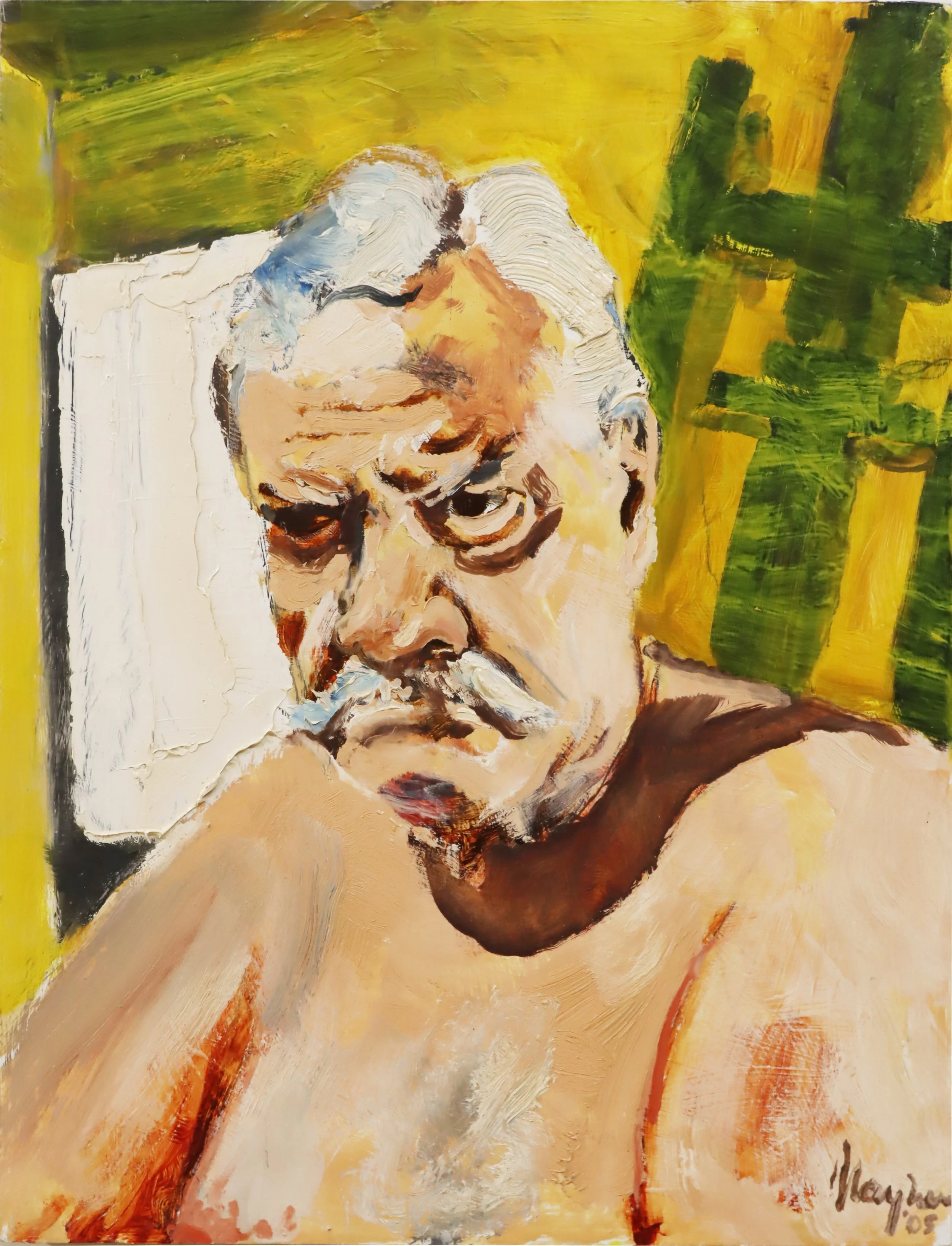
Gordon Rayner. Summer Studio. Self Portrait #4, 2005 oil on board 24" x 18" (price on request)
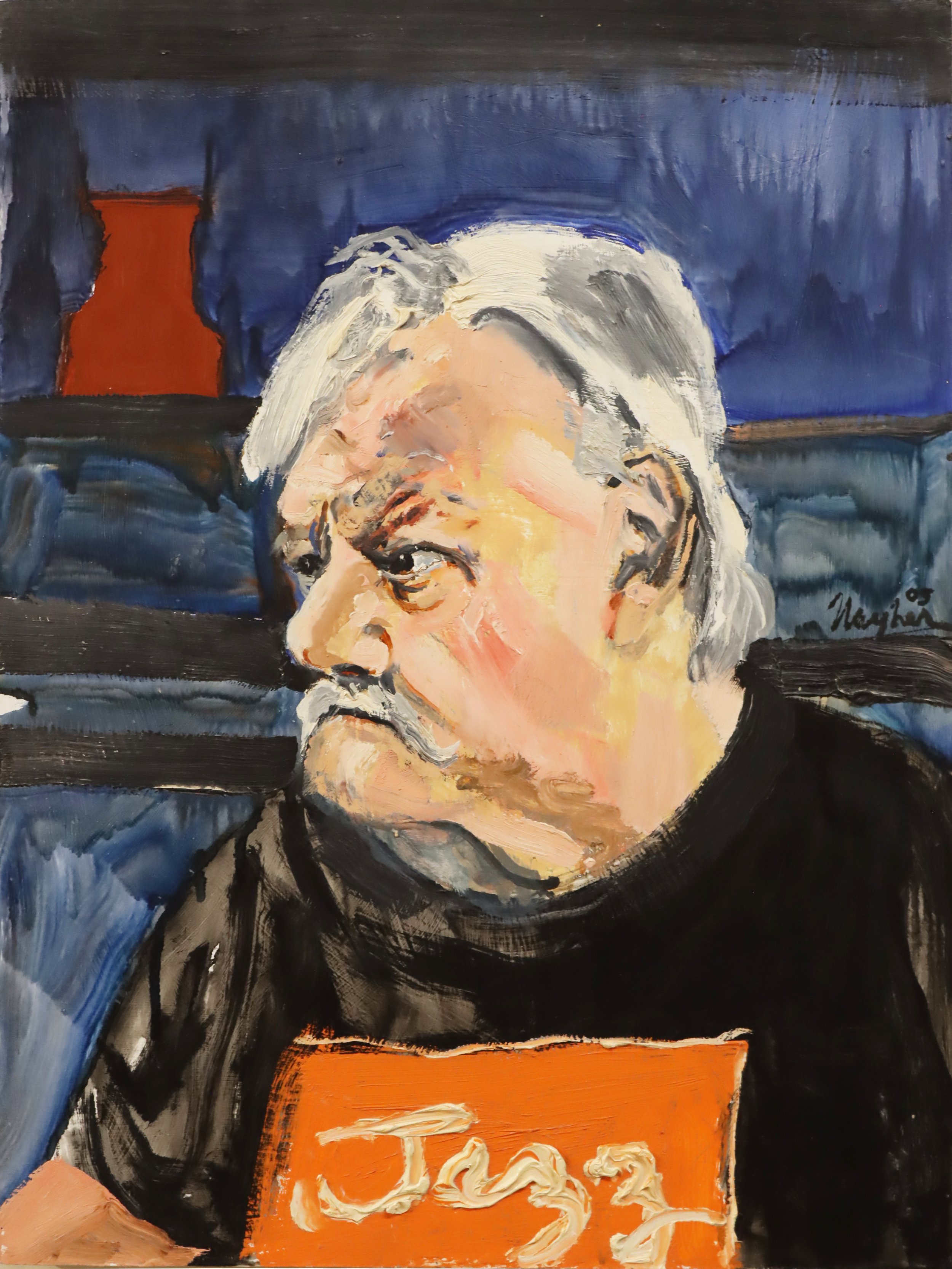
Gordon Rayner. Trading Ideas. Self Portrait #8, 2005 oil on board 24" x 18" (price on request)
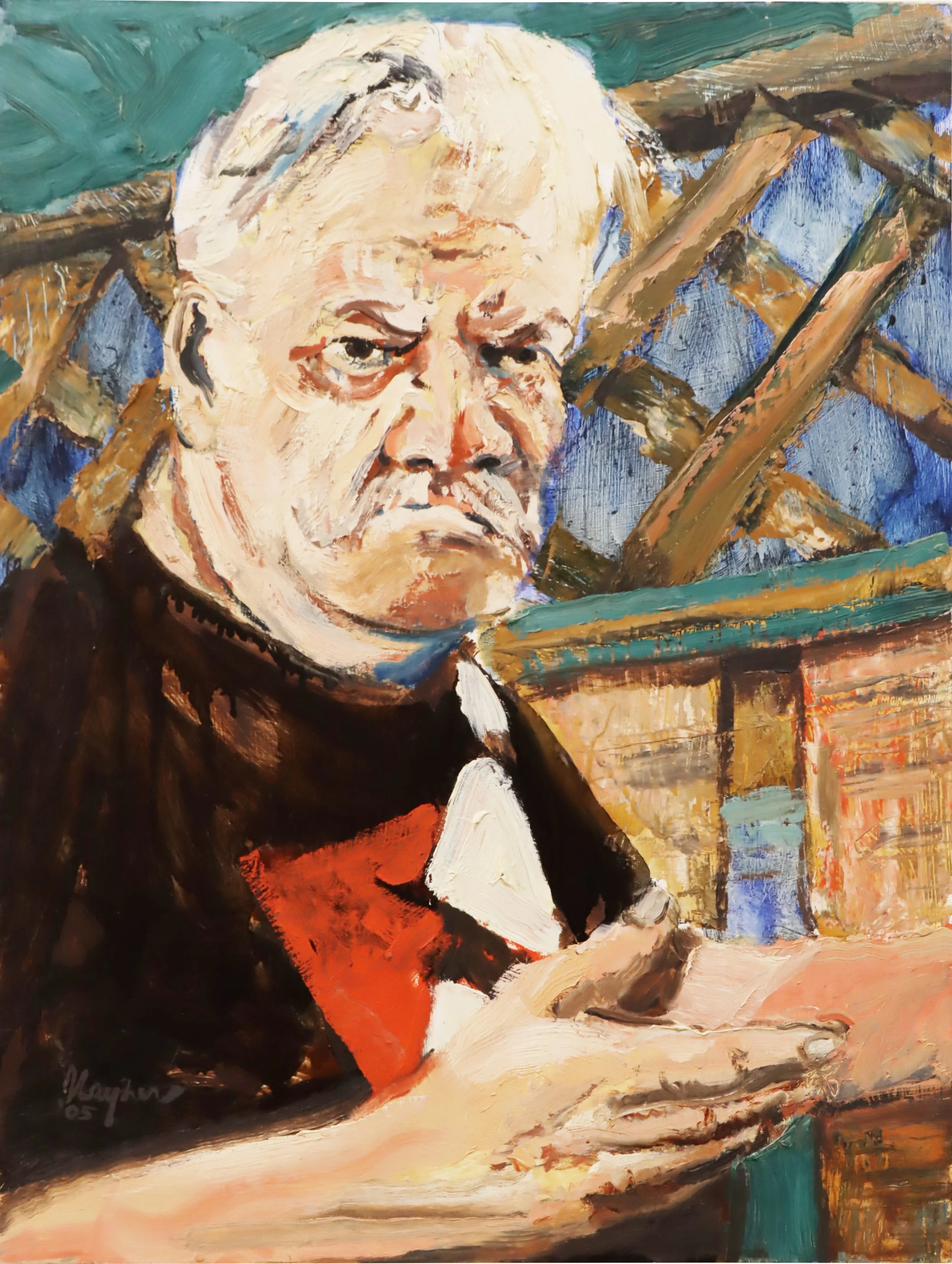
Gordon Rayner. Listening. Self Portrait #5, 2005 oil on board 24" x 18" (price on request)
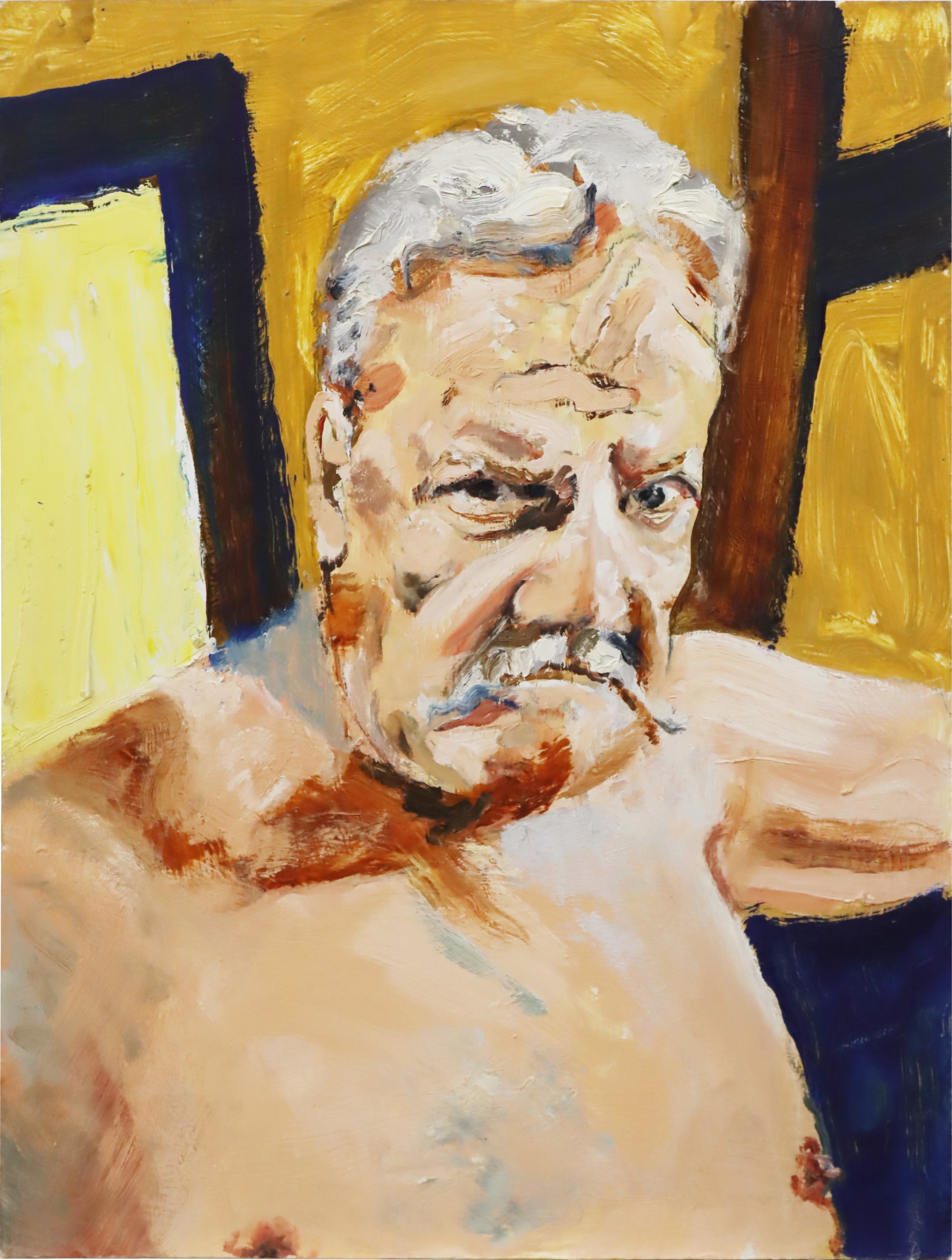
Gordon Rayner. Jazz Grump. Self Portrait #7, 2005 oil on board 24" x 18" (price on request)
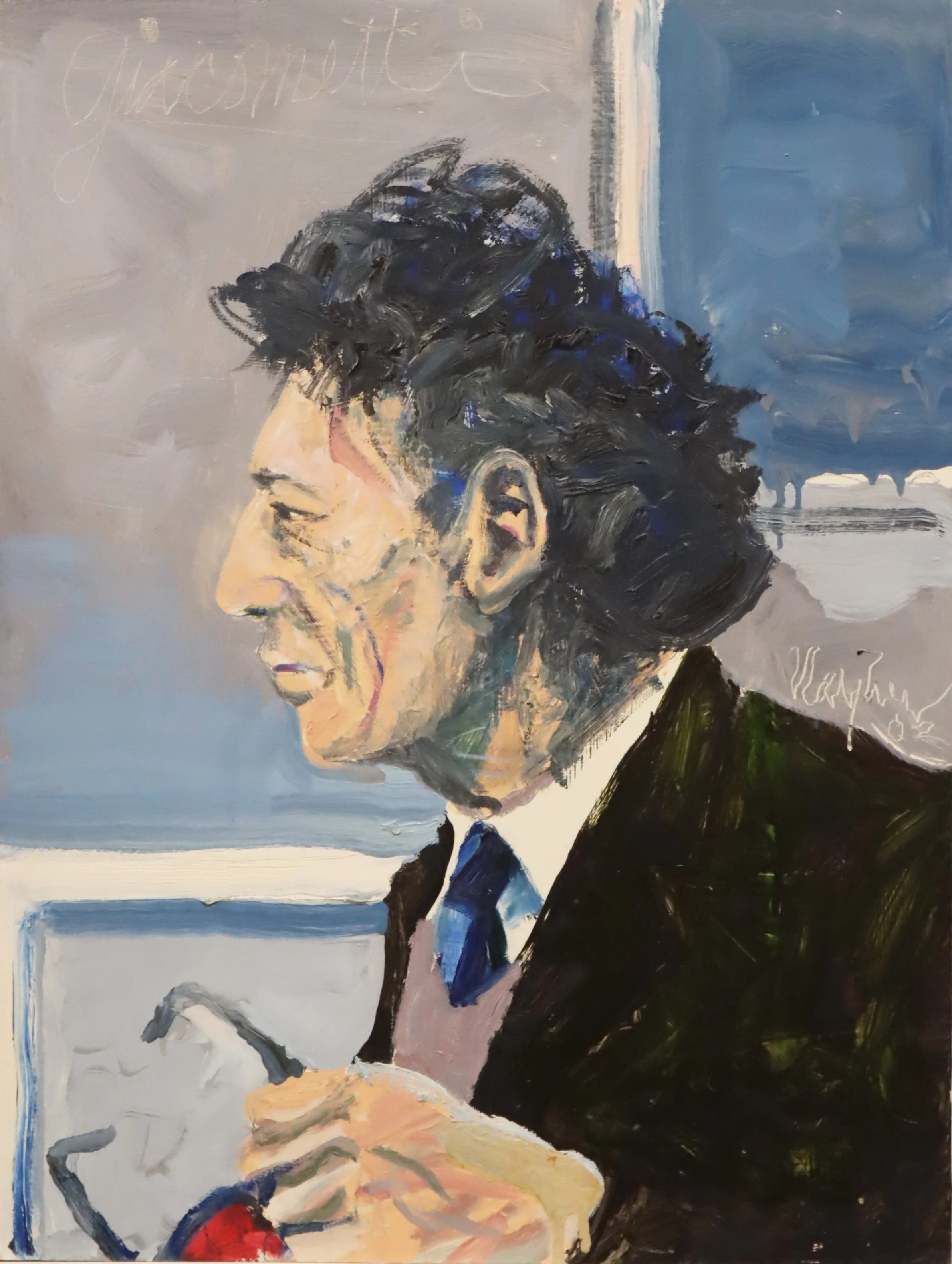
Gordon Rayner. Giacometti, 2005 oil on board 24" x 18" (price on request)
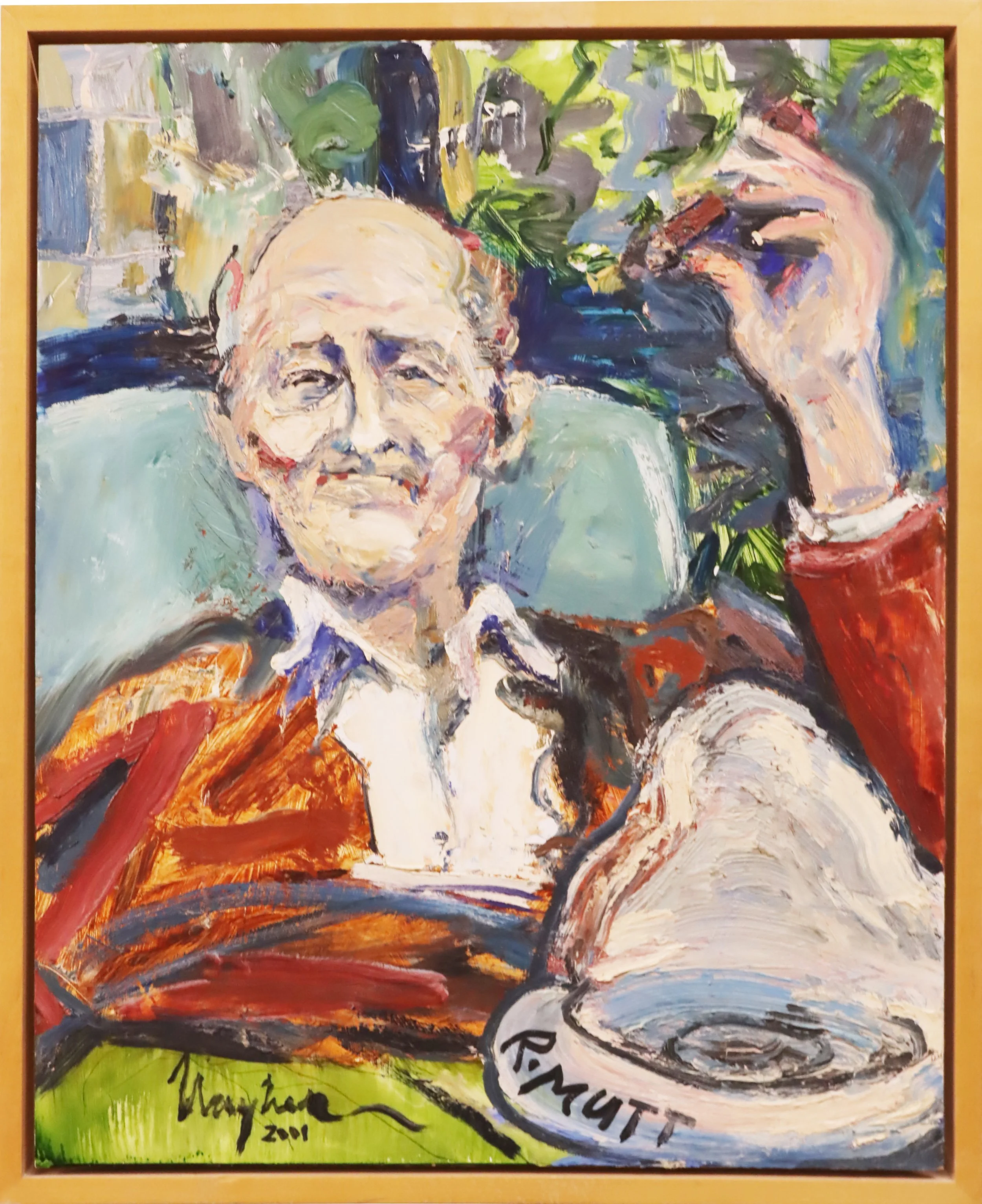
Gordon Rayner. Portrait of Marcel Duchamp, 2001 oil on board 36" x 24" (price on request)
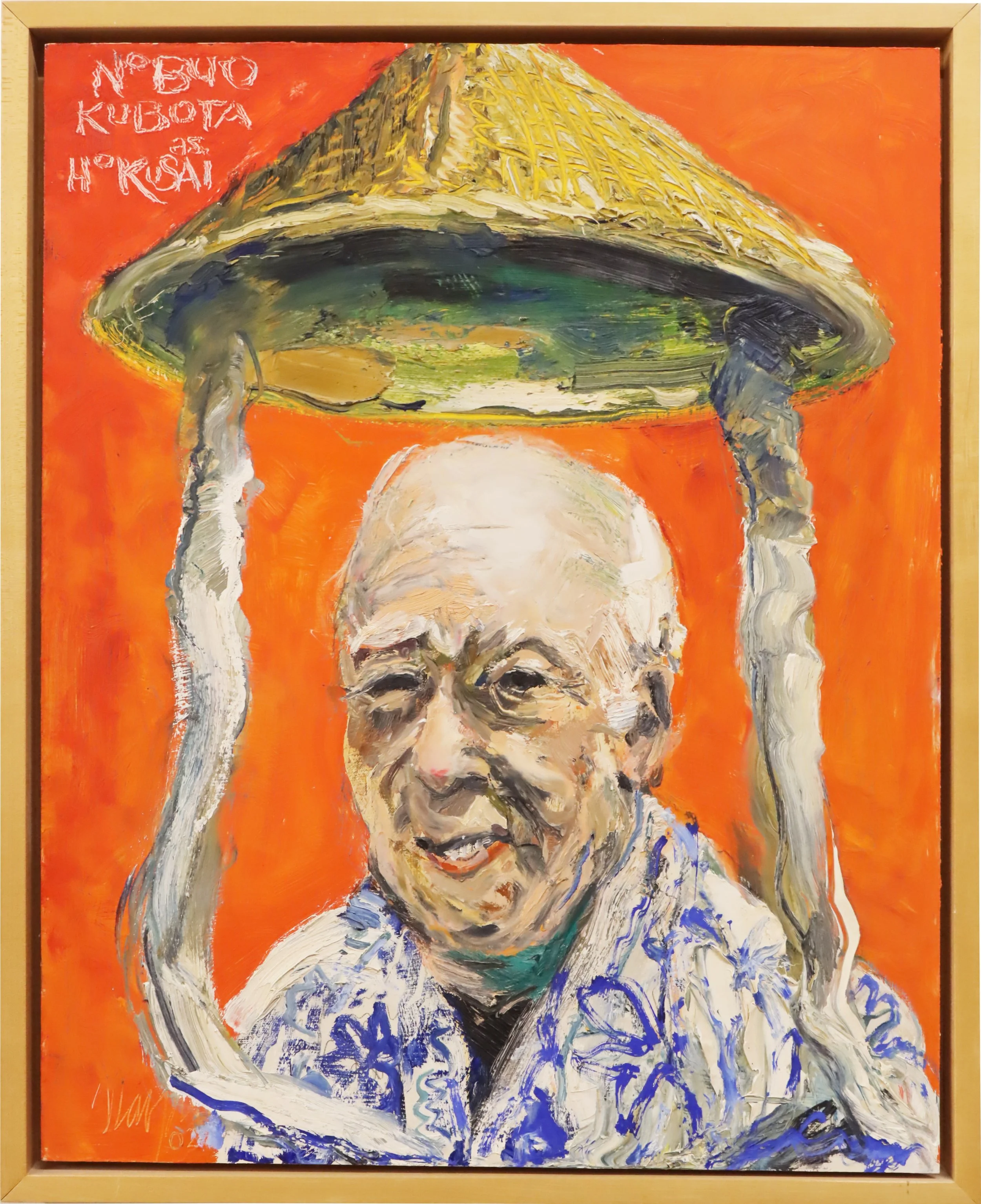
Gordon Rayner. Nobuo Kubota as Hokusai, 2002 oil on board 30" x 24" (price on request)
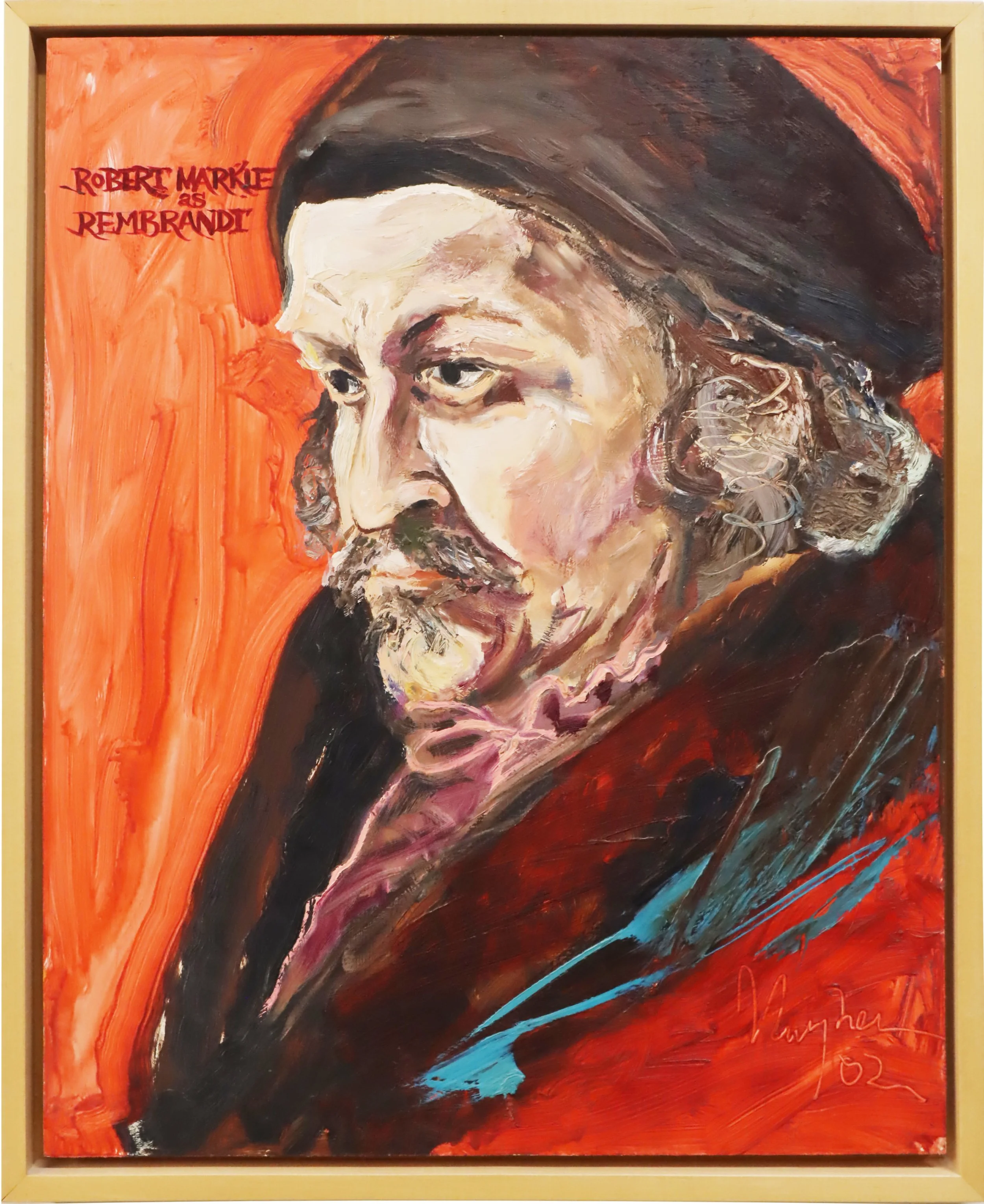
Gordon Rayner. Robert Markle as Rembrandt, 2002 oil on board 36" x 24" (price on request)
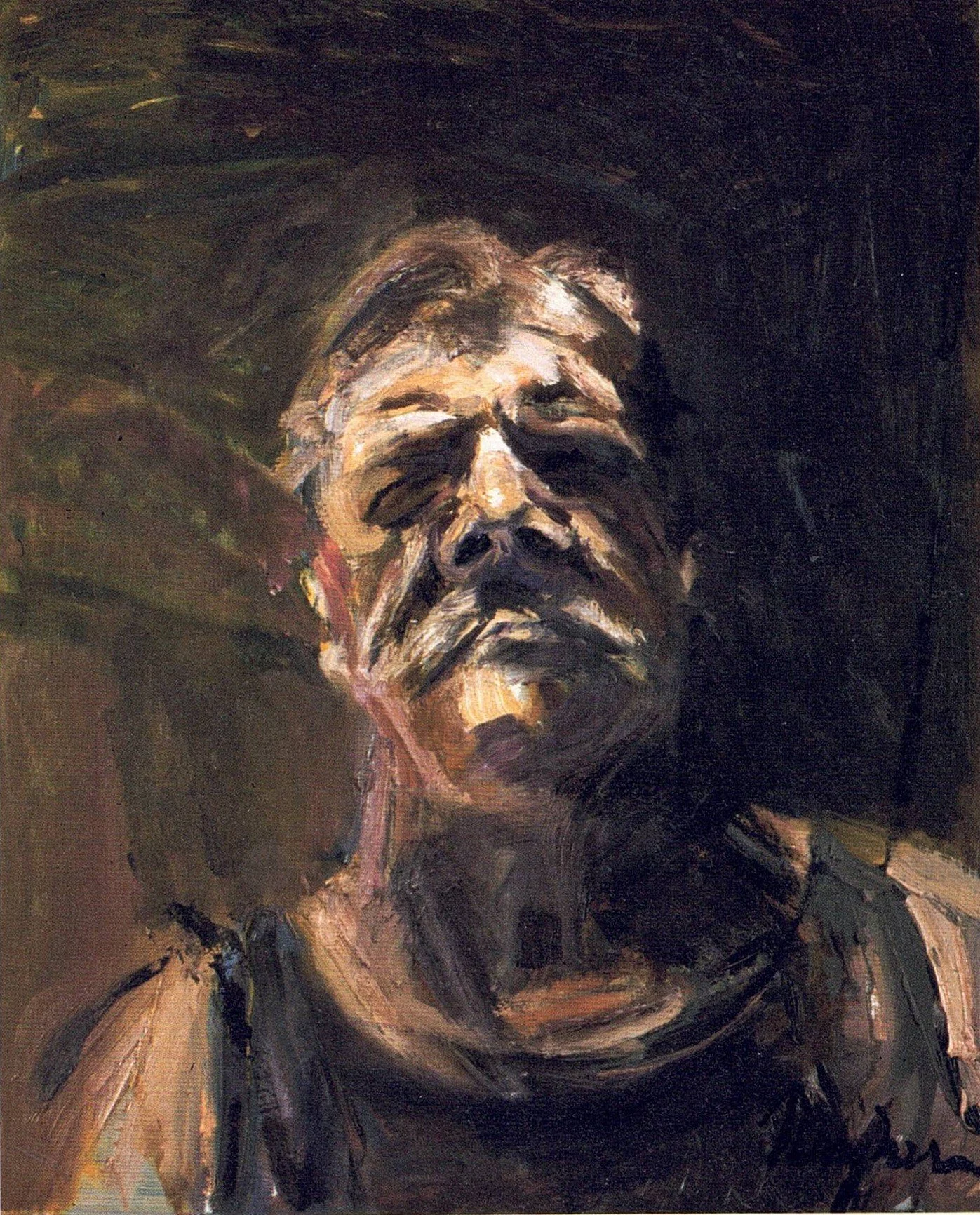
Self portrait, Gordon Rayner. Oil on panel, 200 30” x 24”
For collectors, Rayner represents one of the most compelling voices in Canadian modern art. His work occupies a rare space where emotional intensity, material invention, and historical significance converge. Owning a Rayner is to collect a piece of Canada’s postwar artistic transformation—art that carries the restless spirit of experimentation that helped define contemporary Canadian painting. His importance lies not in adherence to a single style, but in his lifelong commitment to pushing painting beyond its conventional boundaries.
Born on June 14, 1935, in Toronto, Rayner became a seminal figure in Canadian abstract expressionism and one of the country’s most adventurous postwar painters. Over a career spanning more than five decades, he developed a body of work recognized for its primal physicality, extraordinary colour sensibility, and fearless embrace of experimentation. His practice moved fluidly between neo-Dada constructions, expressive landscape interpretation, and psychologically charged figurative painting, reflecting a relentless curiosity rather than allegiance to any single movement.
Rayner’s artistic formation began under the influence of his father, a commercial artist and weekend painter, as well as his father’s close friend, Canadian artist Jack Bush. Before fully committing to painting, Rayner spent 17 years working in commercial art at Wookey, Bush and Winter, a period that refined his sense of design, composition, and visual immediacy. A turning point came in the mid-1950s after encountering the work of the Toronto abstraction movement, particularly the influence of Painters Eleven exhibitions and the expressive force of artists such as William Ronald, alongside exposure to major American abstract expressionists at institutions including the Hart House Gallery and the Buffalo AKG Art Museum.
During the late 1950s and early 1960s, Rayner became associated with Toronto’s neo-Dada experimentation, incorporating found materials directly into his paintings. These works challenged the separation between sculpture and painting, positioning surface, object, and gesture within a single expressive field. This period established his reputation as one of Canada’s most innovative and boundary-defying artists.
Beginning in 1966, the landscape of Magnetawan in northern Ontario became a central source of inspiration. The remote environment functioned less as a subject for representation and more as a catalyst for emotional and material exploration. Rayner’s northern landscape works are distinguished by thick gestural layering, intuitive composition, and occasional use of physical objects embedded within the surface, creating paintings that feel both geological and psychological in their presence.
Rayner exhibited with Toronto’s Isaacs Gallery alongside leading Canadian modernists including Michael Snow, Joyce Wieland, John Meredith, and Graham Coughtry, placing him firmly within the country’s most influential avant-garde artistic circles. By the 1980s, his focus shifted toward figurative painting, particularly the human form rendered with spiritual and psychological resonance. This evolution culminated in the “Oaxaca Suite,” created during extended periods in Oaxaca, Mexico, in the early 1990s, where Rayner fused expressive abstraction with introspective figuration and inventive self-portraiture.
Often described as the “carpenter” of contemporary Canadian art, Rayner was known for integrating found objects into highly charged painterly surfaces, constructing works that vibrate with physical and emotional energy. Major public commissions, including the Tempo mural at Toronto’s St. Clair West subway station, reflect the public dimension of his artistic vision.
His significance is further affirmed by a major touring retrospective organized by the Robert McLaughlin Gallery in 1979, which travelled to twelve Canadian institutions. His works are held in major public collections worldwide, including the National Gallery of Canada, the Art Gallery of Ontario, the Montreal Museum of Fine Arts, the Museum of Modern Art in New York, and the Philadelphia Museum of Art.
Throughout his career, Rayner resisted artistic complacency, continually reinventing his visual language. His late self-portraits reveal a striking honesty—unflinching, luminous, and deeply human—embodying the artist’s lifelong pursuit of creative risk. He was actively working in his Toronto studio when he passed away in 2010.
Rayner’s legacy endures as a testament to creative courage within Canadian modernism. His work remains sought after for its emotional force, historical importance, and radical commitment to material and conceptual exploration, ensuring his place among Canada’s most influential postwar painters.
Collector’s Perspective: Works by Gordon Rayner hold a respected and steadily performing position in the Canadian modern art market. Auction results typically range from approximately CAD 2,500 to 25,000, with larger acrylic and mixed-media works achieving the upper end of the spectrum. Mid-sized comparable works are generally listed in the CAD 8,000 to 9,500 range, placing Pub Table #2 comfortably within current market expectations. Rayner’s value lies in his lasting historical importance and strong institutional validation rather than short-term market speculation. Works connected to his neo-Dada experimentation, landscape interpretation, or figurative period are particularly desirable. Pub Table #2 offers collectors an accessible opportunity to acquire a meaningful example of Canadian postwar modernism, combining historical resonance with the artist’s signature material energy and expressive presence.
For images and acquisition details, please contact us.
"The Art of Gord Rayner" hosted by Ron Moore (1985)
Discover the bold vision of Gordon Rayner—one of Canada’s most original and uncompromising painters—in this rare 1985 documentary, The Art of Gord Rayner, hosted by Ron Moore and recently digitized for the Peel Region archives. This compelling film offers an intimate look into Rayner’s early influences, from his father’s commercial art studio to the magnetic pull of Toronto’s vibrant avant-garde scene, tracing how he evolved into a key figure in Canadian abstract expressionism.