KOSSO ELOUL
(b. Murom, Russia in 1920 -1995)
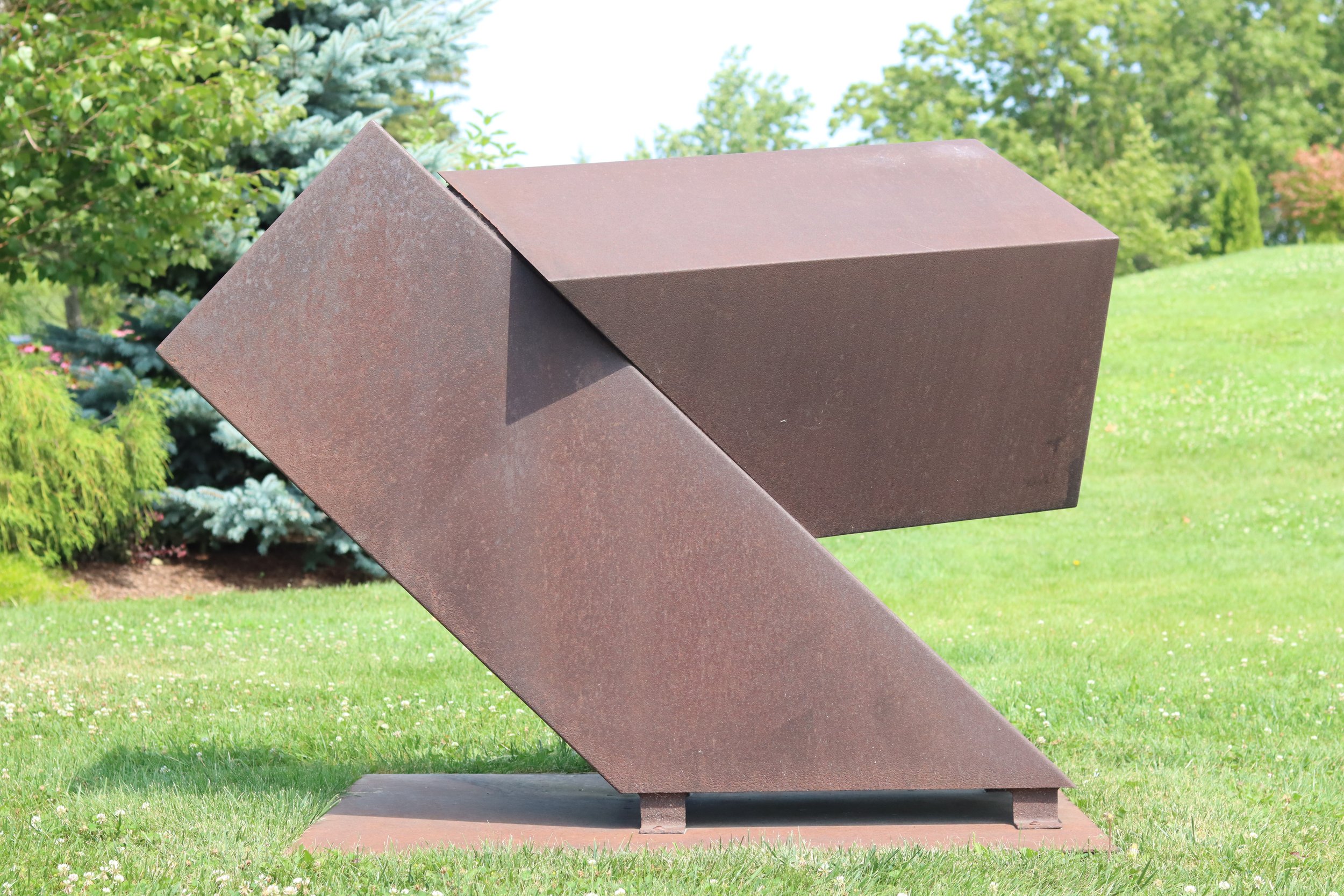
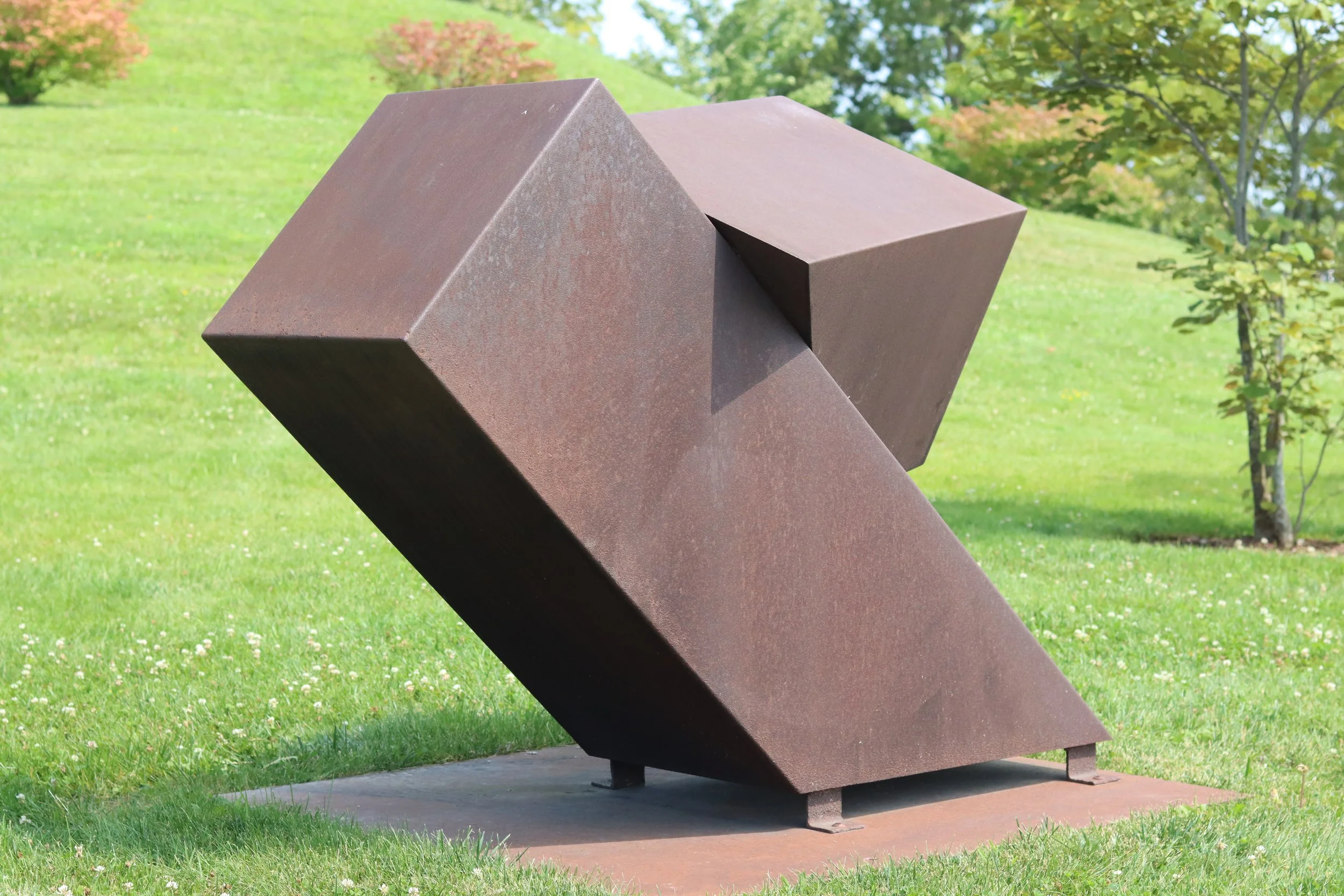
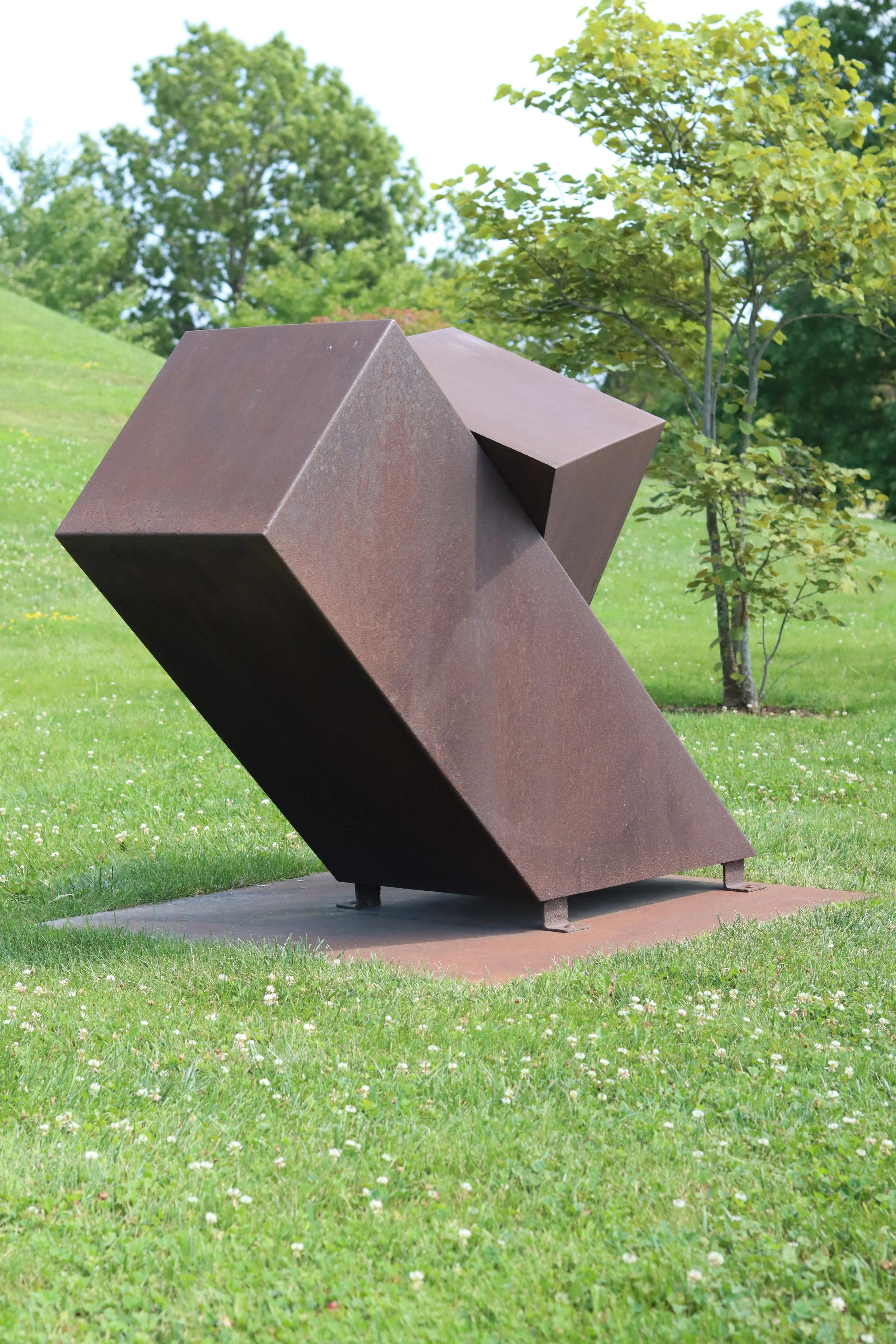
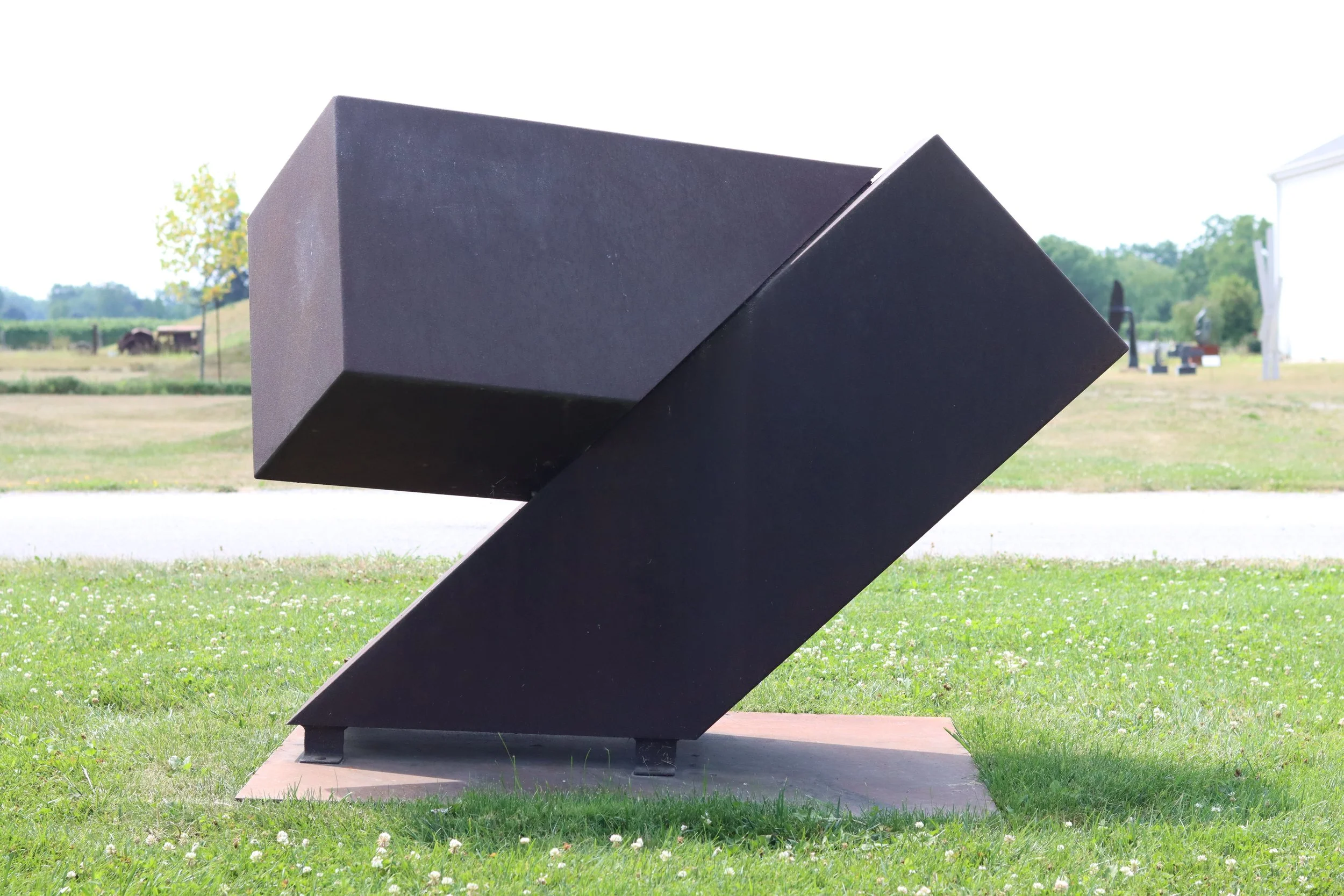
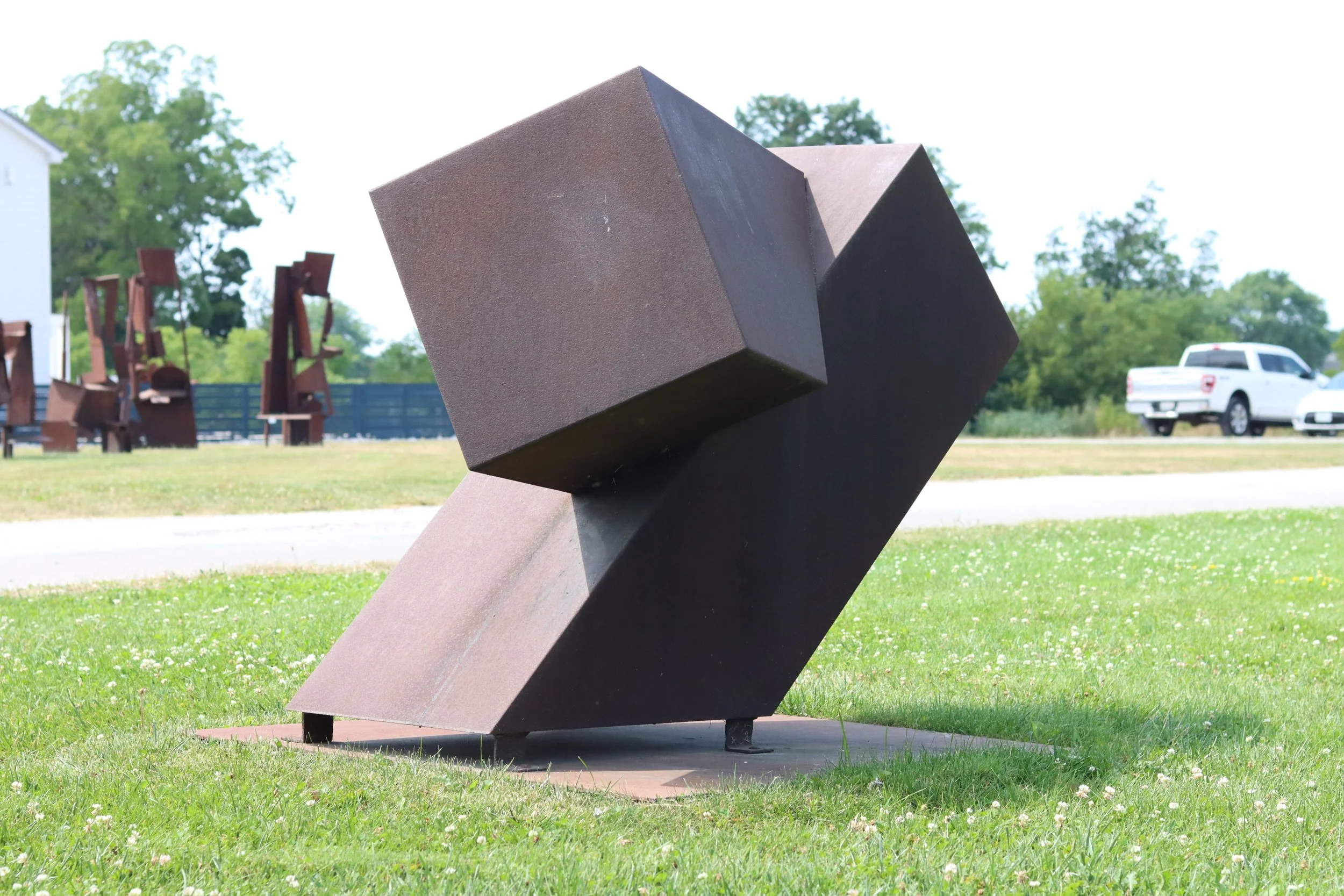
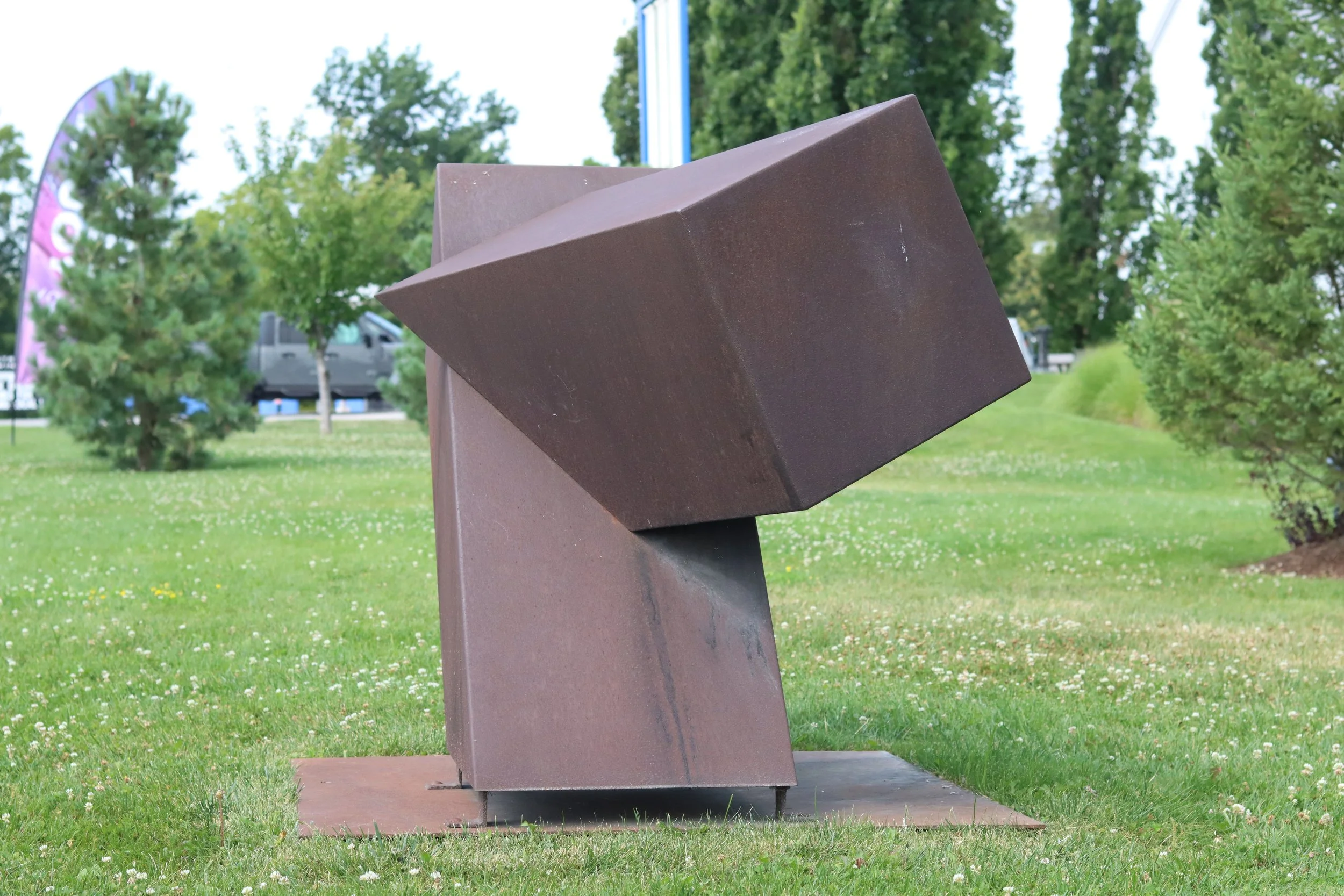
Kosso Eloul. Untited Commission Work, 1987 corten steel 48" x 47" x 64" INQUIRE
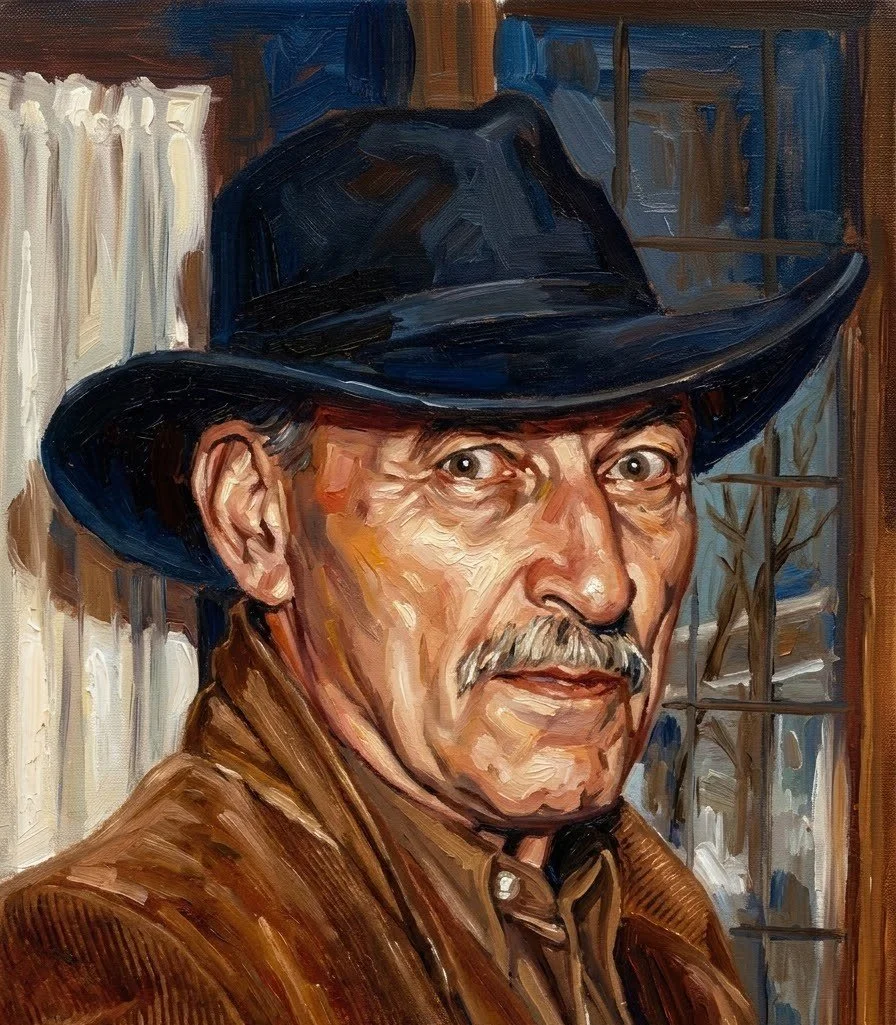
Kosso Eloul holds an important place in the development of post-war Canadian modern sculpture, contributing to the transformation of public art across the country through his monumental minimalist forms and architectural approach to space. For collectors, acquiring a work by Eloul represents the opportunity to own a piece of Canadian art history shaped during a period when public sculpture was evolving from figurative monumentality toward abstract environmental expression. His sculptures are increasingly valued for their historical significance, their refined technical execution, and their ability to remain visually and culturally relevant decades after creation.
Trained at the School of the Art Institute of Chicago, where he studied under influences associated with Frank Lloyd Wright’s architectural modernism and Bauhaus-era design philosophy, Eloul developed a sculptural language defined by balance, movement, and structural clarity. His work reflects the intellectual climate of mid-20th-century abstraction, combining geometric precision with a philosophical interest in how sculpture interacts with landscape, light, and human perception. Rather than focusing on ornamentation, he pursued essential form, creating compositions that rely on the dynamic relationship between mass and void.
Eloul became a central figure in Israeli and Canadian post-war art movements, including participation in the New Horizons abstraction group in Israel. His international recognition was established early when he represented Israel at the 29th Venice Biennale in 1959 and participated in major sculpture symposia throughout Europe, North America, and the Middle East. These experiences helped position him within the global dialogue surrounding modernist public sculpture during a period of rapid artistic and cultural transformation.
After settling in Toronto in the late 1960s with his wife, Canadian abstract painter Rita Letendre, Eloul became one of the most influential sculptors shaping Canada’s urban artistic landscape. During his decades in the city, he created more than forty permanent public sculptures, many installed in civic spaces, parks, and institutional environments. His work helped define Toronto’s modern visual identity, demonstrating how abstract sculpture could function as a living component of urban experience.
Eloul’s major works, including pieces such as Meeting Place in Toronto and Eternal Flame at the Yad Vashem – Holocaust Memorial Center, illustrate his ability to translate memory, history, and civic meaning into abstract geometric language. Rather than depicting events directly, he used vertical thrusts, balanced planes, and controlled spatial tension to evoke themes of continuity, remembrance, and human resilience.
Critics frequently noted that simplicity was the defining strength of Eloul’s sculptural philosophy. His works typically consist of two or three large metal elements arranged to suggest movement or energetic equilibrium. The apparent reduction of form was not a limitation but a deliberate strategy to allow the sculpture to communicate through proportion, surface, and spatial dialogue. Many of his sculptures possess a subtle playfulness beneath their monumental presence, balancing intellectual restraint with emotional accessibility.
Eloul worked primarily in aluminum, steel, and polished stone, developing ideas through three-dimensional maquettes before scaling them into large outdoor commissions. This method allowed him to preserve structural integrity while adapting works to specific environments. His preference for direct fabrication and clean junctions produced surfaces that interact beautifully with natural light, giving his sculptures a quiet but powerful visual rhythm throughout changing weather and seasonal conditions.
His exhibition history includes major institutions such as the Jewish Museum – New York, Art Gallery of Ontario, and the Art Gallery of Hamilton, confirming his position within the international modernist sculpture movement.
Eloul passed away in Toronto in 1995, leaving behind a legacy that continues to influence contemporary public art discourse. His sculptures remain admired for their architectural presence, technical purity, and philosophical approach to space, ensuring his place among Canada’s most important modern sculptors.
Collector’s Perspective:
Today, interest in Eloul’s sculpture continues to grow among collectors who focus on post-war Canadian modernism and the development of large-scale public abstraction. His work occupies a distinctive historical position, bridging international modernist sculpture traditions with the expansion of Canadian civic art during the mid-to-late twentieth century. Because many of his most important sculptures were created as site-specific commissions, examples that have entered private hands with clear documentation and provenance are relatively uncommon, adding to their desirability within the secondary market.
Eloul’s sculptures are valued not only for their visual and architectural presence but also as tangible records of a transformative period in Canadian cultural history. Collectors are increasingly drawn to the way his works embody the shift from figurative monumentality toward environmental abstraction, where sculpture functions as part of lived space rather than as a detached object. Owning one of his works represents participation in the legacy of Canadian urban sculpture, where artistic innovation, public life, and historical memory converge.
For images and acquisition details, please contact us.