
ALEX CAMERON
(b. Parry Sound, Ontario1947–2025)
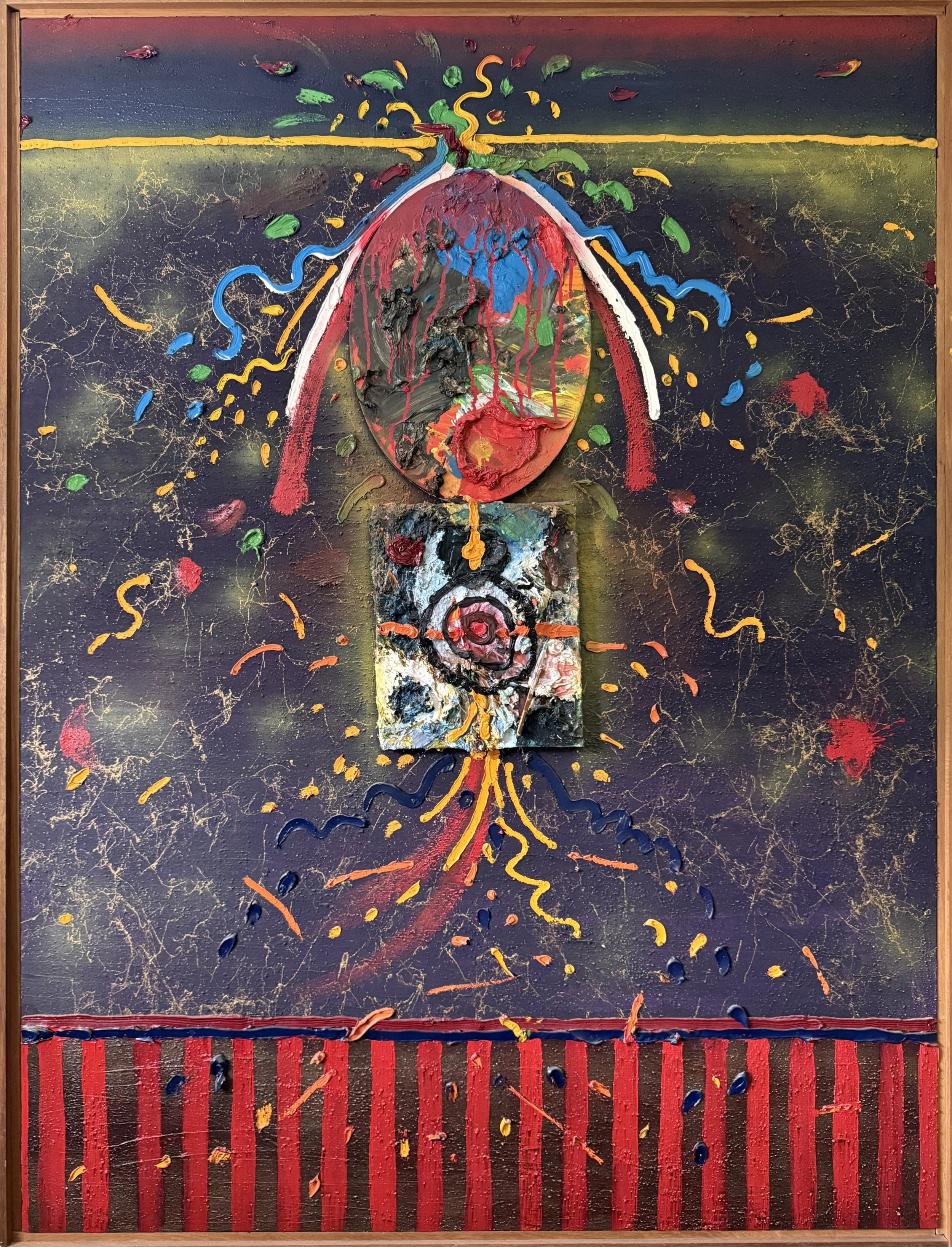
Alex Cameron Red Glance, 1996 oil on panel 60" x 45" $20,000

***SOLD*** Alex Cameron Orange Crimson Bliss, 2004 oil on canvas (framed) 38" x 30" $8,500
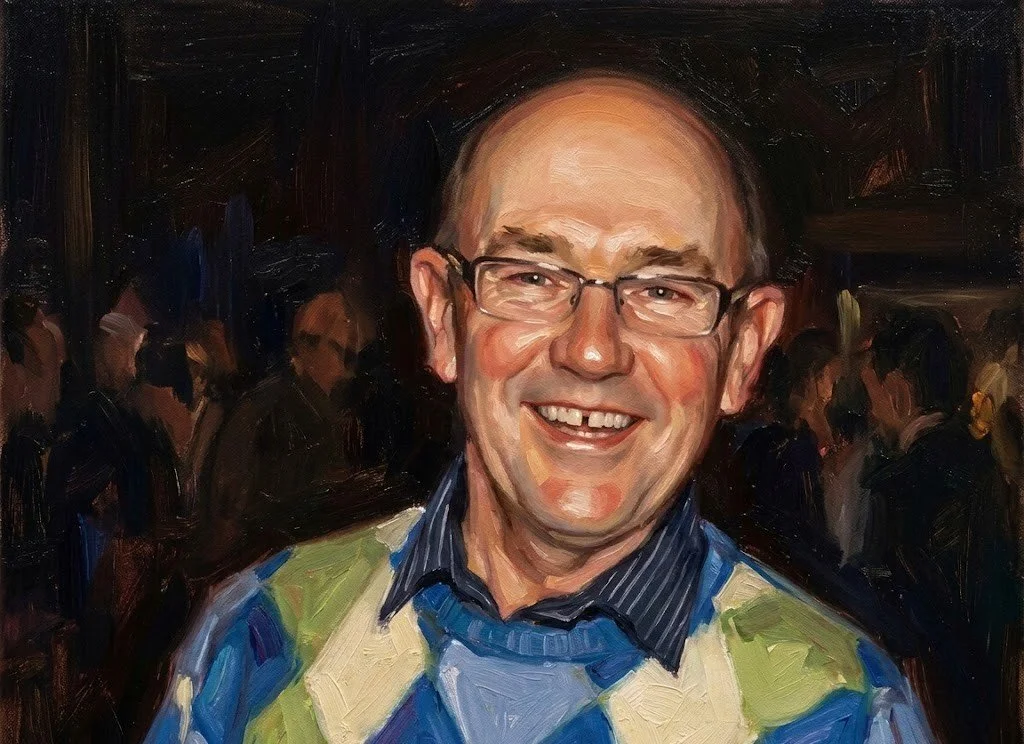
Alex Cameron stands as one of Canada’s most important contemporary painters associated with the third generation of abstract artists in Toronto, a visionary whose work has made an enduring contribution to Canadian art and continues to captivate collectors and institutions alike. Celebrated for his luminous use of colour, sculptural impasto, and masterful balance between abstraction and landscape, Cameron’s paintings are highly sought after for their formal sophistication, emotional resonance, and rare ability to bring the Canadian environment vividly to life on canvas. His works are found in major collections including the Art Gallery of Ontario, the Royal Bank of Canada, the Office of the Prime Minister, and even Her Majesty Queen Elizabeth II’s Silver Jubilee Art Collection, reflecting both his national significance and international recognition.
Raised in the Georgian Bay region of Parry Sound, Ontario, Cameron was immersed in art from an early age, influenced by a painter mother and a designer uncle in New York City, where he first encountered American Abstract Expressionism. These early experiences shaped his lifelong fascination with colour, texture, and the dynamic possibilities of paint. He studied at the New School of Art in Toronto under Graham Coughtry, Gordon Rayner, Dennis Burton, and Robert Markle, developing a disciplined approach that combined meticulous preparatory drawing with expressive, painterly execution. From 1972 to 1976, he worked as a studio assistant to Jack Bush, whose lyrical abstraction and bold impasto techniques profoundly influenced Cameron, and through whom he forged an enduring connection with the influential critic Clement Greenberg.
Cameron began exhibiting publicly in 1971 at A Space in Toronto, launching a prolific career that spanned more than five decades with over forty solo exhibitions. His early works featured flat, vibrant colour fields animated by sketch-like linear elements, evolving in the 1980s into semi-abstract landscapes with layered spatial depth. Drawing inspiration from Tom Thomson, the Group of Seven, Frank Stella, and the Painters Eleven, Cameron’s landscapes combined suggestion of natural forms—trees, shorelines, water—with an abstraction that emphasized rhythm, line, and colour. His paintings are structured in three visual planes—foreground, middle distance, and sky—yet they transcend literal depiction, turning the Canadian landscape into a stage for colour, movement, and visual poetry.
Cameron’s technique was as remarkable as his vision. Applying paint directly from the tube in finger-width ropes, dashes, and squiggles, he created canvases with extraordinary tactile and visual energy. He was a prolific artist, often completing large-scale works in a single day, while always naming his paintings only after their completion. His process combined plein air observation, memory, and imagination, informed by extensive travels across Canada, India, and Nepal, but he never painted from photographs, preferring to rely on the mind’s eye to translate landscapes into vibrant, living compositions.
In addition to painting, Cameron lived a life of energy and dedication. Between 1975 and 1987, he worked as a mechanic and tuner for motorcycle racer Miles Baldwin, contributing to numerous podium finishes for “Team Milo,” and he maintained a close creative friendship with fellow artist David Bolduc. Even after a debilitating stroke in 2012 limited the use of his right arm, Cameron adapted, mastering painting with his left hand without ever losing his characteristic vibrancy or joy.
On June 4, 2025, after a morning spent painting in his Toronto studio, Cameron suffered a serious injury from a fall and passed away on June 17, surrounded by his wife Lorna Hawrysh and family. The large canvas he was working on, Big Dipper, remains unfinished, a poignant testament to his enduring commitment to art.
Collector’s Perspective:
For collectors, Alex Cameron represents a defining voice in postwar Canadian painting. His vibrant abstractions and semi-abstract landscapes merge modernist structure with a powerful sense of Canadian place, offering both emotional resonance and strong historical significance. His work is held in major collections including the Art Gallery of Ontario and the Queen’s Silver Jubilee Collection, reflecting sustained institutional recognition.
Since his passing in 2025, Cameron’s inventory has become finite, reinforcing long-term collector interest. Over the past decade, his market sat in the solid mid- to upper-tier range for Canadian contemporary painting, with auction results generally spanning the low hundreds to roughly USD 10,000–11,000, with larger works and key-period paintings achieving the strongest performance. Representation by galleries such as Bau-Xi and Oeno helped maintain steady demand, and works with provenance, exhibition history, or larger scale continue to be most sought after. As supply decreases, Cameron’s market is positioned for gradual value stability and selective appreciation over time.
For images and acquisition details, please contact us.