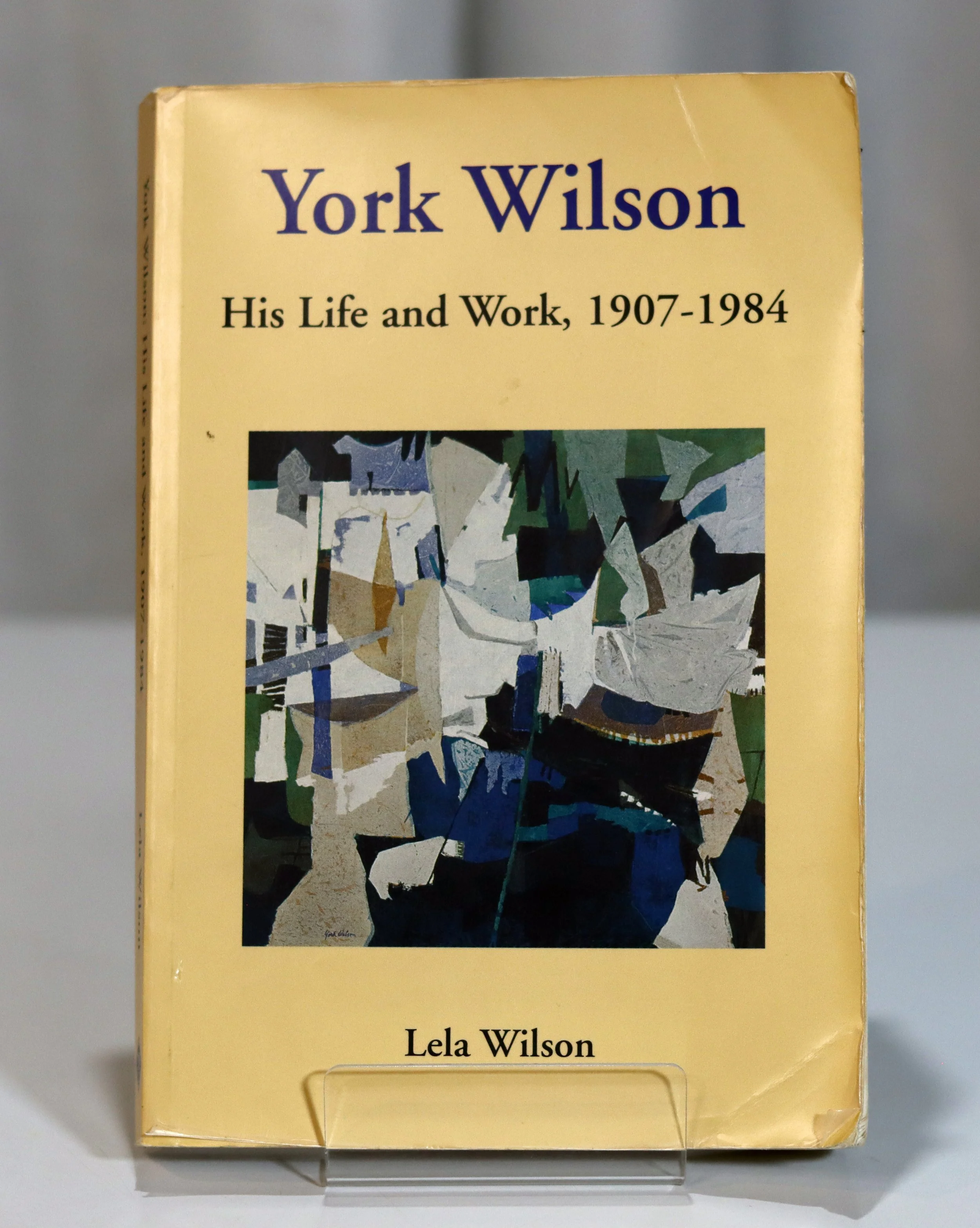
YORK WILSON
(1907-1984)
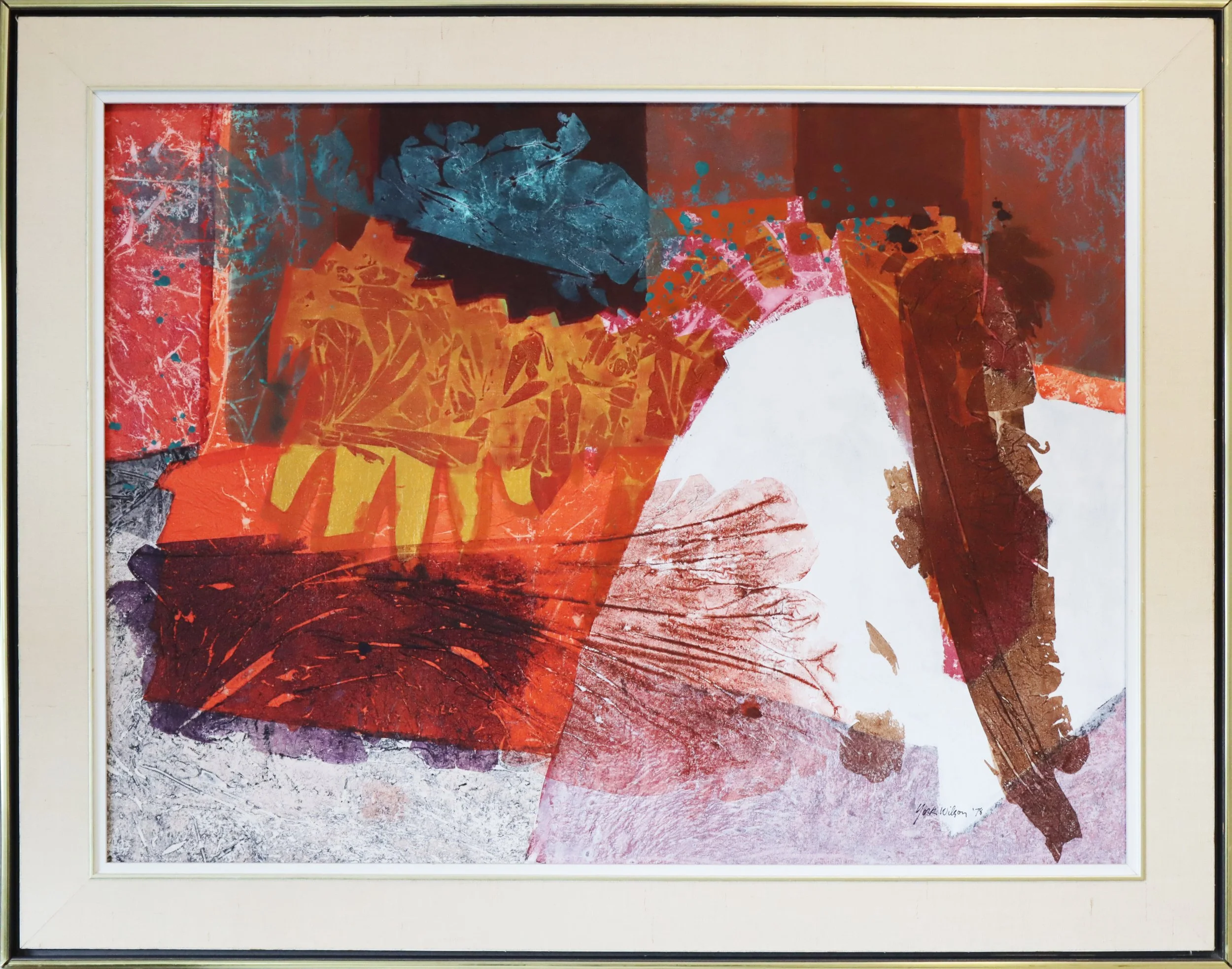
York Wilson. Tribute of Garlands, 1978 oil on canvas 32" x 24" $22,000
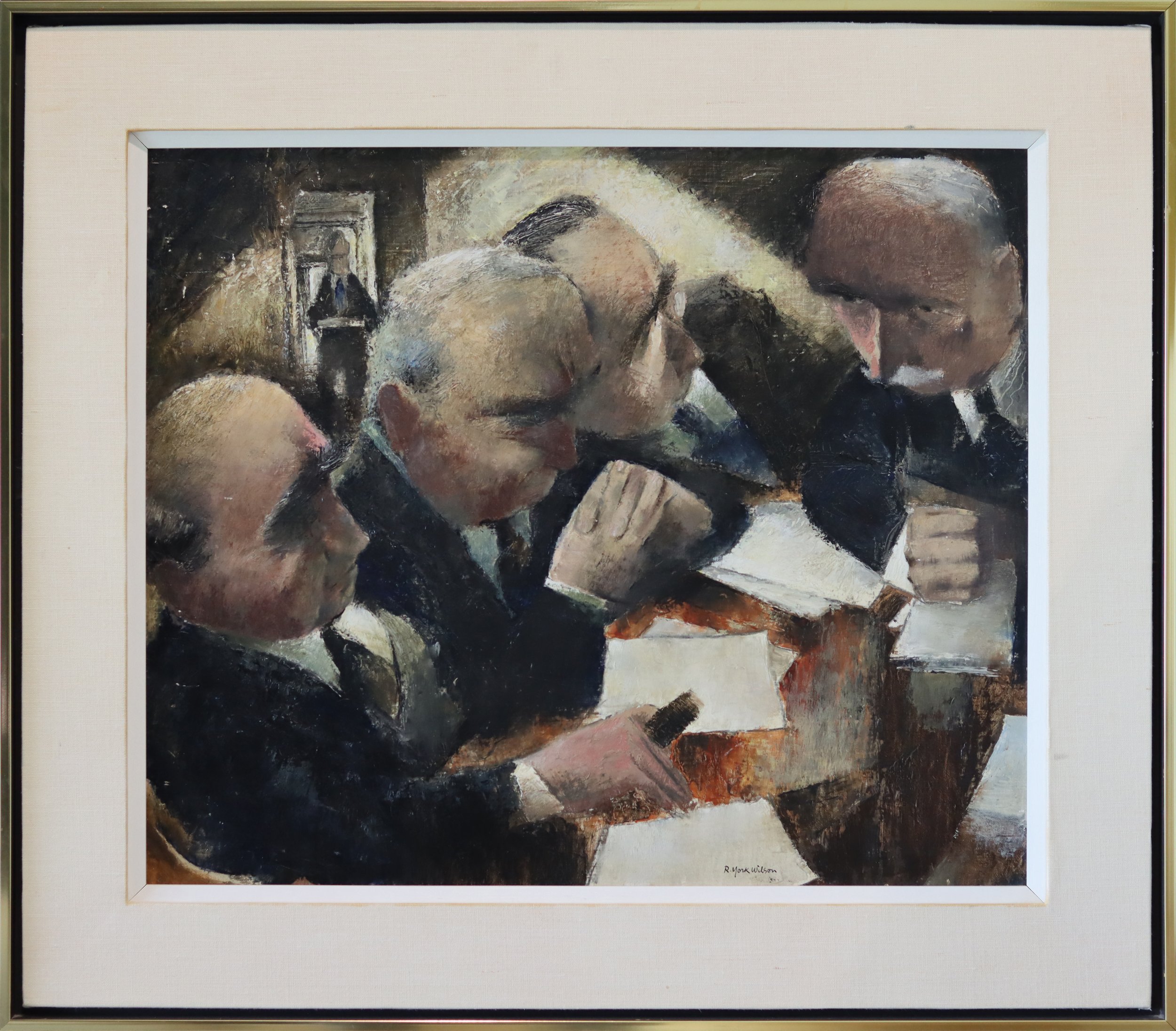
York Wilson. The Conference, 1949 oil on canvas 20" x 24" $7,000

Ronald York Wilson, known professionally as R. York Wilson or simply York Wilson, is one of Canada’s most important 20th-century painters and muralists. His career spanned commercial illustration, social-realist satire, lyrical abstraction, and monumental architectural murals, marking him as a versatile and innovative force in Canadian art. Collecting a York Wilson work is an opportunity to own a piece of Canada’s cultural history—a connection to an artist who shaped the visual identity of postwar architecture, pioneered new painting techniques, and left a lasting mark on Canadian modernism.
Born in Toronto in 1907, Wilson trained at Central Technical School and began his career in commercial studios, working alongside notable figures such as A.J. Casson and Charles Comfort. By the 1930s, he had established himself as a freelance illustrator while developing an independent painting practice. His early works, often social-realist and satirical, captured urban life, theatre, and the human condition with wit and sensitivity. Pieces like Welfare Worker (1941) reveal both his technical skill and his engagement with Canadian society at a pivotal moment.
Wilson’s career shifted dramatically in 1949 during a six-month stay in San Miguel de Allende, Mexico. There he met revolutionary muralist David Alfaro Siqueiros and began experimenting with industrial paints such as pyroxylin, which he adapted for both mural and easel work. This period marked his full commitment to independent art and introduced him to the large-scale mural projects that would define his legacy.
Wilson’s murals became iconic fixtures of Canadian modern architecture. His Story of Oil (1957–58) for the Imperial Oil Building in Toronto was the largest mural in Canada at the time and a landmark in the integration of art and architecture. The Seven Lively Arts mural (1960) at the O’Keefe Centre further demonstrated his ambition and innovation, blending bold abstraction with narrative, and even involved a historic legal battle that set precedent for independent artists in Canada. His contributions extended to major public commissions for McGill University, Bell Canada, Queen’s Park, Carleton University, and hospitals and airports across the country.
Alongside his mural work, Wilson evolved a distinctive style of lyrical abstraction in the 1950s and a bold Geometric period in the late 1960s, producing hard-edge, striped compositions that combined color, rhythm, and design in ways that were ahead of their time. These works reveal his continuous experimentation, technical mastery, and commitment to pushing Canadian art forward.
Collecting York Wilson is more than acquiring a painting; it is an investment in a nationally significant artist whose work bridges multiple movements, from social realism to modernist abstraction, and whose murals remain enduring symbols of Canada’s postwar optimism. His works are held in major institutions, including the National Gallery of Canada, Art Gallery of Ontario, Montreal Museum of Fine Arts, and the McMichael Canadian Art Collection, as well as in international collections in Paris and Mexico City.
York Wilson’s career reflects innovation, ambition, and a uniquely Canadian vision. For collectors, his work represents not only aesthetic mastery but also a direct connection to the evolution of Canadian art in the 20th century—an opportunity to own a piece of the country’s cultural heritage.
Collector’s Perspective:
York Wilson is one of Canada’s most important 20th-century artists, whose work spans social realism, lyrical abstraction, and monumental murals. Collecting his work offers both aesthetic and historical value, connecting the owner to a key figure in Canadian modernism. His secondary market remains strong, with sustained interest in early social-realist pieces, mid-century abstractions, and geometric works. Wilson’s murals continue to define Toronto’s architectural landscape, and his paintings are held in major institutions including the National Gallery of Canada, Art Gallery of Ontario, and McMichael Canadian Art Collection. Acquiring a York Wilson is not just an investment in art—it is a way to own a piece of Canada’s cultural heritage.
BOOK AVAILABLE