
DAVID URBAN
(b. 1966 Toronto, ON)

David Urban. Infanta, 2005 oil on canvas 32" x 39" INQUIRE

David Urban. Argument in Isolation, 2005 oil on canvas 48" x 36" INQUIRE

David Urban. Argument in Isolation, 2005 oil on canvas with a black frame 36" x 48" INQUIRE

David Urban. Shore, 2002 oil on canvas 36" x 48" INQUIRE

David Urban. Treats for the Nightwalker Abys #2, 2004 oil on canvas 93 1/4" x 78" INQUIRE

David Urban. Viewer of the Blue Abstraction, 2015 Acrylic on canvas stretched on plywood 84" x 72" INQUIRE

David Urban. Bather and Reflection, 2016 oil on canvas 84" x 72" INQUIRE

David Urban. Indicating the Grove, 2015 Acrylic on canvas stretched on plywood 84" x 72" INQUIRE

David Urban. Body and Shadow # 2 (Turning Away), 1995 oil on canvas stretched on plywood 84" x 72" INQUIRE
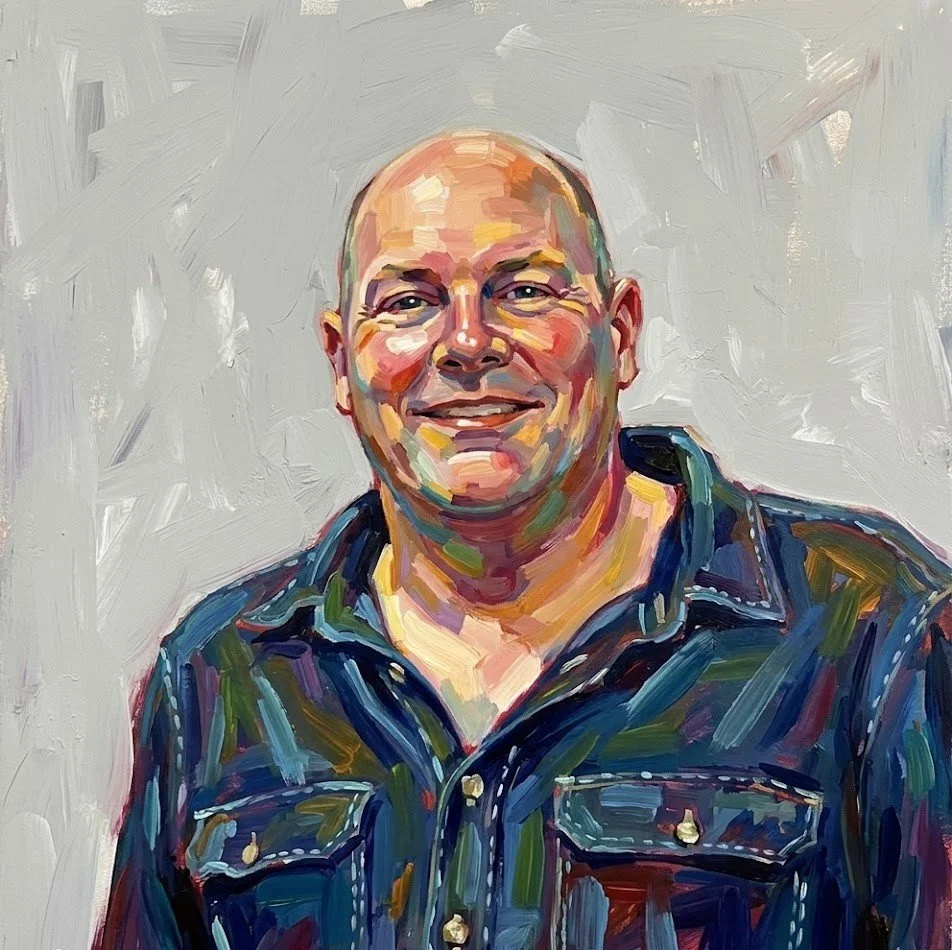
David Urban is widely regarded as one of the most important contemporary abstract painters working in Canada today. For collectors, his work represents a significant chapter in the ongoing evolution of Canadian abstraction—one that bridges the legacy of postwar modernism with the intellectual and expressive concerns of a new generation. Over the past three decades, Urban has built a reputation for paintings that combine rigorous knowledge of art history with an intuitive, lyrical visual language. His work occupies an important position within the Canadian art landscape, extending the dialogue of abstraction established by earlier modernists while reimagining it through bold colour, rhythmic structure, and deeply personal mark-making. As institutional recognition continues to strengthen, Urban’s paintings have become increasingly sought after by collectors who value both historical relevance and artistic originality.
Born in Toronto in 1966, Urban pursued an unusually interdisciplinary academic path that reflects the intellectual depth of his practice. He studied poetry and painting at York University, graduating in 1989 with both a Bachelor of Fine Arts in Painting and Drawing and a Bachelor of Arts in English Literature. He later completed a Master’s degree in English Literature and Creative Writing at University of Windsor in 1991, studying with acclaimed Canadian writer Alistair MacLeod, before earning a Master of Fine Arts in Painting from University of Guelph in 1993. This rare combination of literary and visual training would shape Urban’s approach to painting, infusing his work with both intellectual rigor and poetic sensibility.
Urban gained immediate attention following his first solo exhibition at Toronto’s Sable-Castelli Gallery in 1994, which sold out and established him as one of the most compelling emerging painters of his generation. Critics quickly recognized the distinctive qualities of his work—bold, expressive lines moving across luminous colour fields, dynamic compositions that suggested fragments of landscape, still life, or architecture without fully resolving into representation. Early comparisons were drawn to the structural concerns of modernists such as Paul Cézanne and the painterly strategies of contemporary abstract artist Jonathan Lasker, yet Urban’s work quickly developed a highly recognizable and independent visual language.
At the heart of Urban’s practice is an exploration of the complex relationship between abstraction and representation. His paintings are built through energetic collisions of line, shape, and colour, often layered over atmospheric colour-field grounds. Gestural marks and looping forms traverse the canvas with an almost musical rhythm, creating compositions that feel both carefully structured and spontaneously improvised. These rhythmic geometries sometimes evoke beams, boards, or architectural frameworks, while expressive lines wander freely across textured surfaces, hinting at figures or landscapes before dissolving again into abstraction.
Urban’s work reflects a deep engagement with the history and methodology of painting. He has long studied the work of early modernist innovators such as Piet Mondrian and Henri Matisse, whose investigations of colour, space, and structure continue to resonate within his practice. Yet rather than simply referencing these traditions, Urban expands them—reworking modernist ideas through a contemporary lens that embraces improvisation, playfulness, and expressive freedom.
Art historian Roald Nasgaard, in his landmark study Abstract Painting in Canada, described Urban’s paintings as reconstructing “the possibility of belief in art as a transformative power, an actual usable force that enables us to understand the world.” This observation underscores the philosophical dimension of Urban’s practice. His paintings do not merely explore formal relationships; they seek to reconnect viewers with the imaginative and emotional possibilities of art.
Urban’s wide-ranging creative interests also inform his painting. A poet and accomplished musician who plays several instruments, he approaches the canvas with a sensitivity to rhythm and improvisation that parallels musical composition. His gestural marks often resemble visual notations, suggesting the cadence of music or the structure of language. Literature, childhood memory, and the primacy of imagination frequently surface within his work, giving his paintings a poetic resonance that distinguishes them from more purely formal approaches to abstraction.
In addition to his studio practice, Urban has contributed significantly to the broader discourse surrounding contemporary painting. He has written essays and delivered lectures on art, including the influential essay Painting’s Radiant Array published in Border Crossings. In 2002 he curated Painters 15, an exhibition of established Canadian artists presented at the Shanghai Museum of Art and later at the Museum of Contemporary Canadian Art in Toronto, helping introduce international audiences to the vitality of Canadian abstraction.
Urban has presented more than thirty solo exhibitions and participated in numerous group exhibitions across Canada and internationally. His work has been widely discussed in publications including Art in America and Canadian Art, reflecting sustained critical engagement with his practice. In 2012 he was appointed Koerner Artist-in-Residence at Queen's University, further demonstrating his influence as both an artist and thinker within the Canadian art community.
Today, Urban’s paintings are represented in major public and private collections, including the National Gallery of Canada, the Art Gallery of Ontario, and the Musée des beaux-arts de Montréal. He is also a member of the Royal Canadian Academy of Arts.
David Urban’s work offers a rare convergence of intellectual depth, painterly vitality, and historical significance. His paintings extend the trajectory of Canadian abstraction while maintaining a deeply personal voice—works that reward long contemplation and stand as lasting contributions to the country’s artistic legacy. As his career continues to mature and institutional recognition grows, Urban’s paintings remain compelling acquisitions for collectors seeking to represent the strength and evolution of contemporary Canadian painting.
Collector’s Perspective:
For collectors, David Urban represents a rare combination of artistic distinction and market stability. His career has been carefully nurtured by gallery representation and international promotion, particularly in Europe, establishing a measured and credible pricing trajectory. Urban’s bold, abstract works—marked by rhythmic geometries, dynamic brushwork, and vibrant color—have earned him a respected place in Canadian contemporary art and inclusion in major institutions such as the National Gallery of Canada.
As a mature, internationally recognized artist, Urban’s paintings offer long-term value for collectors seeking works that are both culturally significant and visually compelling. His career reflects thoughtful curation and sustained institutional support, making his work a meaningful addition to any collection of contemporary Canadian abstraction.
For images and acquisition details, please contact us.
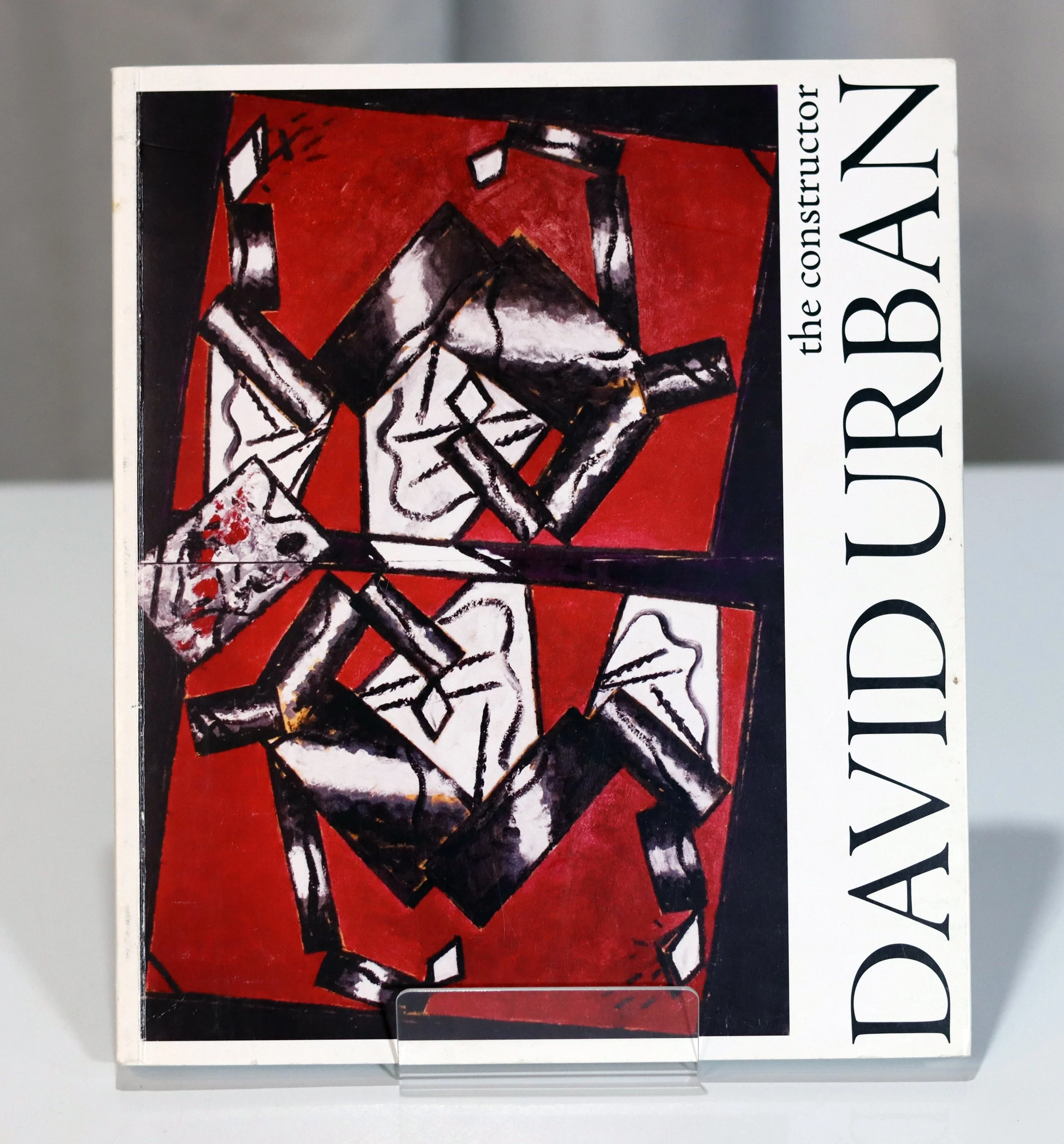
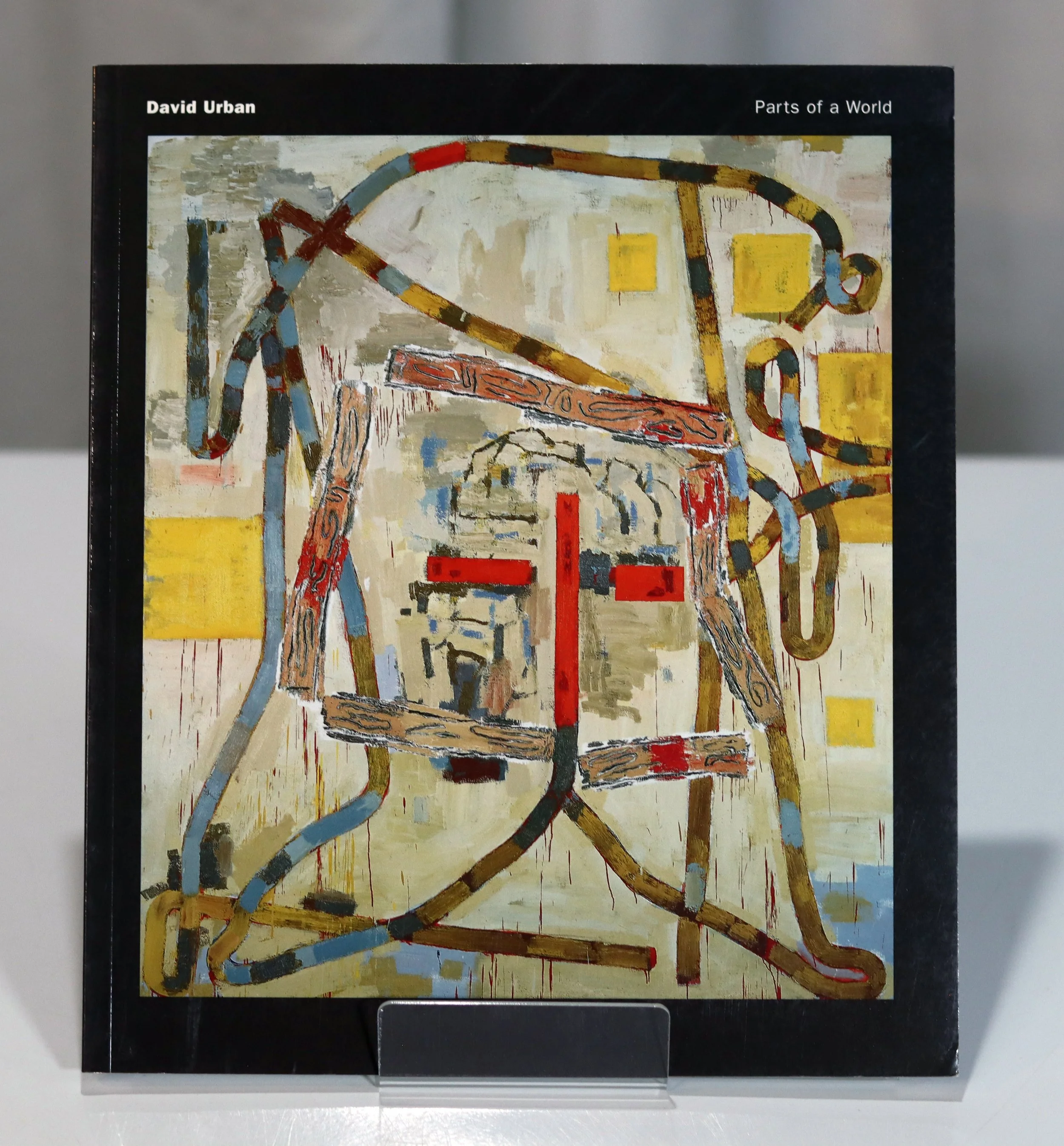
BOOKS AVAILABLE
Publications:
There are numerous articles and publications on Canadian artist David Urban, who is a widely recognized figure in contemporary Canadian painting. He is celebrated for his vibrant, rhythmically structured paintings that explore the interplay between abstraction and representation.
His work and career have been covered in major publications, including Art in America and Canadian Art magazine.
Urban has also written essays about painting and contemporary art for Border Crossings magazine.
https://www.magentafoundation.org/magazine/david-urban/
https://lfpress.com/2016/09/27/on-the-canvas-david-urban-returns-to-roots
https://collection.thegoldfarbgallery.ca/personality/david-urban/29819
https://ago.ca/events/passion-kathleen-munn-tour-canadian-artist-david-urban
https://www.gibsongallery.com/exhibitions/david-urban/
https://www.corkingallery.com/viewing-room/4-david-urban-revisiting-motifs/
https://www.cbc.ca/news/entertainment/canadian-art-at-toronto-s-td-centre-1.3214566
https://www.tusslemagazine.com/david-urban
https://canadianart.ca/reviews/david-urbans-timely-paintings-impress-at-corkin-gallery/