
CHAKA CHIKODZI
(b. Zimbabwe, Africa)
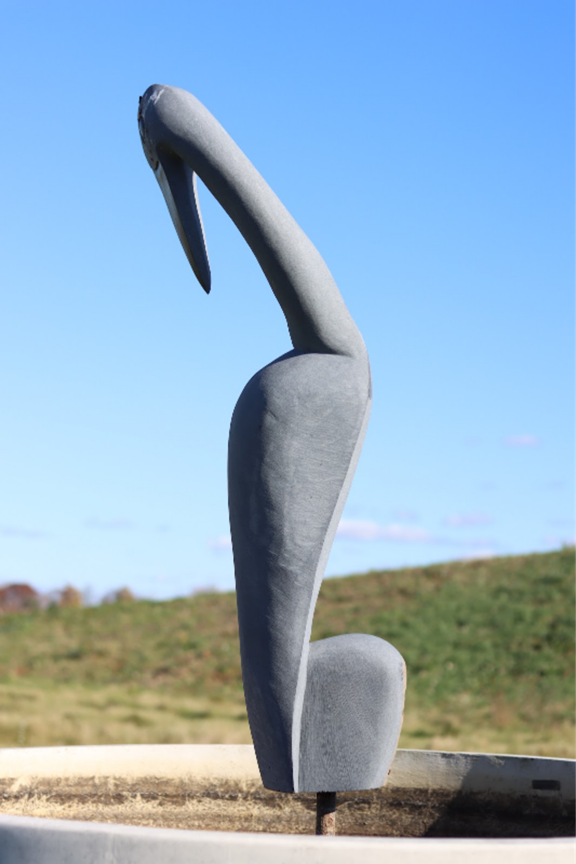
Chaka Chikodzi. Calling Bird, 2020 springstone 60.2"h x 15"d x 30"w INQUIRE

Chaka Chikodzi. Whale Tail, 2016 springstone 60"h x 15"d x 30"w INQUIRE
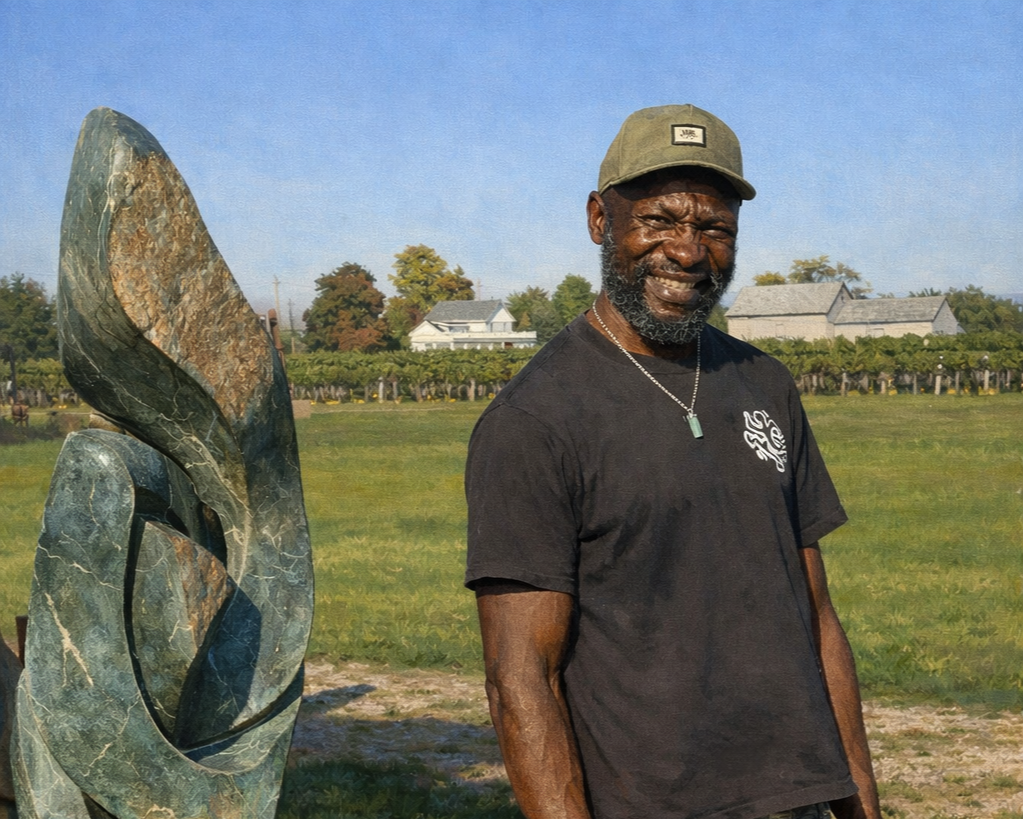
For collectors, owning a Chaka Chikodzi sculpture is to possess more than a work of art—it is to hold a story of culture, ancestry, and the deep time of the earth itself. Each piece embodies the luminous beauty of Zimbabwean springstone, carved with reverence and guided by billions of years of geological memory. Chikodzi’s sculptures bridge continents and histories, offering collectors a tangible connection to a rich cultural lineage while serving as striking, contemporary objects of contemplation.
Chaka Chikodzi is a Zimbabwean-Canadian sculptor based in Katarokwi/Kingston, Ontario. He works exclusively with volcanic springstone from Zimbabwe’s Great Dyke, a rare, mineral-rich geological formation stretching 500 kilometres across the country. Hand-selected for color, grain, and tonal depth, each stone is transported to Canada, where Chikodzi carves slowly and intuitively, allowing the rock’s natural patterns and history to guide the form. His work balances organic abstraction with architectural stability, revealing stones polished to highlight their interior life and ancestral resonance.
Born in Zimbabwe, Chikodzi began carving at thirteen in Mvurwi, learning from family in a tradition that sees stone as both material and inheritance. Immigrating to Canada in the early 2000s, he rebuilt his practice while maintaining strong ties to Zimbabwe, drawing inspiration from geological and cultural sites such as the Great Zimbabwe ruins, the Matobo Hills, and ancient rock painting sites. His sculptures reflect this dialogue between land, identity, and time, transforming geological history into forms that embody continuity, memory, and transcendence.
Collectors are drawn not only to the rich colors of cobalt blues, deep purples, and oxidized greens but to the philosophical grounding of the work. Owning a Chikodzi sculpture is to engage with a piece of earth shaped by both natural forces and human hands—a bridge between continents, eras, and stories.
Beyond his studio practice, Chikodzi is committed to education and community. He founded Tawineyi Community School in rural Zimbabwe, fostering literacy, traditional arts, and cultural continuity. His sculptures have been exhibited across Canada, including at the Agnes Etherington Art Centre and The Artist Project in Toronto, and are held in private collections internationally. In 2020, he received Kingston’s Mayor’s Arts Award (Creator Award), recognizing both artistic excellence and community impact.
Chaka Chikodzi continues to live and work between Zimbabwe and Canada, creating sculptures that speak of continuity—between land and maker, past and present, Africa and Canada. For collectors, his work is a rare opportunity to own art that is timeless, culturally profound, and deeply human.
Collector’s Perspective:
Zimbabwean stone sculpture gained international recognition in the 1950s and 1960s through the Shona movement, with artists like Sylvester Mubayi and Bernard Matemera carving serpentine from the Great Dyke into spiritually grounded forms. Economic shifts later spread the tradition globally while preserving its cultural roots.
Chaka Chikodzi, trained in Zimbabwe and based in Canada for over two decades, continues this legacy, carving Great Dyke stone to explore migration, identity, and tradition. His work appeals to collectors seeking both authenticity and contemporary cross-cultural narratives, with strong demand for masterfully crafted Zimbabwean sculpture.
For images and acquisition details, please contact us.
Chaka Chikodzi
A film by Naomi Okabe and Tess Girard and commissioned by Agnes Etherington Art Centre 2022. Screened at both Kingston Canadian Film Festival and Belville Downtown DocFest. 2023 Winner of the Bests Local Short at the Kingston Canadian Film Festival.
This film is produced by Naomi Okabe and Tess Girard with Chaka Chikodzi, and is commissioned and distributed by Agnes Etherington Art Centre (2022).
Funded by the Elizabeth L. Gordon Art Program, a program of the Walter and Duncan Gordon Foundation and administered by the Ontario Arts Foundation and by the Museums Assistance Program, Digital Access to Heritage grant.