
When Fire Meets Form: A Curator's Reflection on a Conversation Between Two Artists
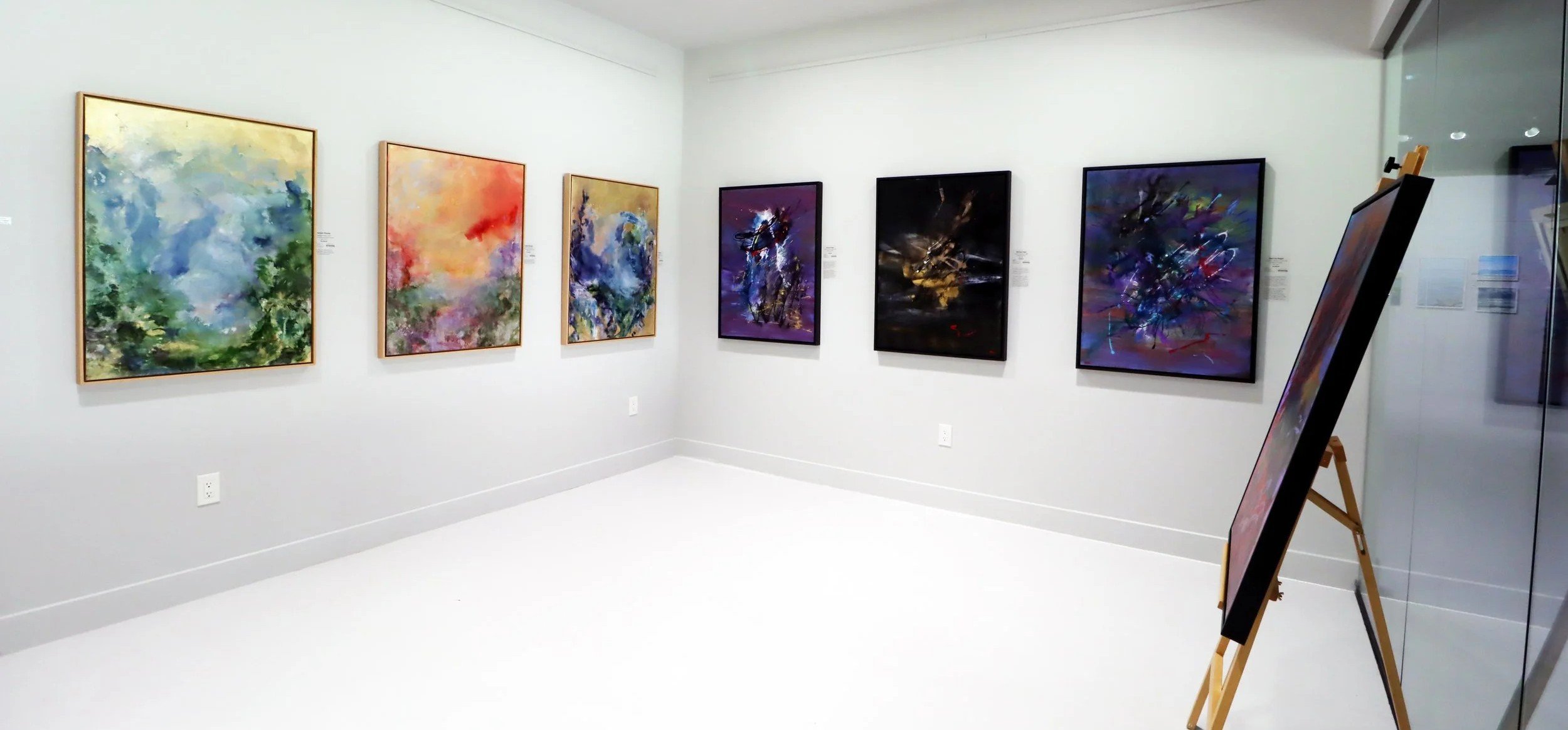
Fire and Form Exhibition at Ironwood Cider House (Atelier Ironwood) July 19 - Aug. 2, 2026
By Margie Galita, Curator
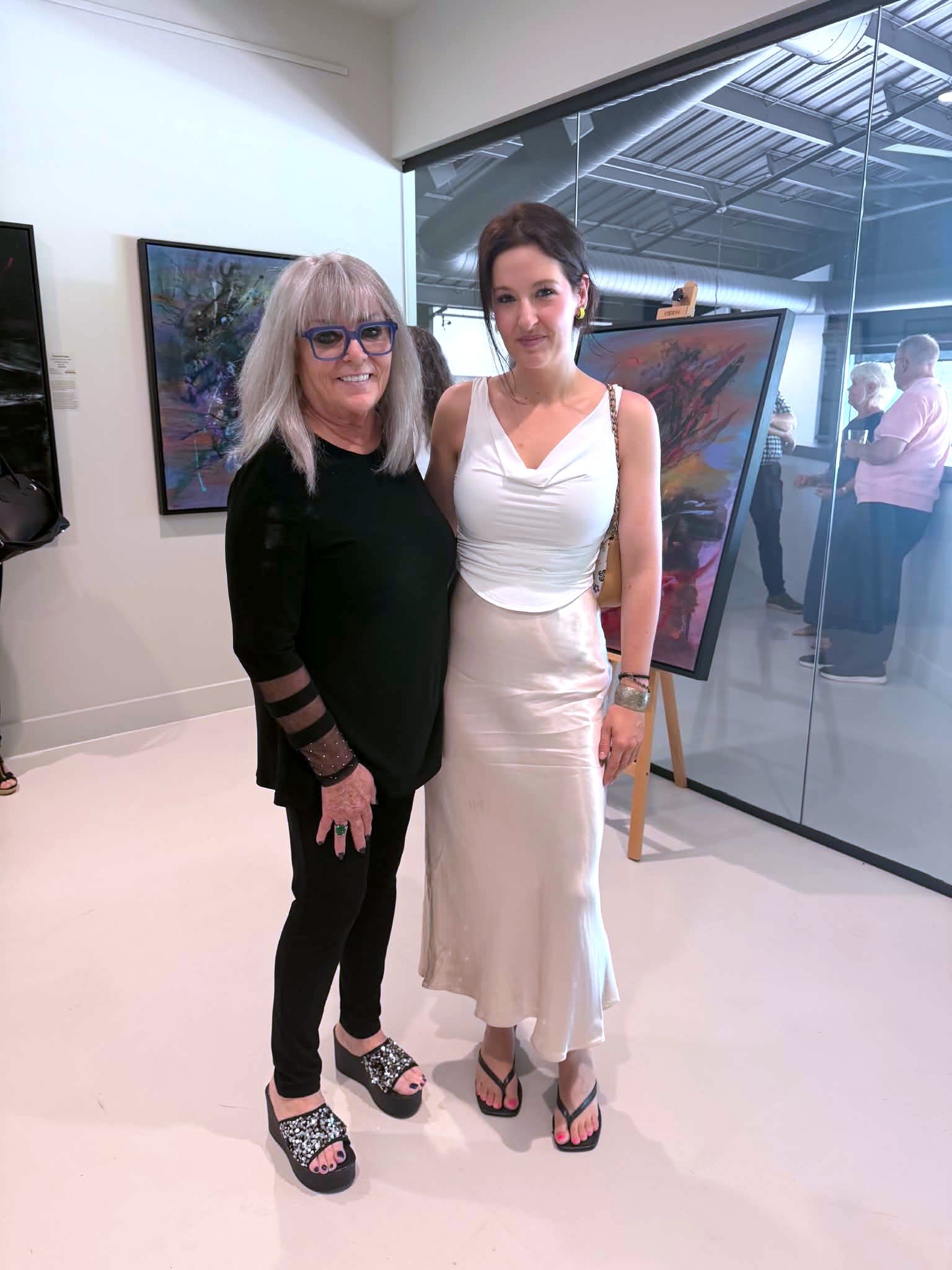
(left) Patricia Gagic (right) Jordan Moody at Atelier Ironwood. Fire and Form exhibition opening July 19, 2026
Some exhibitions are built around a theme. Others are built around a conversation.
Fire and Form: A Dialogue at the Crunode is remarkable because the dialogue extends far beyond the exhibition title. Standing before the works of Patricia Karen Gagic and Jordan Moody, I found myself witnessing something unexpected: two independent artistic practices that seemed to know each other before they ever shared a gallery wall.
It was not simply that the paintings complemented one another. They completed one another.
A Surprising Visual Relationship
Gagic's work is anchored by powerful, centralized forms—energetic structures that emerge from layers of gesture and movement. They are not fixed symbols, but moments of convergence, as if energy has reached a point where it can finally recognize itself. Moody's paintings, by contrast, breathe outward. Atmospheric washes of colour dissolve into luminous fields where the centre often remains intentionally open, inviting the eye to move through rather than settle upon the canvas.
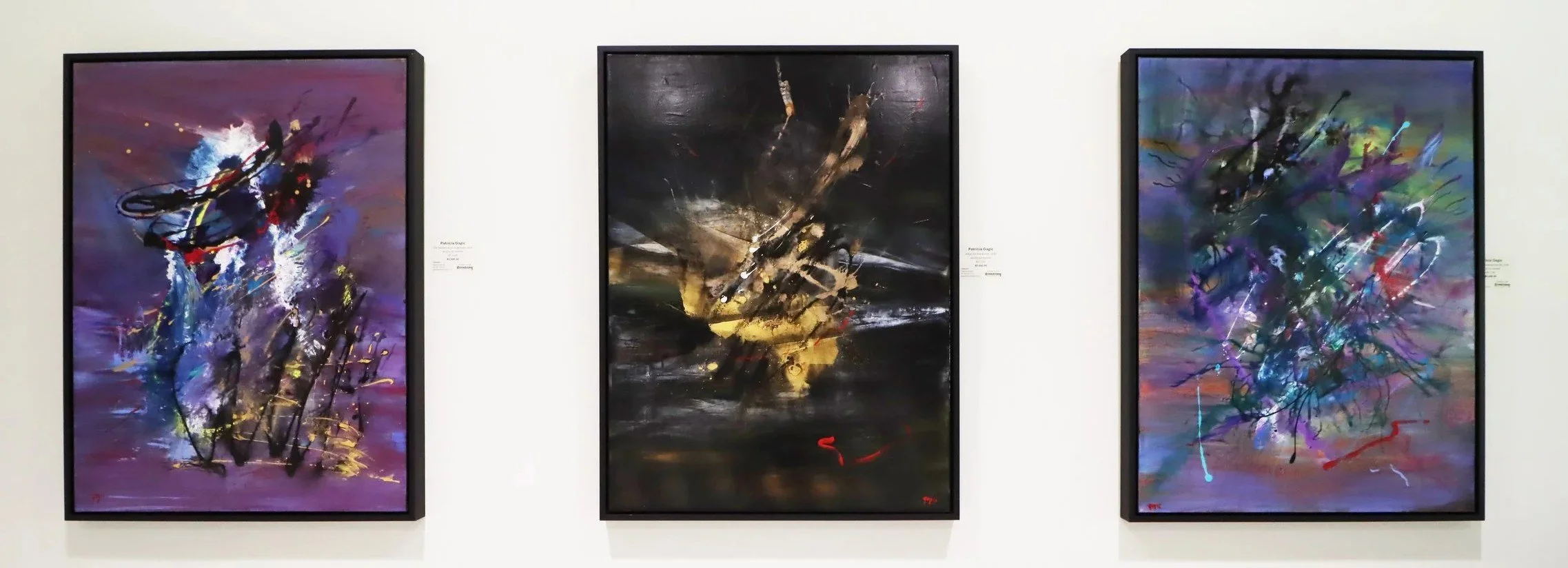
Works by Patricia Gagic exhibited at Atelier Ironwood, Niagara-on-the-Lake, 2026
The surprise came when these works were installed together.
Without prior planning, Gagic's concentrated forms appear to occupy the very spaces Moody leaves open. If one imagines the paintings physically superimposed, Patricia's central structures seem almost destined to inhabit Jordan's luminous voids. One artist paints the crossing. The other paints the space that longs for it.
This visual relationship became impossible to ignore.
The Philosophy Made Visible
It also gives remarkable form to the philosophy behind the newly founded Lemniscate Prauscate Art Movement, established by Patricia Karen Gagic in 2026. The movement proposes that consciousness exists as a continuous circuit represented by the lemniscate, the infinity symbol, where experience flows outward before returning through witness and reflection. The crossing point, known as the crunode, is where transformation occurs.
The exhibition reveals that philosophy without needing to explain it.
Jordan Moody's paintings embody movement, atmosphere, possibility, and emergence. They feel like the first loop of the lemniscate: experience unfolding before meaning has settled. Gagic's works occupy the crossing itself, where energy gathers, transforms, and returns with intention. Seen together, the paintings create something neither artist could produce alone—a complete circuit of visual thought.
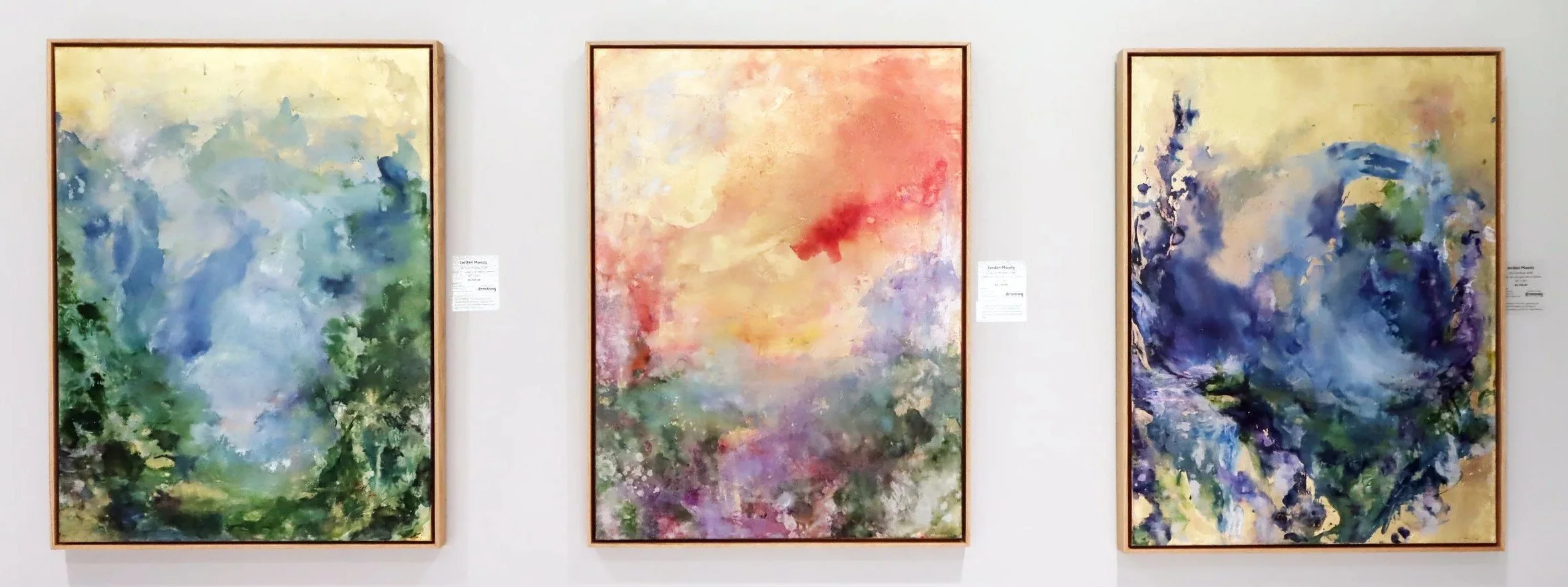
Works by Jordan Moody exhibited at Atelier Ironwood in Niagara-on-the-Lake, 2026
The Circuit Cannot Close with One
This relationship echoes one of the Movement's central ideas: the circuit cannot close with one.
No consciousness completes itself in isolation. No artwork fully exists until it is witnessed. Transformation requires relationship.
Here, that relationship exists on several levels. Between artist and mentor. Between abstraction and structure. Between fire and form. Most importantly, it exists between the two bodies of work themselves. Each painting becomes a witness to the other, completing a visual exchange that neither fully articulates alone.
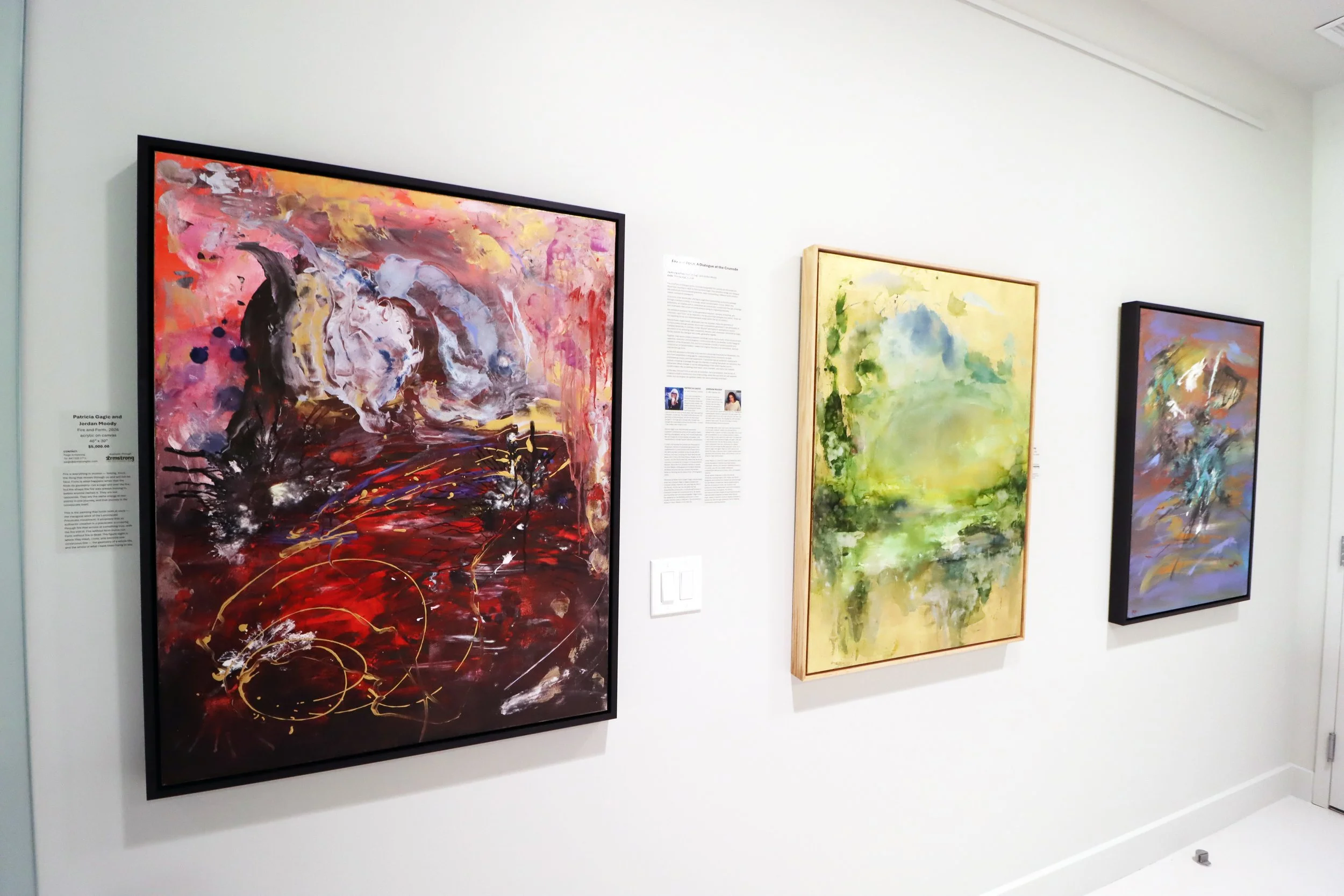
(Left) Fire and Form (2026), a collaborative painting by Patricia Karen Gagic and Jordan Moody. (right of it) The first of four paintings created by Jordan Moody
The Last Crossing
Every exhibition has a moment that quietly gathers everything that came before it.
For Fire and Form, it is the collaborative painting created by Patricia Karen Gagic and Jordan Moody.
The large white form seems strangely familiar. It recalls the atmospheric shape from Jordan's earlier painting, but here it has crossed into a new state. What was once light and openness becomes substance. What was once possibility becomes form.
Standing before it, I was reminded that the lemniscate is not simply an infinity symbol. It is a path of return.
The conversation between Patricia and Jordan had been unfolding in the gallery all along. Here, for the first time, it occupies the same canvas. Fire has become form. And form, in turn, releases new fire.
The Curator as Witness
As a curator, these are the moments one hopes to discover but cannot manufacture. The most meaningful conversations between artworks are rarely imposed through curatorial narrative; they emerge naturally when two authentic practices share the same space. What began as two distinct voices evolved into a single visual language.
The exhibition ultimately suggests that painting is not a static object but an active site of encounter. Every canvas opens a circuit that awaits completion—not only through the presence of another artwork, but through the presence of the viewer. When we stand before these paintings with attention and curiosity, we become participants in the exchange. We occupy the crunode ourselves, where perception becomes reflection and observation becomes transformation.
Perhaps that is the greatest achievement of Fire and Form. It demonstrates that the most compelling dialogue in art is not simply between artists, but between works that unexpectedly reveal themselves to have been speaking the same language all along.
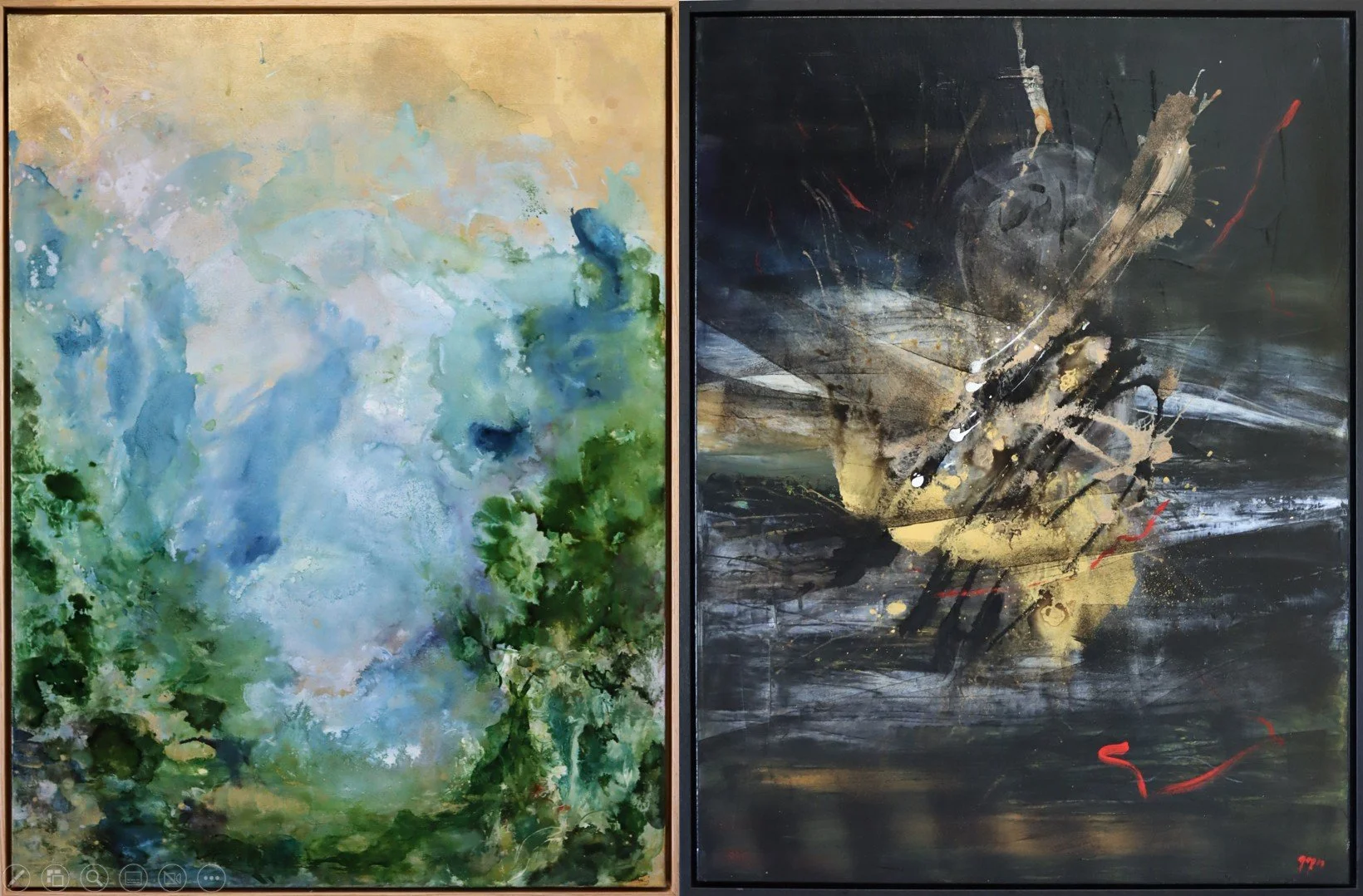
(left) Jordan Moody. The Emerald Gate, 2026 alcohol ink, faux gold leaf on canvas 40” x 30” (right) Patricia Gagic. What The Fire Builds, 2026 acrylic on canvas 40” x 30”
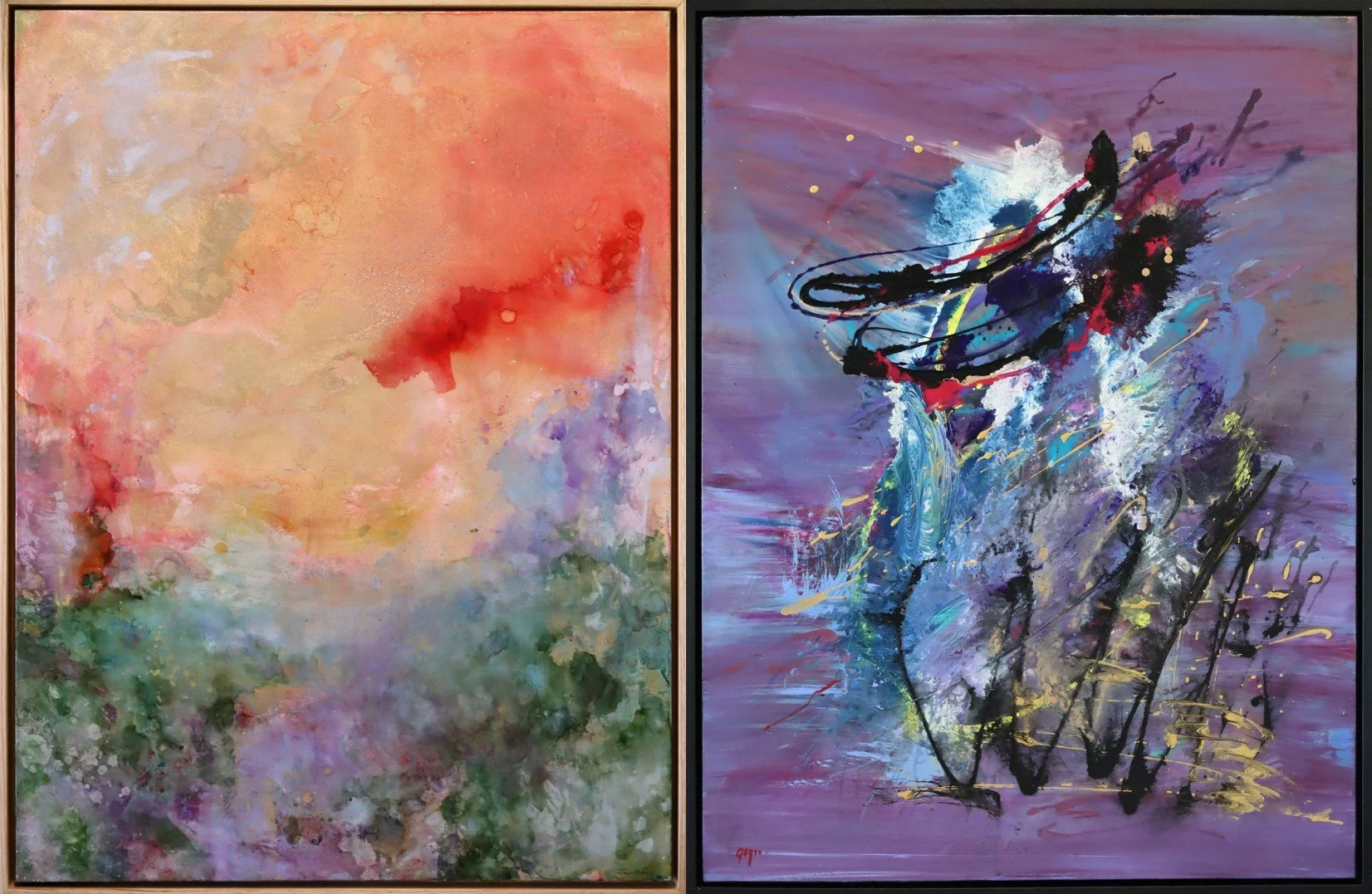
(left) Jordan Moody. Into The Blue, 2026 alcohol ink, faux gold leaf on canvas 40” x 30” (right) Patricia Gagic. The Theorem of the In-Between, 2026 acrylic on canvas 40” x 30”
