
The Great Creative Acceleration
How AI Is Changing Who Gets to Create and What Culture Becomes
Reflections following Armstrong Fine Art Consulting’s Artist Talk with Geoff Farnsworth
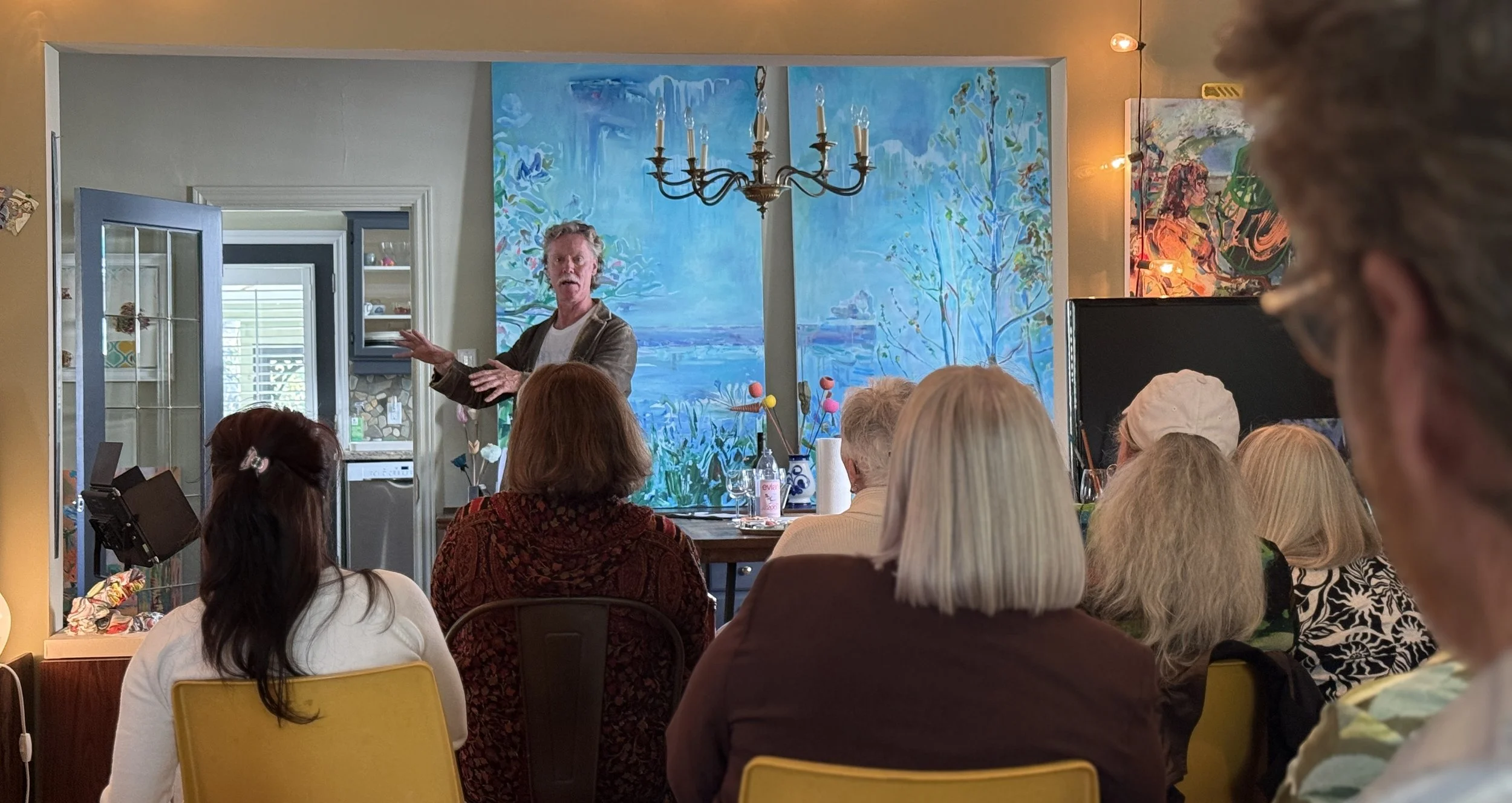
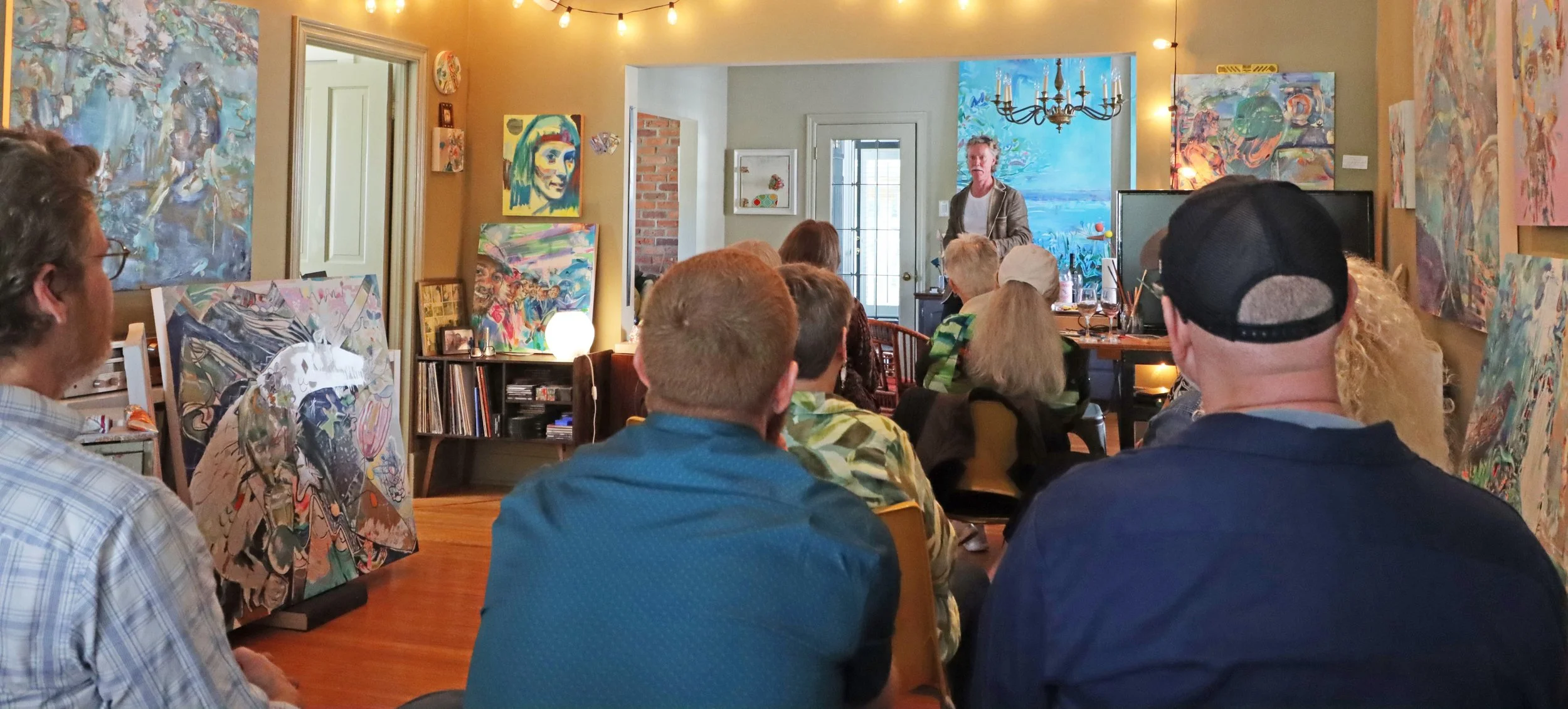
We were thrilled to have the opportunity to take our Artist Talk to the artist’s studio this past weekend, and we would like to extend our sincere thanks to Geoff Farnsworth for opening his studio and home to us. There is something uniquely valuable about experiencing art within the environment where it is created: surrounded by the works, materials, and ongoing explorations that offer a glimpse into an artist’s world. Our afternoon was filled with engaging conversations, thoughtful questions, and the kind of exchange that reminds us why creating opportunities for dialogue is such an important part of our work at Armstrong Fine Art Consulting.
One particularly interesting topic that emerged was the changing landscape of the visual arts in an era of increasingly accessible artificial intelligence. As AI-assisted creative tools become more sophisticated and widely available, how might they affect artists, the creative process, and the culture we collectively shape?
It was a conversation worth continuing beyond the studio. In the days following our discussion, I began exploring some of the research and ideas surrounding this transformation. What emerged was a concept I have come to call The Great Creative Acceleration—a cultural shift driven by the democratization of creative power.
I wanted to share some of these thoughts as an invitation to continue the conversation. Rather than offering definitive answers to questions that are still unfolding, the aim is to consider what this moment might mean for artists, collectors, cultural institutions, and anyone interested in the future of creative expression.
When imagination meets accessibility
We are entering a moment in cultural history when the distance between imagining something and bringing it to life is rapidly shrinking. An idea that once required years of technical training, specialized equipment, financial resources, or access to professional networks can now be explored by someone with little more than curiosity, a creative impulse, and an AI-powered tool.
A person with no formal artistic training can experiment with visual art. An aspiring filmmaker can develop scenes and explore visual narratives. A musician can investigate sounds beyond their technical abilities, while a designer can move from an abstract concept to a working prototype in a fraction of the time previously required.
This is more than a technological convenience. It signals a broader cultural shift: the ability to explore a creative idea is becoming less dependent on mastering every technical skill required to execute it.
The phrase The Great Creative Acceleration is my proposed way of describing this convergence of accessible tools, expanded participation, faster production, and evolving cultural expectations. While the phrase itself is a conceptual framework rather than an established academic term, the forces behind it have been explored by researchers studying technology, creativity, and social change.
Three developments stand out.
1. The expansion of creative agency: More people can participate
Throughout history, creative expression has been shaped not only by imagination but also by access. Producing a painting, composing music, publishing a book, or creating a film has required varying combinations of technical skill, time, money, equipment, education, and institutional support.
These barriers have never prevented people from being creative, but they have influenced which ideas could be realized and whose work could reach an audience.
AI is beginning to alter that relationship.
In their 2023 study, Experimental Evidence on the Productivity Effects of Generative Artificial Intelligence, researchers Shakked Noy and Whitney Zhang found that access to ChatGPT helped participants complete professional writing tasks more quickly while improving the quality of their assessed output. Their findings offer evidence that generative AI can reduce some of the practical barriers between an idea and its execution, although the study focused on writing rather than visual art.
David Gauntlett's book Making Is Connecting provides another useful perspective. Gauntlett examines how people become active participants in culture by making, sharing, and exchanging ideas rather than simply consuming what others produce.
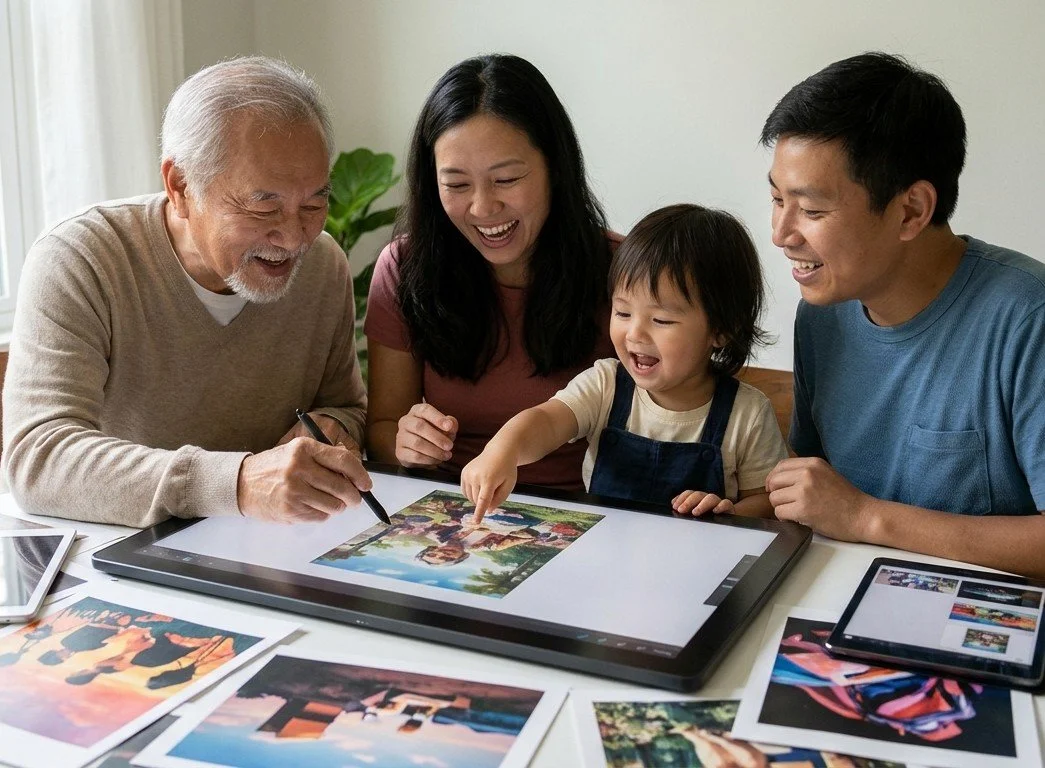
AI may extend this participatory model by giving more people the means to experiment with forms of expression that once seemed beyond their reach.
For the visual arts, this raises interesting questions. What happens when someone who has always had an eye for composition but lacks drawing skills can begin exploring visual ideas? How might someone with a compelling concept but limited technical experience use AI to develop that concept? And how might these new capabilities change the relationship between professional artists and an increasingly creative public?
This does not mean that everyone becomes an accomplished artist overnight, nor does it diminish the knowledge acquired through years of practice. Rather, it suggests that more people can begin exploring creative possibilities, potentially discovering abilities and interests they might never otherwise have pursued.
The first shift, then, is an expansion of creative agency: more people gain the practical ability to act on their imagination.
2. Cultural velocity: When ideas move faster
Creativity does not exist in isolation. Culture develops through the exchange of ideas, the reinterpretation of existing work, and the continual interaction between artists, audiences, institutions, and technologies.
When more people can produce creative work—and do so more quickly—the potential volume of cultural exchange grows.
An image can inspire a design. A visual style can influence a music video. A creative experiment can circulate globally and be reinterpreted by thousands of people within days.
AI is not the only force driving this acceleration. Digital distribution, social media, and global connectivity have already transformed how ideas travel. However, AI adds another dimension by accelerating the creation and revision of the material entering these networks.
In Social Acceleration: A New Theory of Modernity (2013), sociologist Hartmut Rosa examines how technological change interacts with the accelerating pace of social change and everyday life.
His work provides a useful lens through which to consider the cultural implications of AI. As creative production becomes faster, expectations may shift as well. New work appears more frequently, styles evolve rapidly, and creators are increasingly exposed to a continuous stream of competing ideas.
We might call this cultural velocity: the speed at which creative ideas circulate, influence one another, and contribute to new cultural expressions.
The opportunities are considerable. More voices can enter the conversation, ideas can cross traditional boundaries, and experimentation can happen on a scale previously difficult to imagine.
Yet acceleration also creates pressure. When new work appears constantly, attention becomes scarce, and even meaningful contributions can be quickly overshadowed by the next wave of content.
The Great Creative Acceleration is therefore not simply about producing more. It is about the changing relationship between creative production, cultural exchange, and the pace at which our collective tastes and expectations evolve.
3. The changing threshold of originality: What makes creative work meaningful?
Perhaps the most significant question concerns originality.
When technical execution becomes more accessible, the ability to produce something visually impressive or technically competent may become less effective as a distinguishing factor on its own.
The questions that matter increasingly include: Why was this made? What does it communicate? What perspective does it offer? Does it challenge an assumption, reveal something unexpected, or express an idea in a distinctive way?
In other words, as the means of production become more accessible, human judgment, intention, taste, context, and artistic vision may become more important in distinguishing creative work.
Walter Benjamin explored a related historical transformation in his essay The Work of Art in the Age of Mechanical Reproduction (1935–1936). Examining photography and film, Benjamin considered how technologies of reproduction changed the status, accessibility, and cultural meaning of art.
Generative AI presents a different technological development, but the historical parallel is worth considering. When the means of making and distributing images change, the cultural conditions surrounding art change with them.
Today, the question is not simply whether a machine can generate an image. It is how human intention operates within a process in which generating possibilities has become increasingly accessible.
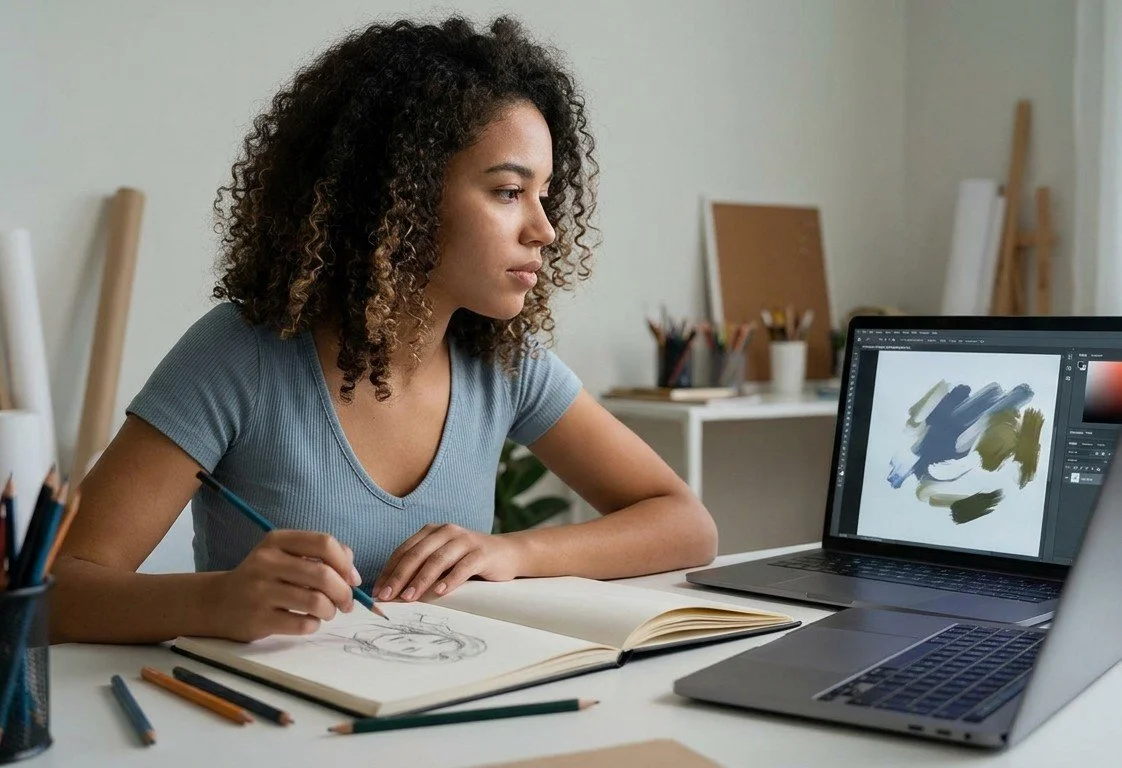
An artist might use AI to explore visual directions, challenge an initial concept, or test possibilities before returning to the physical act of painting. Another artist may choose not to use AI at all. Both approaches can involve deliberate creative judgment, and neither the presence nor absence of AI automatically determines the artistic value of the result.
The distinction lies in what the creator brings to the process and what the work ultimately communicates.
For artists, this may make personal vision and the development of a distinctive practice even more important. For galleries and collectors, it invites a deeper consideration of authorship, process, originality, and the qualities that make an artwork meaningful.
Technical skill remains valuable. But the ability to generate an image and the ability to create something culturally significant are not necessarily the same thing.
The counterargument: More creativity does not automatically mean more innovation
There is an important tension at the heart of this transformation.
If more people can create more work in less time, does that necessarily produce a richer, more diverse, and more innovative culture?
Research suggests we should be cautious.
In their 2024 Science Advances paper, Generative AI Enhances Individual Creativity but Reduces the Collective Diversity of Novel Content, researchers Anil R. Doshi and Oliver P. Hauser examined AI-assisted short-story writing.
Their findings revealed a fascinating paradox: AI assistance could improve the judged creativity and quality of individual stories, particularly for writers who were initially less creative, while the stories produced with AI assistance tended to be more similar to one another.
The study focused on short stories in a particular experimental setting, so its findings cannot automatically be generalized to every form of artistic production. Nevertheless, it raises an important question for the visual arts.
If many people use similar AI models and draw on similar aesthetic conventions, could the quantity of creative output increase while the diversity of ideas decreases?
We could find ourselves surrounded by more images, more music, more designs, and more stories, yet encounter increasingly familiar patterns and visual languages.
This is the paradox of democratized creativity: expanding access does not automatically expand originality.
The challenge is not simply to enable everyone to create. It is to preserve the conditions in which people can create something genuinely different.
This is where human curiosity, lived experience, critical judgment, experimentation, and the willingness to challenge familiar conventions remain important. AI can offer possibilities, but the creative choices made in response to those possibilities still matter.
What does this mean for the visual arts?
For Armstrong Fine Art Consulting, conversations like the one we shared with Geoff Farnsworth are a reminder that the visual arts do not exist apart from the broader cultural environment. Artists are continually responding to changes in technology, society, and the ways people experience the world.
AI presents new opportunities, but it also raises questions that deserve thoughtful consideration rather than immediate conclusions.
How might AI influence the way artists develop their ideas? How should we understand authorship when creative work involves both human and machine contributions? What role should process play in evaluating a finished artwork? And as the volume of visual material increases, how will artists, galleries, and collectors identify work that offers a distinctive and meaningful perspective?
These are not questions that technology alone can answer.
For artists, the challenge may be to use new tools without losing sight of the individual experiences and intentions that shape their practice. For galleries and curators, it may mean continuing to look beyond surface appeal to consider context, process, and artistic development. For collectors, it offers an opportunity to reflect on what draws them to a work and what makes it worth living with over time.
And for audiences, it invites us to become more thoughtful participants in a culture that increasingly places creative tools within everyone's reach.
Continuing the conversation
The Great Creative Acceleration is not a declaration that AI will replace artists, nor that technical skill and artistic training will become irrelevant. It is a way of describing a cultural moment in which the means of creative production are expanding faster than our established ideas about who can create, what counts as creative work, and how artistic value is determined.
The possibilities are exciting, but the questions are equally important.
Will expanded access lead to a more diverse cultural landscape? Will the speed of production create new opportunities for discovery, or make it harder for meaningful work to find an audience? And as AI becomes an increasingly familiar part of creative practice, will we develop new ways of understanding originality and artistic contribution?
Perhaps the most important question is not how much more we will be able to create, but what we will choose to create—and whether the growth in creative participation will lead to a corresponding growth in cultural imagination.
Our Artist Talk with Geoff Farnsworth was a reminder of the value of gathering, exchanging ideas, and allowing conversations to move beyond the immediate experience of looking at art. We are grateful to Geoff for opening his studio to us and to everyone who joined us in exploring the questions that shape our creative lives.
At Armstrong Fine Art Consulting, we believe that supporting the visual arts means more than presenting and discussing finished works. It also means creating opportunities to ask questions, exchange perspectives, and engage with the forces shaping the future of culture.
The tools are changing. The possibilities are expanding. The pace is accelerating. The conversation is only beginning.
We invite you to share your thoughts: How do you see AI influencing creativity and the visual arts? Does greater access to creative tools open the door to greater originality, or does it make the role of the individual artist even more important?
We look forward to continuing the conversation.
Further reading
For readers interested in exploring the research behind these ideas:
Noy, Shakked, and Whitney Zhang. “Experimental Evidence on the Productivity Effects of Generative Artificial Intelligence.” Science (2023). Read the study.
Rosa, Hartmut. Social Acceleration: A New Theory of Modernity. Columbia University Press (2013). Explore the book.
Doshi, Anil R., and Oliver P. Hauser. “Generative AI Enhances Individual Creativity but Reduces the Collective Diversity of Novel Content.” Science Advances (2024). Read the study.
Benjamin, Walter. “The Work of Art in the Age of Mechanical Reproduction” (1935–1936). Read the essay.
Gauntlett, David. Making Is Connecting: The Social Power of Creativity, from Craft and Knitting to Digital Everything. Expanded edition (2018). Explore the author's publications.
