
Black Canadian Art History: What We Know, What Was Lost, and What We Are Still Recovering
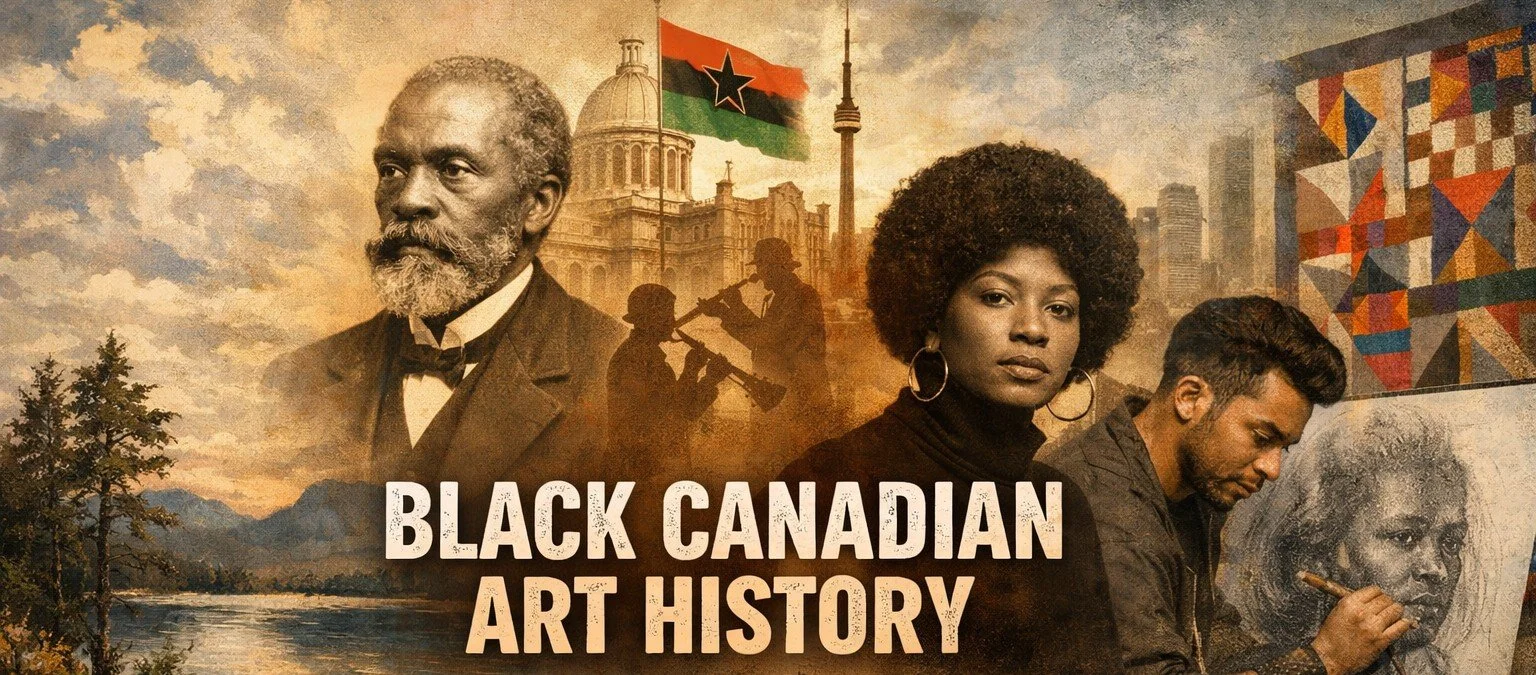
Black History Month invites us not only to celebrate presence, but to confront absence—particularly in Canadian art history, where Black visual artists were long excluded from institutions, archives, and national narratives. What survives today is partial, fragmentary, and uneven, shaped as much by systemic omission as by artistic production itself.
At Armstrong Fine Art Consulting, we approach this history with humility and care. Our team reflects the complexity of migration and inheritance that defines Canada itself. I (Margie) am an immigrant from the Philippines, with ancestral roots spanning Chinese, Korean, Spanish, Indigenous Mexican, and Polynesian lineages. Our Director, Paige, is of European descent, with six generations of family history in Canada—including stories rooted in Saskatchewan that were never fully carried forward.
Stories disappear not because they lack value, but because national narratives often demand simplification. In order to belong, immigrants frequently feel pressure to assimilate into a dominant storyline. Yet running parallel to that story are countless others—equally Canadian, equally real—that risk being forgotten.
One of the histories we openly acknowledge we are still learning is Black Canadian art history.
Early Presence, Sparse Records
Canada had relatively few documented Black visual artists active between the 1920s and 1960s. That word—documented—is critical. It does not mean Black artists were not working. It means their work was rarely collected, exhibited, reviewed, or archived within the structures that define “official” art history.
Systemic exclusion shaped who was seen as a professional artist, who received training, and whose work was preserved. Many Black artists were categorized as “amateurs,” absorbed into community craft traditions, or omitted altogether. As a result, what we know today represents only fragments of a much larger field of artistic production.
The Earliest Recorded Figures
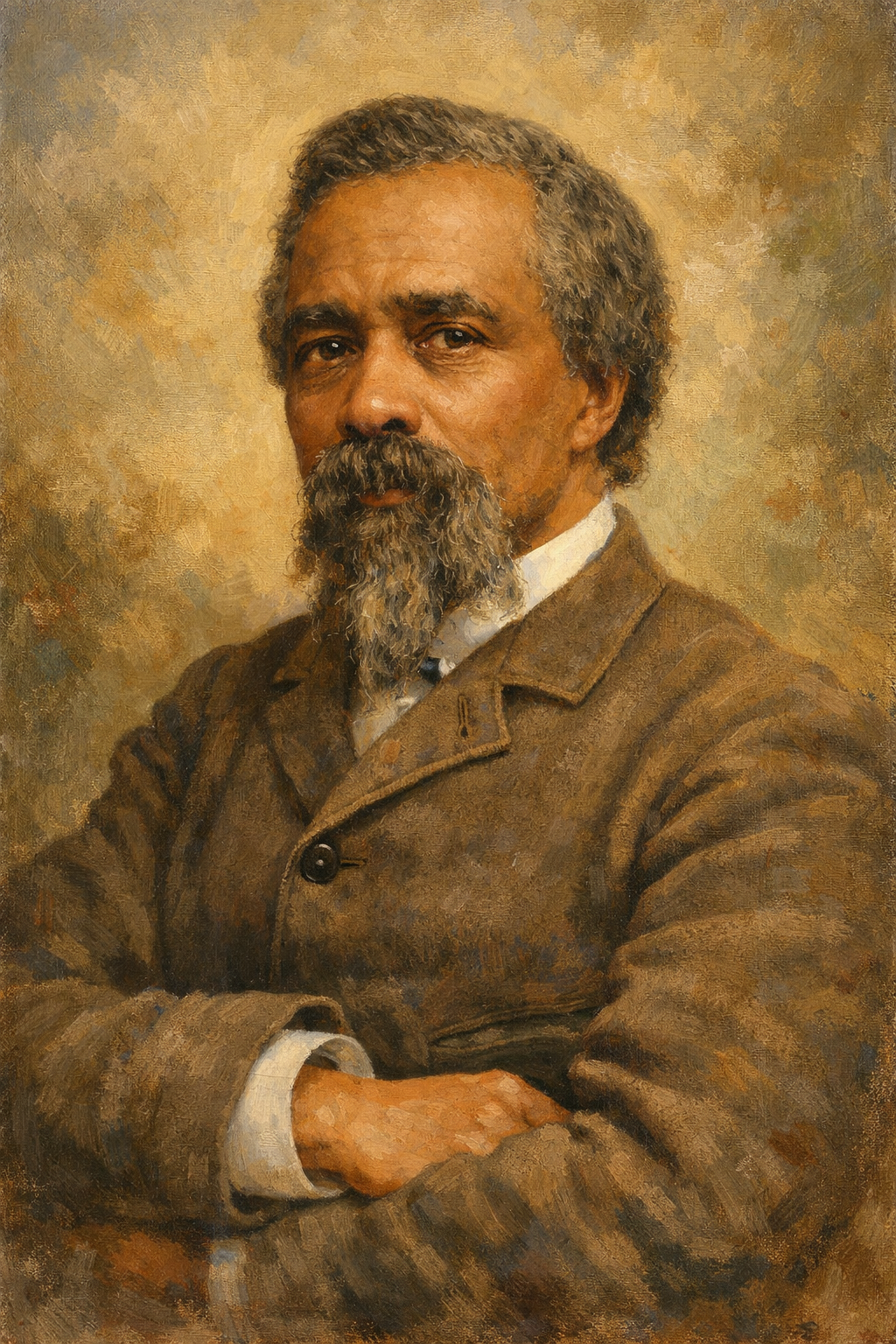
Edward Mitchell Bannister (1828–1901)
Born in New Brunswick, Bannister is often cited as a foundational figure when tracing Black art histories connected to Canada. Though his career unfolded primarily in the United States, his Barbizon-influenced landscapes and his 1876 gold medal at the Philadelphia Centennial Exposition established a precedent for Black professional artistry linked to Canadian origins.
Image is an artistic imitation for educational purpose.
Source: Gustine L. Hurd, Edward Mitchell Bannister, c. 1880, Albumen silver print, 14.5 × 10.3 cm, Collection of the National Portrait Gallery, Smithsonian Institution, Gift of Sandra and Jacob Terner (NPG.76.66)
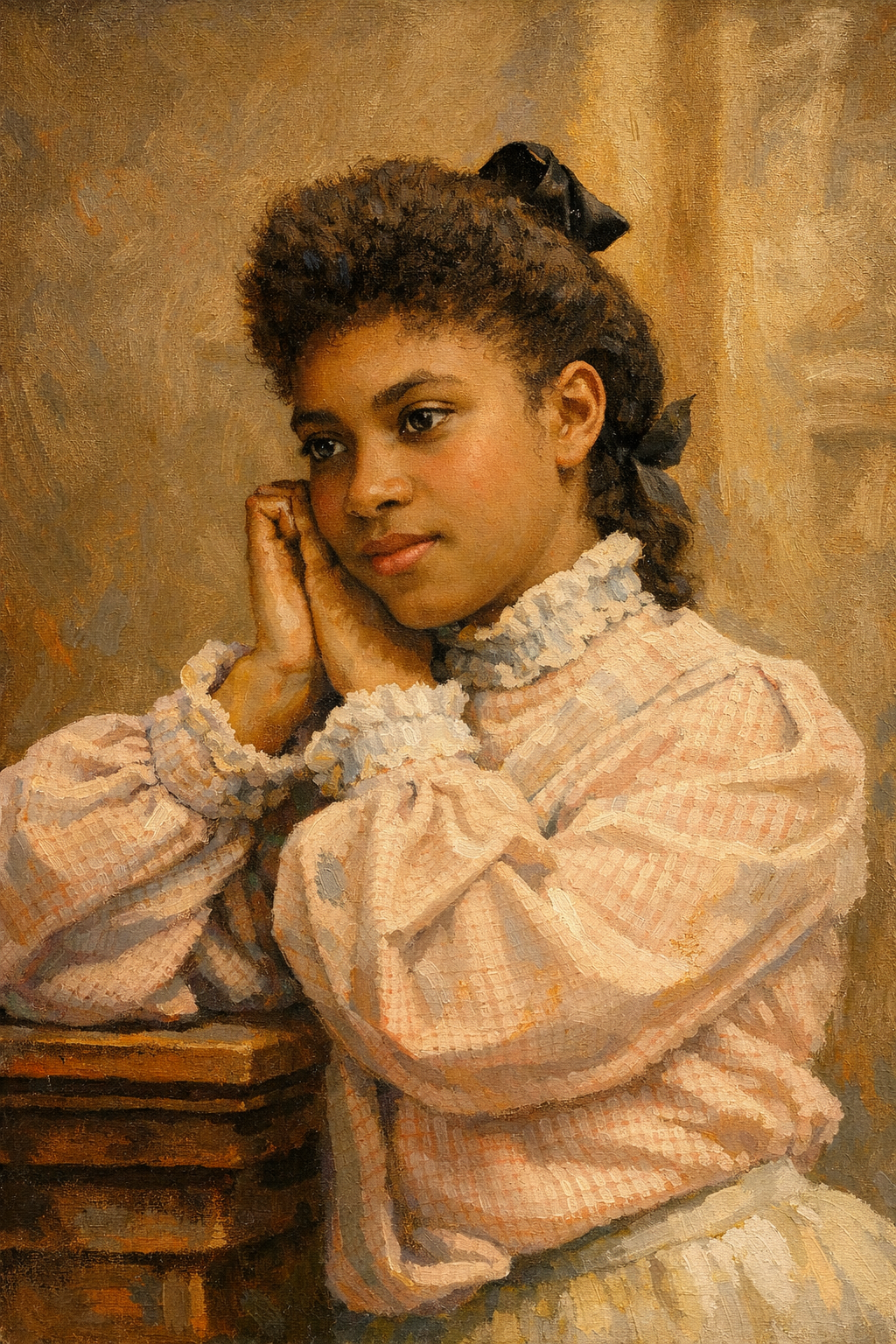
Edith Hester MacDonald Brown (1886–1956)
Born in Africville, Nova Scotia, Edith MacDonald Brown is now considered the earliest known African Canadian woman fine artist. She painted from the late 1890s through the early decades of the 20th century, producing landscapes and still lifes in a careful academic European style.
Despite working contemporaneously with early 20th-century Canadian painters, she never exhibited publicly during her lifetime. Only a small number of her oil paintings survive, yet they firmly place her within Canadian art production of the period. Her rediscovery underscores how many artists were erased not by lack of skill, but by lack of access.
Image is an artistic imitation for educational purpose.
Source: MSVU Art Gallery
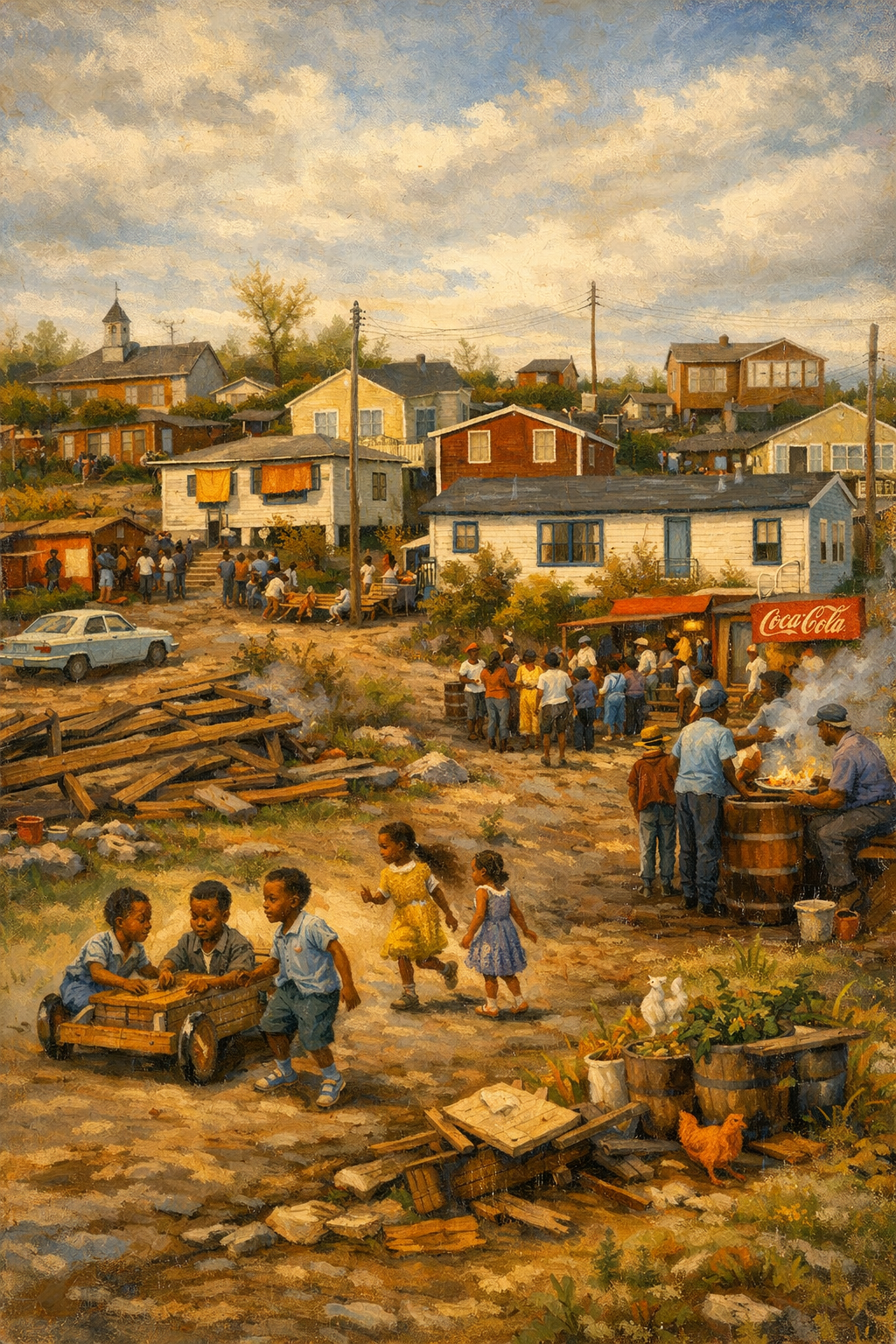
Africville, Nova Scotia
Africville, founded in the 1840s on Bedford Basin’s southern shore, was a Black community of Loyalists, War of 1812 refugees, Jamaican Maroons, and other migrants. By the late 19th century, its ~400 residents ran farms, fishing businesses, a school, and the Seaview African United Baptist Church, fostering a vibrant cultural life despite poverty. Halifax neglected the community—taxing residents while providing no services and dumping undesirable facilities—culminating in the 1960s demolition of homes and the church, displacing families. Later recognition included the Africville Genealogy Society (1983), National Historic Site status (1996), and a municipal apology with settlement (2010), leading to the rebuilt Seaview Church as Africville Museum. Africville remains a powerful symbol of Black Canadian resilience, heritage, and the fight against erasure.
1920s–1930s: Community Without Credit
In the interwar period, Black cultural life thrived in Canada—particularly in Nova Scotia and Montréal—but visual artists were rarely named in official records.
In Montréal, Black cultural networks were shaped by organizations such as Marcus Garvey’s UNIA and by a vibrant performance scene. Scholars have shown that Black communities supported visual artists alongside musicians and writers, even if those artists’ names were seldom preserved.
In Nova Scotia, African Nova Scotian communities—including Africville—produced painters, quilters, church decorators, and sign painters whose authorship was often undocumented. Later curators and historians have emphasized that works of remarkable sophistication existed, but attribution was lost as materials remained in families, churches, or community spaces rather than entering museums.
During this period, Black people were more frequently depicted as subjects in white Canadian art than recognized as artists themselves—contributing further to archival silence.
1940s–1960s: Toward Visibility
By the mid-20th century, documentation improves slightly, though Black artists largely continued to work outside mainstream institutions.
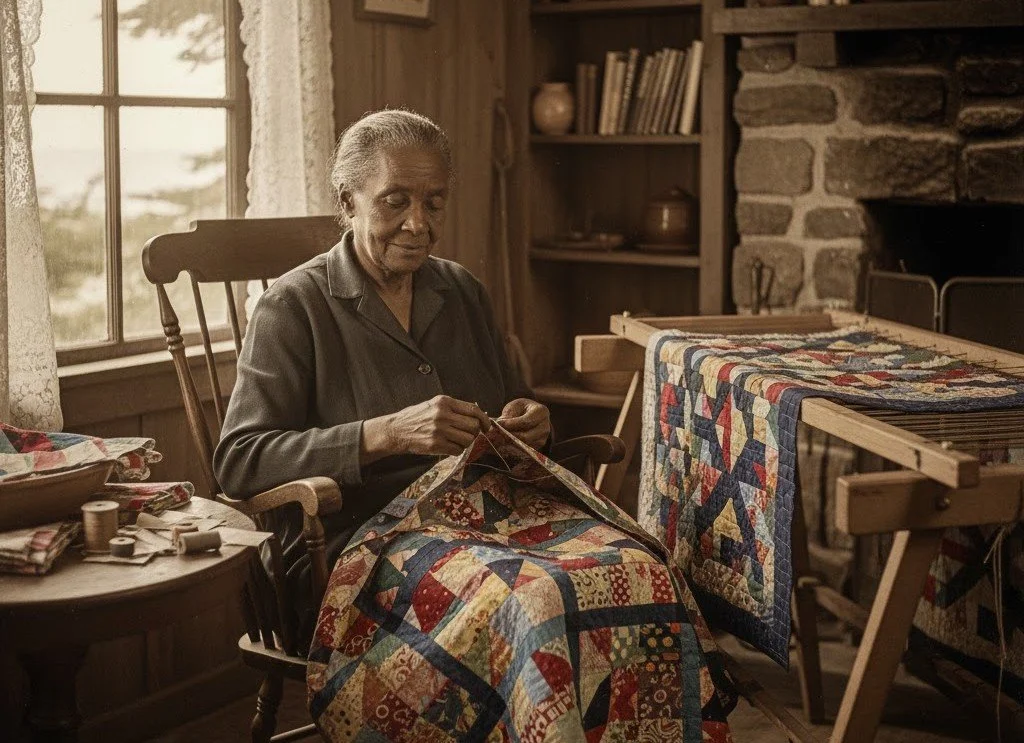
Artistic production often took place in:
Churches, schools, and social clubs
Quilting and textile traditions
Scenic painting, sign painting, and set design for theatre and performance
These practices are now increasingly recognized as part of Canada’s visual art history, particularly through recovery projects in Nova Scotia. Exhibitions such as In This Place: Black Art in Nova Scotia and later curatorial initiatives revealed just how extensive—and overlooked—this work was.
Toronto and the Late 1960s Shift
Toronto’s recorded Black visual art history is comparatively recent. Prior to the late 1960s, the city’s Black population was small, and professional visual artists were rarely documented.
This changed with post-1960s migration from the Caribbean and the United States.
Why This History Matters
Black Canadian art history is not a footnote to Canadian art. It is a parallel narrative that challenges how cultural value has been assigned, recorded, and remembered.
As immigrants, settlers, descendants, and cultural workers, we recognize how easily stories can disappear when they do not serve a dominant national myth. Recovery is not about rewriting history—it is about widening it.
This Black History Month, we honour not only the artists whose names we know, but also the many whose work survives without attribution, and those whose contributions remain embedded in communities rather than catalogues.
The work of remembering is ongoing. And it belongs to all of us.
Other interesting read:
The Canadian Encyclopedia. Edward Mitchell Bannister by John Boileau
Owens Art Gallery, Hidden Blackness: Edward Mitchell Bannister (1828 - 1901) curated by David Woods
What Our Reader's Say
〰️
What Our Reader's Say 〰️
Greetings Paige and Margie,
The articles you are sending out on Canadian art are informative, interesting and appreciated. Better understanding the context of different artists and their/our time presents a rich picture in which to understand their creative work, impulse and contribution. It also brings the past to life. Thank you for these.
Best wishes!
Karen Buckenham - currently in South Africa
