
HENRY SPENCER MOORE
(1898 - 1986) OM CH FBA
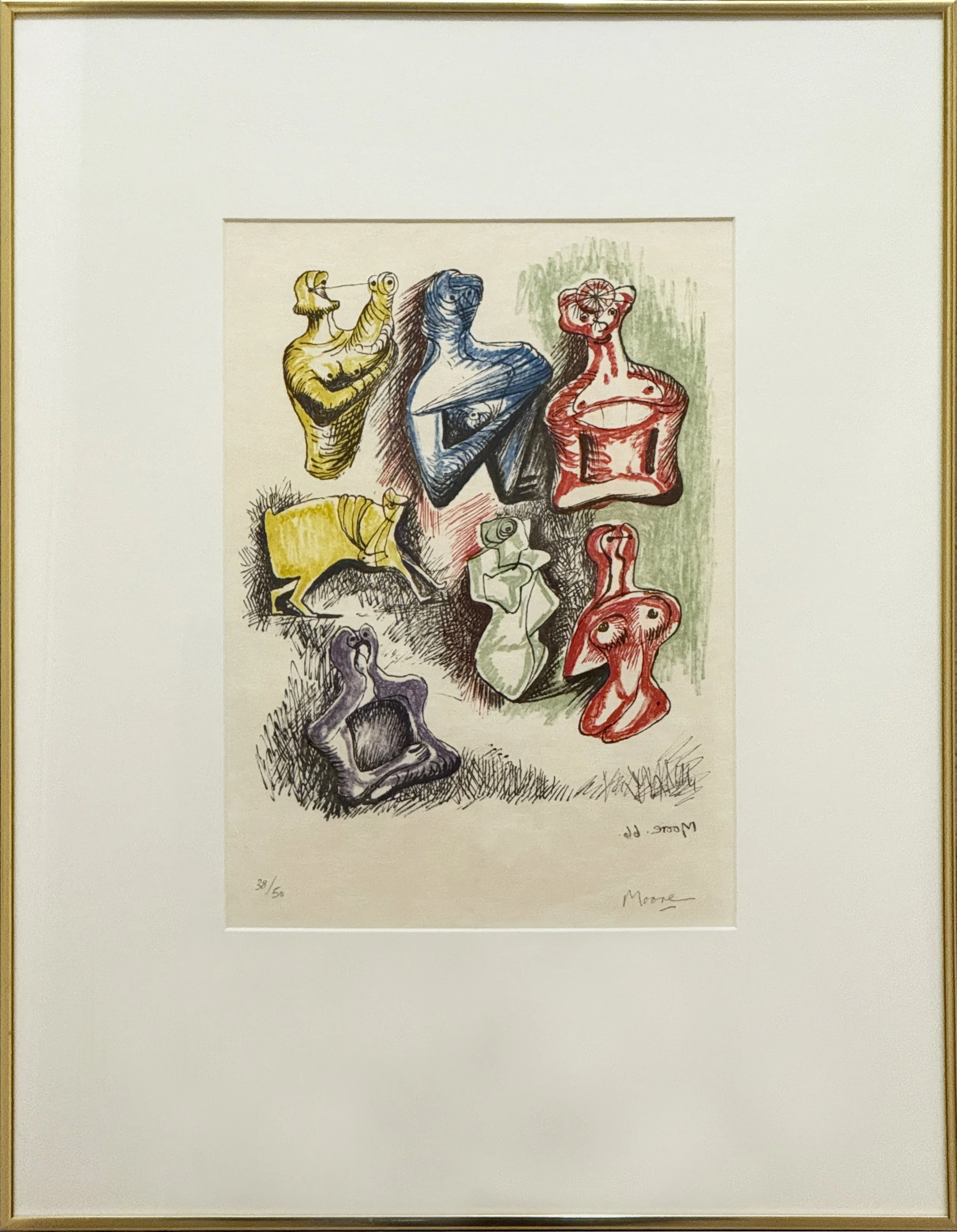
Henry Spencer Moore. Untitled (Ideas for Sculpture), 1966 original coloured lithograph on paper 23” x 18” $3,000
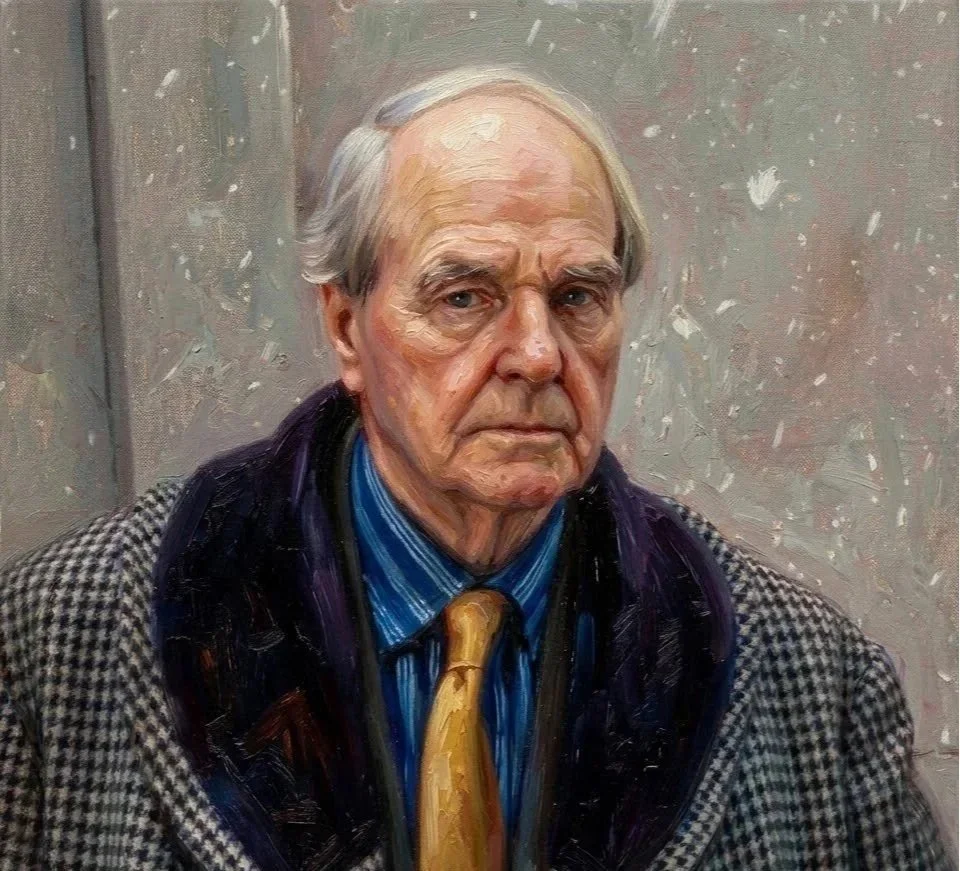
From a market and collecting standpoint, Henry Moore’s work represents one of the most important intersections of twentieth-century modern sculpture, international modernism, and Canadian cultural heritage. Widely regarded as the preeminent British sculptor of his era, Moore helped redefine monumental sculpture by transforming the human figure into semi-abstract forms that emphasize the relationship between mass, space, and landscape. His influence remains especially significant in Canada, where his work played a pivotal role in shaping public appreciation for modern sculpture.
Moore’s connection to Canada is historically and institutionally profound. The Art Gallery of Ontario holds the largest public collection of his work in the world, reflecting Canada’s long-standing commitment to preserving and exhibiting his artistic legacy. His sculptures are also prominently installed in Canadian cultural and civic spaces, reinforcing his importance within the country’s modern art history and public art development.
Born in 1898 in Castleford, Yorkshire, Moore grew up in a mining town surrounded by the natural landscapes that would later inspire his organic sculptural forms. After serving in the British Army during World War I, he pursued formal artistic training at the Leeds School of Art and later at the Royal College of Art in London. During his studies, Moore encountered modernist and ethnographic collections, including those at the British Museum, which helped shape his interest in non-Western sculptural traditions and the conceptual possibilities of abstraction.
Moore became internationally known for his direct-carving approach to sculpture, working in stone and wood without excessive mechanical intervention. This technique allowed the material’s natural character to remain visible, with tool marks often preserved as part of the finished work. His early explorations focused on abstracted human figures, particularly reclining forms and mother-and-child compositions that reflect both anatomical structure and landscape topography.
As his career progressed, Moore transitioned increasingly to bronze casting, enabling the creation of large-scale monumental sculptures suitable for public commissions. By the mid-twentieth century, his work was installed in major international settings, including projects for the UNESCO headquarters in Paris and the Festival of Britain. These commissions helped establish Moore as one of the first British sculptors to achieve truly global recognition during his lifetime.
A defining feature of Moore’s mature work is the exploration of pierced forms and internal voids within solid mass. These openings create dynamic interactions between sculpture and environment, allowing light, shadow, and surrounding space to become active components of the composition. This formal innovation profoundly influenced post-war sculpture and inspired generations of international artists.
Moore’s artistic vision was not limited to sculpture. During World War II, he produced powerful drawings depicting London civilians sheltering during the Blitz, works that captured themes of vulnerability, endurance, and human resilience. These drawings remain significant examples of twentieth-century wartime art and demonstrate the breadth of his artistic practice.
Throughout his career, Moore achieved extraordinary international success while maintaining a relatively modest personal lifestyle. In 1977, he established the Henry Moore Foundation, an organization dedicated to preserving his work and supporting education and research in modern and contemporary art. The foundation continues to operate his former studios and sculpture park at Perry Green in Hertfordshire, along with the Henry Moore Institute in Leeds.
Moore mentored and influenced numerous younger sculptors, including artists such as Sir Anthony Caro and other members of the post-war British sculpture movement. His legacy extends beyond individual artworks to encompass a fundamental rethinking of sculpture as an environmental and spatial art form.
Today, Moore’s sculptures, drawings, and tapestries are held in major institutional collections worldwide and remain highly sought after in the international art market. His works are considered blue-chip examples of twentieth-century modernism, valued for their historical importance, aesthetic universality, and enduring cultural resonance.
Collector’s Perspective:
Works by Henry Moore are considered highly collectible blue-chip examples of twentieth-century modern art. Because many of his major sculptural commissions were produced for public institutions, privately available sculpture is relatively scarce, particularly works with strong provenance, early casting dates, or exhibition documentation.
Moore’s graphic works, especially his lithograph drawings, are also highly sought after. His prints and works on paper often provide a more intimate entry point into his practice while retaining the formal language and historical importance of his sculpture. These works are collected internationally for their expressive line quality and connection to his sculptural exploration of human form and space.
The artist’s global institutional representation, including the substantial collection held by the Art Gallery of Ontario, reinforces the market significance of his oeuvre. As museum holdings continue to define the core of his legacy, well-documented sculptures and lithographs appearing in the private market are regarded as exceptional opportunities for serious collectors of modern art.
For images and acquisition details, please contact us.