
HAROLD FEIST
(b. San Angelo, Texas USA 1945-2021)
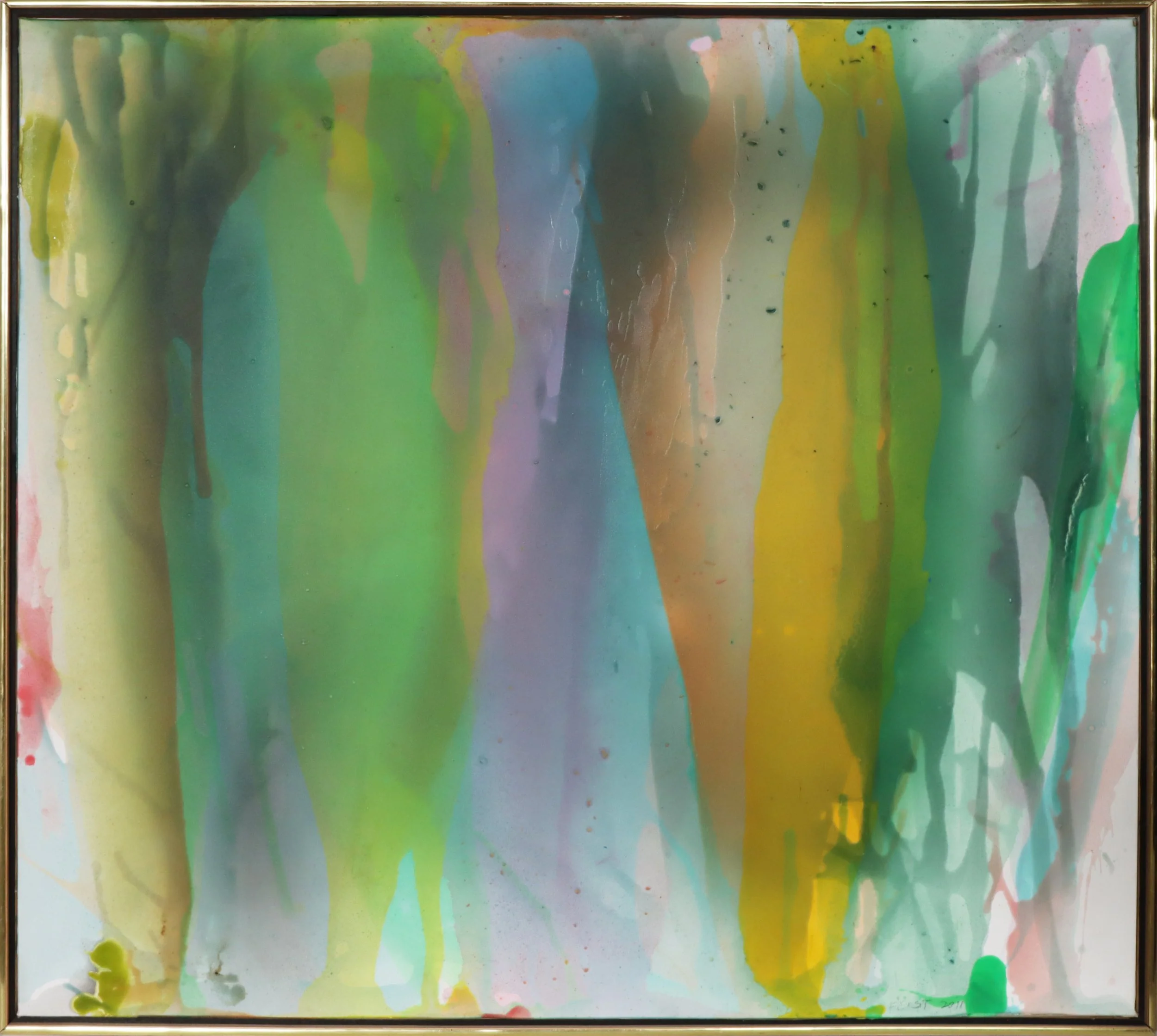
Harold Feist. Hereditas, 2011 mixed media on canvas 59.25" x 53" $15,000
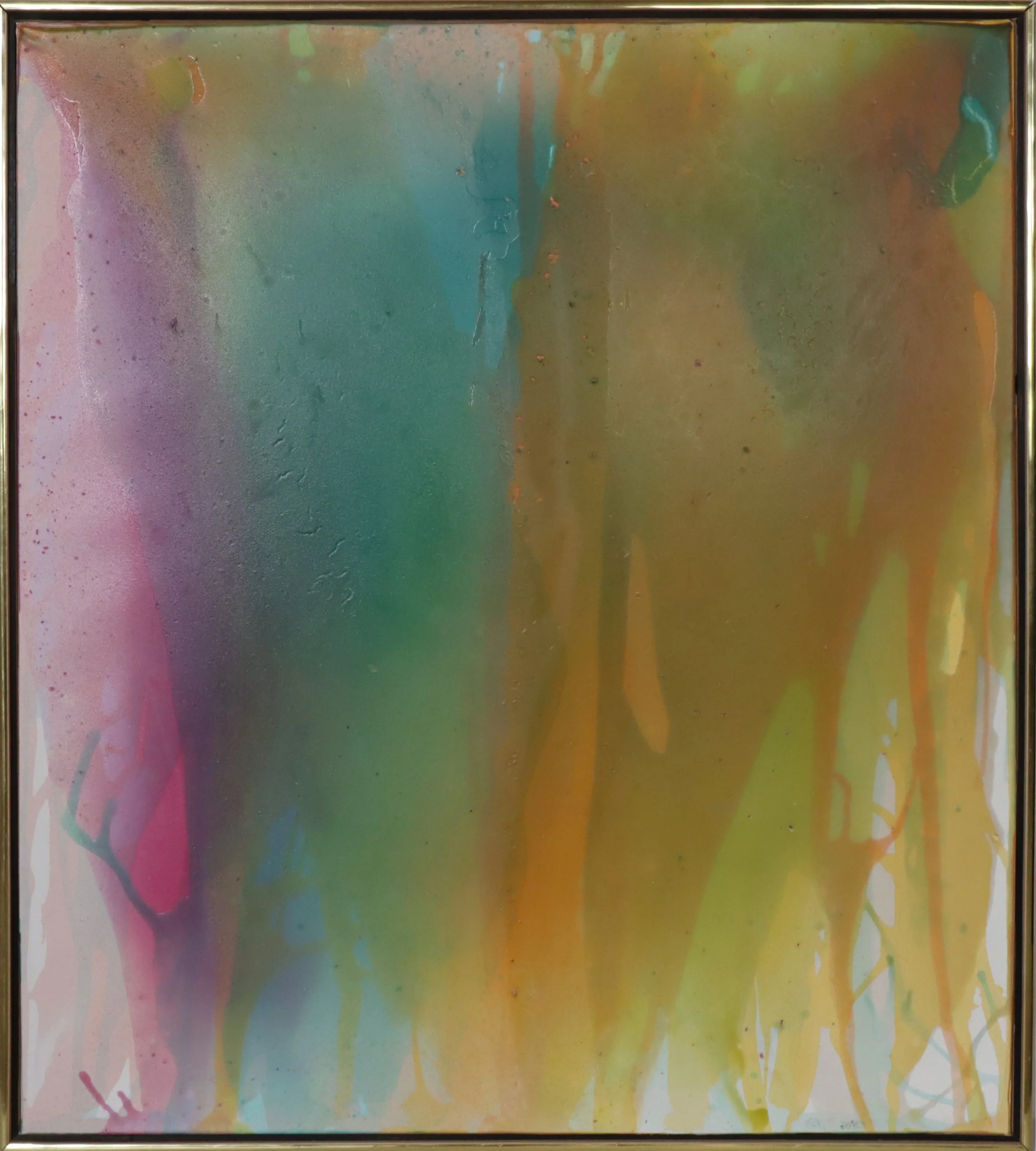
Harold Feist. Difficilies, 2009 mixed media on canvas 55.5" x 49" $15,000
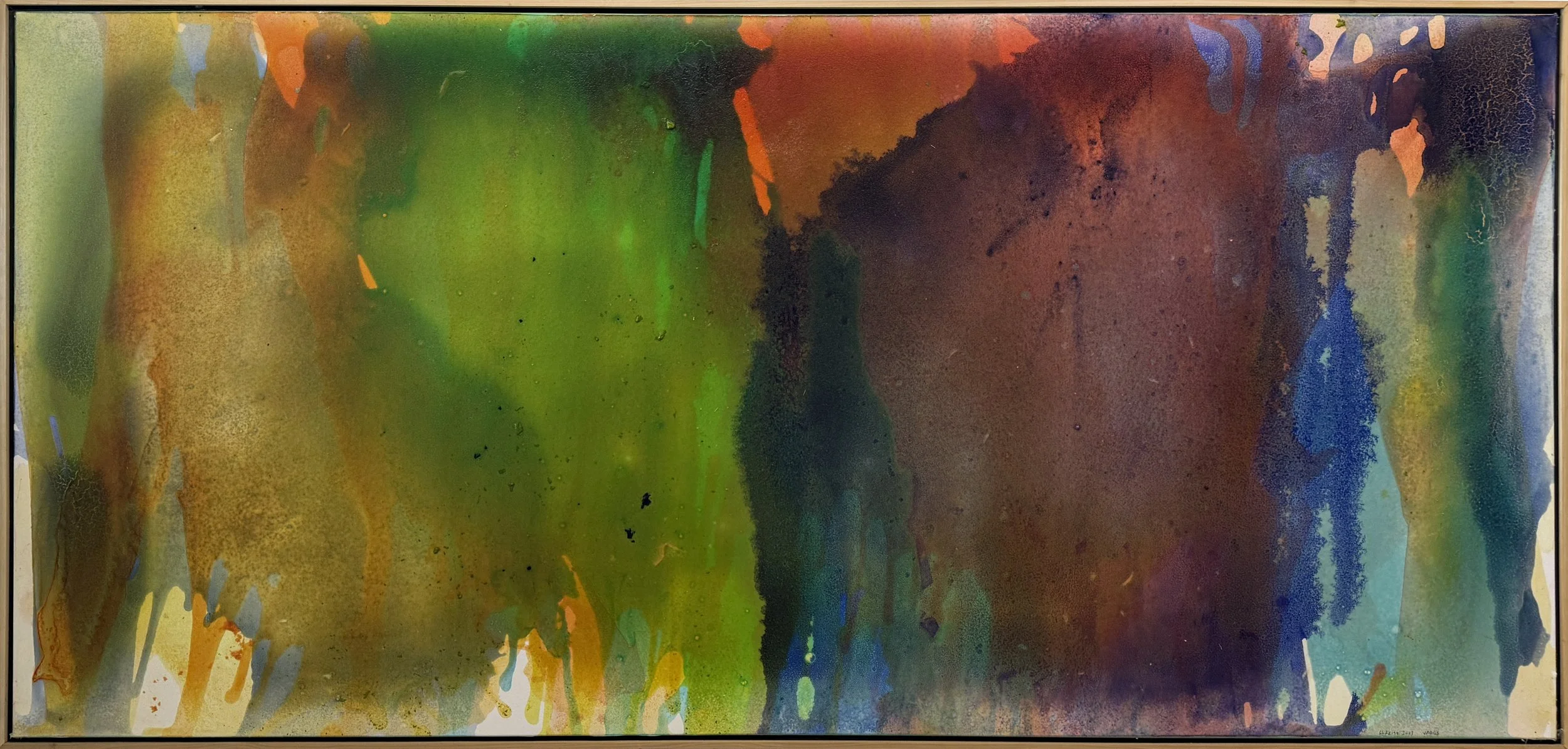
Harold Feist. Vagus, 2017 acrylic, latex on canvas 54" x 116" $25,000.00
Harold Feist represents a compelling opportunity for collectors seeking historically grounded abstraction with lasting relevance. As a key figure who bridged American Colour Field painting and Canadian modernist traditions, Feist’s work carries both critical lineage and institutional validation—positioning it as a meaningful and enduring investment within postwar and contemporary abstraction in Canada.
Feist became a dual citizen of Canada and the United States, ultimately establishing his career and legacy within the Canadian art landscape. His formal training at the University of Illinois and the Maryland Institute College of Art, where he was a Hoffberger Fellow, placed him within a rigorous academic and critical framework. Crucially, his work was mentored and championed by Clement Greenberg and Jules Olitski. These formative influences placed Feist within a pivotal moment in postwar abstraction, where the emphasis on colour, scale, and optical experience redefined painting’s possibilities. Rather than adopting a stylistic formula, Feist absorbed these ideas into an evolving personal language, ultimately developing a practice that extended and refined Colour Field principles through a more fluid, process-driven approach grounded in perception, material behaviour, and sustained experimentation.
Feist’s relocation to Canada marked a pivotal moment not only in his own career but in the evolution of abstraction within the country. Through his teaching roles at the Alberta University of the Arts, Mount Allison University, the University of Regina, and the Ontario College of Art, he played an instrumental role in shaping a generation of artists. His decision in 1978 to devote himself fully to painting marked the beginning of a sustained and focused studio practice that would define his mature output.
Over the course of more than five decades, Feist exhibited extensively across Canada, the United States, and internationally, with exhibitions in major cultural centres including Berlin, Lisbon, London, and Paris. His work is held in significant public collections such as the Museum of Fine Arts Boston and the Art Gallery of Alberta, reflecting both its critical recognition and enduring institutional value. This broad exhibition history and sustained acquisition by major museums underscore Feist’s importance within postwar abstraction and affirm his position as a significant figure in both Canadian and international art contexts.
At the core of Feist’s practice is a distinctive and highly refined approach to Colour Field painting. Working with acrylic and latex, he developed a process-driven method in which diluted paint was poured onto a horizontal surface and guided through subtle movements of the canvas. This intuitive technique allowed colour to flow, merge, and resolve organically, producing luminous, immersive fields that evoke natural phenomena while remaining resolutely abstract.
As art historian Roald Nasgaard has observed, Feist’s paintings foreground the “surface activity of paint itself,” emphasizing the material presence of paint as both subject and experience. By minimizing overt gesture, Feist allowed gravity, motion, and the inherent properties of his medium to shape each composition. The result is a body of work that balances control with unpredictability—paintings that feel both deliberate and alive, grounded in process yet expansive in their visual impact.
Feist’s contribution to Canadian art lies in this synthesis: he translated the ideals of American Colour Field abstraction into a distinctly Canadian context, expanding its language through his own commitment to process, presence, and perceptual experience. His paintings offer collectors not only visual depth and atmospheric resonance, but also a direct connection to a pivotal moment in the evolution of abstraction.
Collector’s Perspective:
Following his passing in 2021, Harold Feist’s work has entered a period of renewed critical and institutional reassessment, as the market and collecting community increasingly recognize the depth and significance of his contribution to North American abstraction. Within this context, and as his estate continues to carefully re-evaluate and steward his body of work, there is a timely opportunity for collectors to engage with his paintings. Feist’s practice embodies a sustained pursuit of clarity, balance, and the expressive potential of colour—qualities that remain both historically important and visually compelling—positioning his work as a strong and meaningful addition to serious contemporary and postwar abstraction collections.
For images and acquisition details, please contact us.
Did you know?
Harold Feist’s daughter, Leslie Feist, is the world-renowned singer-songwriter known mononymously as Feist. A central figure in Canadian music, she has garnered 14 Juno Awards and global acclaim for her solo work and her contributions to the indie-arts collective Broken Social Scene.
Much like her father’s impact on the visual arts, Leslie has profoundly elevated Canadian culture through her innovative songwriting and distinct voice, bridging the gap between indie-rock authenticity and international pop success.