
Pinecone 1, 2013
Floyd Elzinga


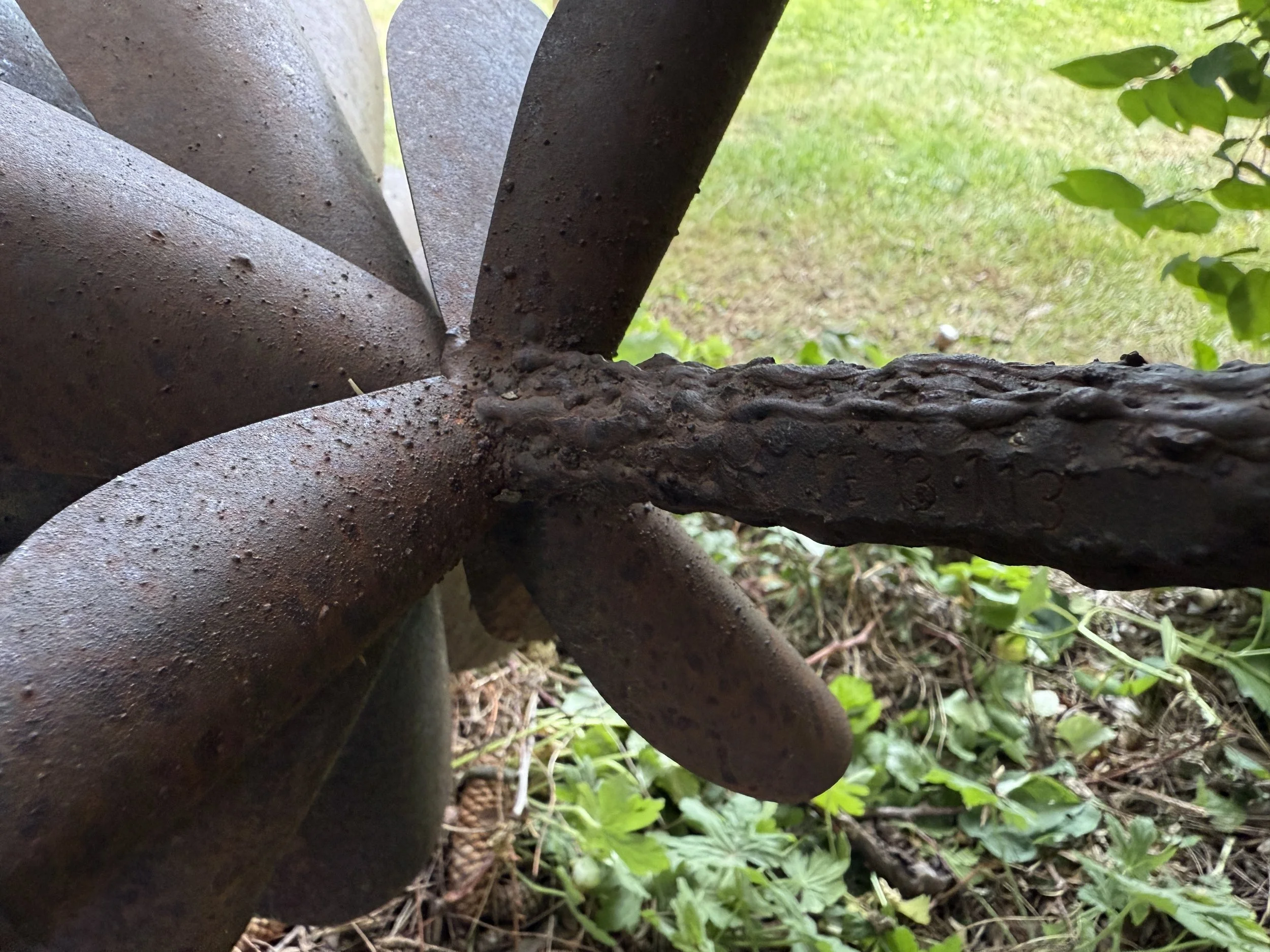
Artist: Floyd Elzinga
Title: Pinecone 1, 2013
Media: corten steel
Size: 80”x 23” x 23”
Notes: Stamp FE13 113 (on stem)
Provenance:
Mann Collection since 2015
Artist’s Studio
Featured at 13th Street Winery, St. Catharines, ON
Description: Measuring 80" x 23" x 23", this striking Elzinga pinecone rises gracefully above the ground on two steel poles that anchor below the surface. The elevated installation gives the pinecone a sense of weightlessness and quiet reverence, echoing the artist’s fascination with seeds, regeneration, and the resilience of the natural world. Designed for outdoor placement, it becomes a living focal point in any landscape.
Collector’s Note: Floyd Elzinga’s market continues to strengthen as demand for his sculptures grows among both private collectors and public institutions. His signature pinecones, seed forms, and large-scale landscape works are consistently quick to sell, making him one of the most sought-after contemporary sculptors working in metal today. With rising material costs and an expanding collector base across Canada, the U.S., and internationally, the value of his work has steadily increased year over year. His market remains active, and upward-moving, making now an excellent time to buy.
ABOUT THE ARTIST
Floyd Elzinga (b. 1966)
Floyd Elzinga is an acclaimed Canadian sculptor widely recognized for his monumental steel and bronze works that transform the raw drama of the natural world into powerful contemporary form. Based on the Niagara Escarpment, Elzinga draws inspiration from the rugged terrain around him—using eroded stumps, fractured branches, invasive species, and ravaged trees as the primary language of his practice. For over 15 years, he has built a celebrated career on reframing nature’s imperfections not as losses but as symbols of resilience, regeneration, and quiet power.
At the crossroads of naturalism, Pop-inspired aesthetics, and environmental commentary, Elzinga crafts outdoor sculptures and wall reliefs that appeal to collectors who are inspired by nature and value depth, material richness, and conceptual nuance. His signature vocabulary—oversized pinecones, wind-bent branches, maple leaves, and seed forms—elevates the familiar into the iconic, challenging viewers to reconsider the life cycles, tensions, and quiet heroism embedded in the Canadian landscape.
Elzinga’s sculptural practice is grounded in rigorous material exploration. Initially drawn to steel for its malleability and expressive potential, he continues to push the boundaries of the medium through grinding, rusting, polishing, heating, and forging. These processes allow him to treat steel with the sensitivity of a painter’s brushstroke—capturing light, texture, and depth with striking nuance. His formal training includes a Bachelor of Fine Arts from the Nova Scotia College of Art and Design, a degree in Earth Sciences from McMaster University, and a Certificate in Art Fundamentals from Sheridan College, merging scientific understanding with artistic experimentation.
His work has been exhibited widely across Ontario, Alberta, and Nova Scotia, and is represented in significant public and private collections in Canada, the United States, and internationally. Notable commissions include a branch and leaf sculpture for Global Affairs Canada installed at APEC Park in Da Nang, Vietnam; permanent works for the City of Lacombe (Alberta); Kings Christian Collegiate (Oakville); Loretto College (Toronto); The Groves Welcome Center (Humble, Texas); and the Ritz-Carlton Hotel (Toronto). His acclaimed large-scale installations for Nuit Blanche Toronto and municipal collections across Ontario further underscore his standing as a leading figure in contemporary Canadian sculpture.
A highlight of Elzinga’s recent work includes his 2022–2023 Everest residency, during which he transformed debris collected from the mountain into sculptural works—a poignant continuation of his commitment to environmental storytelling and the belief that, even in harsh conditions, beauty and potential can be reclaimed.
For collectors, Floyd Elzinga’s sculptures offer more than striking aesthetics—they carry an emotional and philosophical weight rooted in cycles of repair, survival, and renewal. His ability to transform steel into living form, while engaging with ecological dialogue, positions his work as both visually commanding and deeply resonant. Each piece becomes a lasting testament to the strength and fragility of the natural world, inviting reflection, connection, and enduring appreciation.